Monad (philosophy)

Definition and stakes

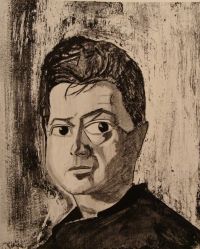
Portrait of Herbert Ernest Cushman Herbert Ernest Cushman,  A Beginner's History of Philosophy…

“ A soul-monad contains in itself at all times representations of the whole world, some obscure, some clear. This power of universal representation makes the monad a microcosm. What we call knowledge of the external world is our representation of it within ourselves. This representation is possible to us because we reproduce it in miniature. Since the monad directly perceives only itself and its own states, it follows that the more clearly and distinctly it is conscious of its own activities, the more adequately does it represent the cosmos. ”
Source: Gutenberg

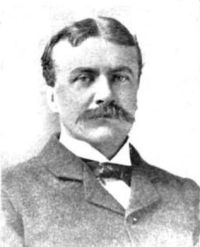
Portrait of Georg Wilhelm Friedrich Hegel Georg Wilhelm Friedrich Hegel,  Hegel's Lectures on the History of Philosophy…

“ The principles of things are monads, of which each is for itself, without having influence on the others. If now the Monad of monads, God, is the absolute substance, and individual monads are created through His will, their substantiality comes to an end. There is therefore a contradiction present, which remains unsolved in itself—that is between the one substantial monad and the many monads for which independence is claimed, because their essence consists in their standing in no relation to one another. ”
Source: Gutenberg

Various,  The Journal of Speculative Philosophy…

“ Otherwise each Monad would be a divinity. The Monads are limited, not in the object, but in the mode of their knowledge of the object. They all tend confusedly to the infinite, to the whole; but they are limited and distinguished by the degrees of distinctness in their perceptions. ”
Source: Gutenberg

Get perspective with Kwize: daily news enlightened by great literature