Entelechy

Definition and stakes

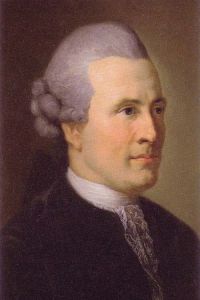
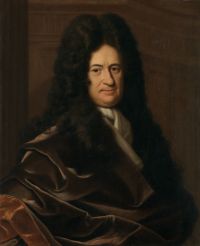
Portrait of Gottfried Leibniz Gottfried Leibniz,  Monadology (1898)

“ The body belonging to a Monad (which is its entelechy or its soul) constitutes along with the entelechy what may be called a living being, and along with the soul what is called an animal. Now this body of living being or of an animal is always organic; for, as every Monad is, in its own way, a mirror of the universe, and as the universe is ruled according to a perfect order, there must also be order in that which represents it, i.e. in the perceptions of the soul, and consequently there must be order in the body, through which the universe is represented in the soul. ”
Source: Wikisource

Portrait of Gottfried Leibniz Gottfried Leibniz,  Monadology (1890)

“ But a soul can read in itself only that which is distinctly represented in it. It cannot develop it laws all at once, for they reach into the infinite.
62. Thus, although each created monad represents the entire universe, it represents most distinctly the body which is particularly appropriated to it and of which it forms the entelechy; and as this body represents the whole universe by the connection of all matter in a plenum, the soul also represents the whole universe by representing that body which especially belongs to it.
”
Source: Wikisource

1911 Encyclopædia Britannica, Volume 18… (1911)

“ On this assumption of the eternity of the world, God could not be a Creator. Aristotle thought that God is only prime mover, and that too only as the good for the sake of which Nature moves; so that God moves as motive. Psychologically, Aristotle applied his dualism of matter and form to explain the antithesis of body and soul, so that the soul is the form, or entelechy, of an organic body, and he applied the same dualism to explain sensation, which he supposed to be reception of the sensible form or essence, without the matter, of a body, e.g. ”
Source: Wikisource

Get perspective with Kwize: daily news enlightened by great literature