Musical analysis

Definition and stakes

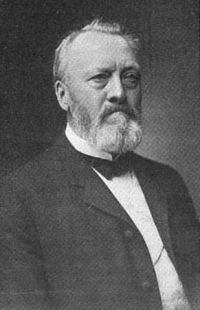
Portrait of Daniel Gregory Mason Daniel Gregory Mason,  The Appreciation of Music - Vol…

“ The great object of musical analysis must always be to concentrate the attention of the music-lover, to focus his mind as well as his ears on the melodies, and their developments, which he hears, and so eventually to increase his pleasure in music, and to help him to substitute for that "drowsy reverie, relieved by nervous thrills," an active, joyful, vigorous co-operation with composers, through which alone he can truly appreciate their art. ”
Source: Gutenberg

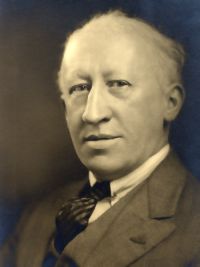
De Witt H. Parker,  The Principles of Aesthetics

“ It is, of course, obvious that our analysis has confined itself to the barest elements of the musical experience. Our music to-day, with its many-voiced harmonies, with its procession of chords instead of single tones, with its modulation into related keys, has an infinite wealth and complexity defying description. A large part of the astonishing effect of music is derived from the fact that in a brief space we seem to hear and absorb so much: the careers of multitudinous lives compressed into an instant. ”
Source: Gutenberg

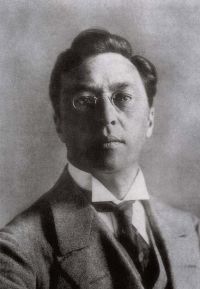
Ethel D. Puffer,  Psychology of Beauty

“ Form is felt as an immediate joy. Structure it is which many critics have in mind when they speak of form, and it is the confusion between the two which makes such an antithesis of musical beauty and sensuous material possible. The real musical beauty, it is clear, is in the melodic idea; in the sequence of tones which are indissolubly one, which are felt together, one of which cannot exist without the other. Musical beauty is in the intrinsic musical form. And yet here, too, we must admit, that, in the last analysis, structure and form need not be different. ”
Source: Wikisource

Get perspective with Kwize: daily news enlightened by great literature