Musical theory

Definition and stakes

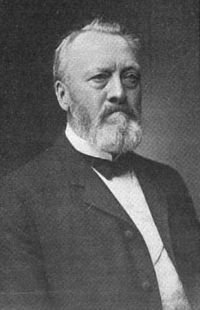
Carl Engel,  Musical Myths and Facts, Volume 1…

“ By far the greater number of our rules of composition are not dictated by any physical law traceable in acoustics, but only by human taste, which is continually undergoing modifications in the course of time. Thus, most of our great composers have caused some alterations in our theory of music. It is not only possible, but probable, that in a hundred years' time we shall have admirable musical compositions very different in form and construction from our present ones. ”

Source: Gutenberg

Anonymous,  The Philosophical Review (1892)

“ Finally, the most important element of music, that which no empirical theory can explain, is the musical thought. The most expressive timbres are meaningless without a unifying idea. This faculty of thinking in sounds is the result of a long cultivation of the æsthetical sense. The musical mind has grown from the language of sensation to that of abstraction. "Every musical thought is, at the same time, an imitation of the external world or at least an expression of feeling; every imitation of the external world or every expression of feeling is, at the same time, a musical thought." ”
Source: Wikisource

Portrait of Daniel Gregory Mason Daniel Gregory Mason,  From Grieg to Brahms: Studies of Some Modern Composers and Their Art

“ Their practice, indeed, unanimously confirms the theory of musical effect which has now been briefly sketched, and which may be more briefly summarized before we pass on to deduce from it some general canons of appreciation and criticism.
Music, we have seen, originates in the spontaneous gestures and cries made by primitive man under the sway of emotion, imitated by observers, and arousing in them the same feelings.
”
Source: Gutenberg

Get perspective with Kwize: daily news enlightened by great literature