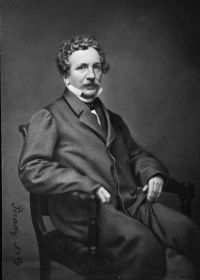
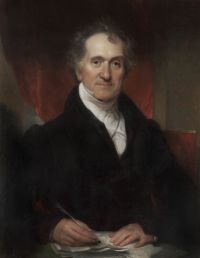
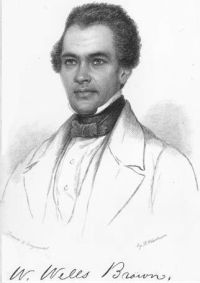
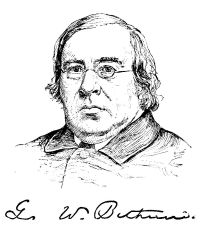
The concept of "must" signifies necessity, obligation, or inevitability, frequently intertwining moral, philosophical, and practical imperatives. Authors such as Booker T. Washington highlighted its role in ethical action, portraying it as a call to harmonize conscience with responsibility, while Arthur Hugh Clough examined its conflict with human autonomy, stating that "we ne’er should act at all; and act we must.
" John Adams connected it to political compliance, questioning whether obedience arises from authority or principle, and George Eliot reinterpreted it through existential involvement, encouraging individuals to seek duty in real-life experience rather than abstract ideals. These diverse viewpoints illustrate "must" as a complex framework through which necessity, morality, and human autonomy converge, underscoring its lasting significance in literature and thought.
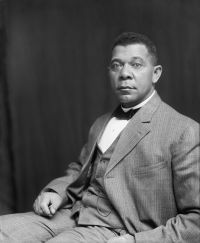 Booker T. Washington,
Character Building
Booker T. Washington,
Character Building