Naturality

Definition and stakes

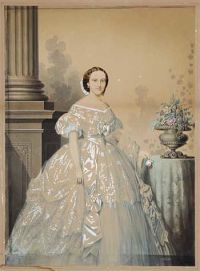
Portrait of Ralph Waldo Emerson Ralph Waldo Emerson,  The American Scholar (1838)

“ Yet when this spiritual light shall haverevealed the law of more earthly natures,—when he has learned to worship the soul, and to see that the natural philosophy that now is, is only the first gropings of its gigantic hand, he shall look forward to an ever expanding knowledge as to a becoming creator. He shall see, that nature is the opposite of the soul, answering to it part for part. One is seal, and one is print. Its beauty is the beauty of his own mind. Its laws are the laws of his own mind. Nature then becomes to him the measure of his attainments. ”
Source: Wikisource

John Stewart,  The Apocalypse of Nature (1790)

“ O Self! component part of thy great integer, Nature—incomprehensible in thy cause and essence—comprehensible in thy ever-changing modes of existence—comprehensible in thy eternal connection with Nature, which all the powers of thought cannot separate—comprehensible motion in the volition of man—comprehensible in thought, the guide and guardian of that volition, to direct man to happiness, or to procure well-being to matter in its eternal revolution—comprehensible in sympathy, which unites the various links of beings in the great chain of Nature. ”
Source: Wikisource

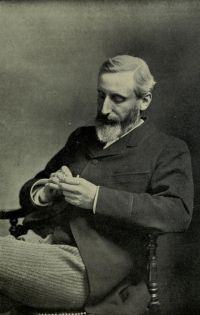
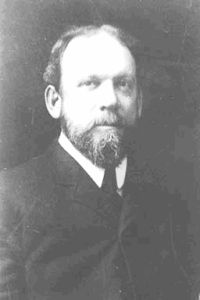
Portrait of Charles Kingsley Charles Kingsley,  The Water of Life, and Other Sermons

“ For this innumerable multitude of things, of which we now-a-days talk as if it were one thing, and had an organic unity of its own, or even as if it were one person, and had a will of its own, and call it Nature—a word which will one day be forgotten by philosophers, with the ‘four elements,’ and the ‘animal spirits;’—this multitude of things, I say, which we miscall Nature, has its dark and ugly, as well as its bright and fair side. ”
Source: Gutenberg

Get perspective with Kwize: daily news enlightened by great literature