Nucleus (biology)

Definition and stakes

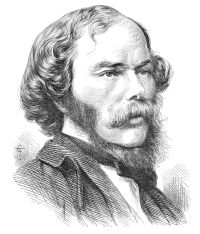
Portrait of Herbert Spencer Herbert Spencer,  The Principles of Biology, Volume 2… (1899)

“ There are also some Protozoa, and the Bacteria, in which no nucleus has certainly been demonstrated. But it is usual to consider the bodies of such organisms as cells nevertheless, and it is supposed that such cells represent a stage of development in which the nucleus has not yet been evolved, though the chemical substance ‘nuclein’ has been formed in some of them. ”

Source: Gutenberg

Portrait of Herbert Spencer Herbert Spencer,  The Principles of Biology, Volume 1…

“ Ordinarily it is marked off from the surrounding protoplasm by a delicate membrane, just as the protoplasm itself is marked off by the exoplasm from the environment. Most commonly there is a single nucleus, but occasionally there are many, and sometimes there is a chief one with minor ones. Moreover, within the nucleus itself there have of late years been discovered remarkable structural elements which undergo complicated changes. ”
Source: Gutenberg

Austin Hall,  The People of the Comet (1923)

“ You are puzzled only so long as you regard the nucleus of the ovum as mere matter, as atoms—substance. It is not that; it is both below and above it. The nucleus is a sac of ions, cohesive and adhesive, male and female, gathered from the life of the parents. Cohesion is life. It is the function of these ions to gather the atoms out of the blood and food and to build up the body. Each ion, while it remains, is a lord and an architect; it gathers its own particular atoms. ”
Source: Wikisource

Get perspective with Kwize: daily news enlightened by great literature