Patent claim

Definition and stakes

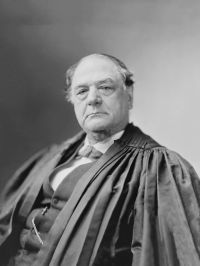
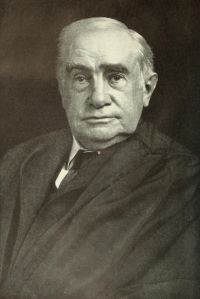
Portrait of Henry Billings Brown Henry Billings Brown,  McClain v. Ortmayer — Opinion of the Court

“ Nothing is better settled in the law of patents than that the patentee may claim the whole or only a part of his invention, and that, if he only describe and claim a part, he is presumed to have abandoned the residue to the public. The object of the patent law in requiring the patentee to 'particularly point out and distinctly claim the part, improvement, or combination which he claims as his invention or discovery' is not only to secure to him all to which he is entitled, but to apprise the public of what is still open to them. ”
Source: Wikisource

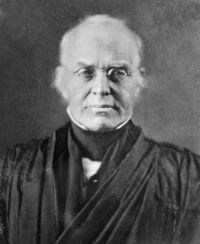
Joseph P. Bradley,  Mahn v. Harwood — Opinion of the Court

“ The taking out of a patent which has, as the law requires it to have, a specific claim is notice to all the world, of the most public and solemn kind, that all those parts of the art, machine, or manufacture set out and described in the specification, and not embraced in such specific claim, are not claimed by the patentee; at least, not claimed in and by that patent. If he has a distinct patent for other parts, or has made application therefor, or has reserved the right to make such application, that is another matter not affecting the patent in question. ”
Source: Wikisource

Stanley Matthews,  Electric Railroad Signal Company v…

“ It is upon these two points that the question of infringement depends. In considering them it is important to bear in mind that the patent is for a combination merely, in which all the elements were known and open to public use. No one of them is claimed to be the invention of the patentee. He does not claim them himself as separate inventions. It is simply a new combination of old and well-known devices for the accomplishment of a new and useful result that is claimed to be the invention secured by the patent. ”
Source: Wikisource

Get perspective with Kwize: daily news enlightened by great literature