“ That the philosopher is a lover of truth, having a nature akin to the best?—and if they admit this will they still quarrel with us for making philosophers our kings? ‘They will be less disposed to quarrel.’ Let us assume then that they are pacified. Still, a person may hesitate about the probability of the son of a king being a philosopher. ”
Philosopher-king
Definition and stakes
The theme of “philosopher-king” has been addressed by authors such as Epictetus, Plato, Friedrich Nietzsche, Charles Mackay and Marcus Tullius Cicero. It is often associated with terms like philosophy, Plato, reason, Aristotle and knowledge.
Quotes about “philosopher-king”
 Charles Kingsley,
Hypatia — or New Foes with an Old Face
“ Each philosopher begs the question in hand, and then marches forward, as brave as a triumph, and prides himself—on proving it all afterwards. No wonder that his theory fits the universe, when he has first clipped the universe to fit his theory. ”
Charles Kingsley,
The Good News of God
“ And philosophers, who look into the laws of soul and spirit, say the same. The wiser men they are, the more they find in the soul of every new-born babe, and its kindred to its mother, wonders and puzzles past man’s understanding.I will say boldly, my friends, that if one could find out the full meaning of those two words, mother and child, one would be the wisest philosopher on earth, and see deeper than all who have ever yet lived, into the secrets of this world of time which we can see, and of the eternal world, which no man can see, save with the eyes of his reasonable soul. ”
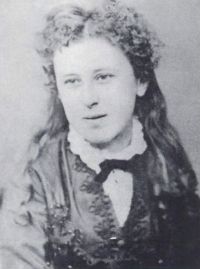 Vernon Lee,
Proteus
(1925)
“ And since we are discussing the reciprocal uses of Genius and of mere Intelligence (Genius ever stimulating Intelligence, Intelligence ever keeping Genius within the bounds of sense and of decency) , allow me to set my face against all those oligarchies of genius and virtue which every Utopian philosopher from Plato to Comte, from Renan to H. G. Wells, has wanted to foist on dull, driven Mankind. ”
William James, A Pluralistic Universe
“ But there two pieces, 'zwei stücke,' as Kant would have said, in every philosophy—the final outlook, belief, or attitude to which it brings us, and the reasonings by which that attitude is reached and mediated. A philosophy, as James Ferrier used to tell us, must indeed be true, but that is the least of its requirements. One may be true without being a philosopher, true by guesswork or by revelation. What distinguishes a philosopher's truth is that it is reasoned. ”
 Immanuel Kant,
Critique of Pure Reason
(1791)
“ In this view philosophy is the science of the relation of all cognition to the ultimate and essential aims of human reason (teleologia rationis humanae) , and the philosopher is not merely an artist—who occupies himself with conceptions—but a lawgiver, legislating for human reason. In this sense of the word, it would be in the highest degree arrogant to assume the title of philosopher, and to pretend that we had reached the perfection of the prototype which lies in the idea alone. ”
 Josiah Royce,
The Spirit of Modern Philosophy
(1892)
“ These moral agents of Kant’s world are not isolated, for, ignorant as they are, they work together. And what better revelation of a divine order than a world where spirits can commune and can work together? Once more, as you see, the philosopher invents nothing; he only reflects. ”
“ I hesitated to make the assertion which I now hazard,—that our guardians must be philosophers. You remember all the contradictory elements, which met in the philosopher—how difficult to find them all in a single person! Intelligence and spirit are not often combined with steadiness; the stolid, fearless, nature is averse to intellectual toil. And yet these opposite elements are all necessary, and therefore, as we were saying before, the aspirant must be tested in pleasures and dangers; and also, as we must now further add, in the highest branches of knowledge. ”
Ludvig Holberg, Comedies by Holberg : Jeppe of the Hill…
“ The first rule of philosophy is, Know thyself; and the further one advances, the lower opinion one should have of himself, the more one should realize what there remains to be learned. But you make philosophy into a kind of fencing, and consider a man a philosopher if he can warp the truth by subtle distinctions and talk himself out of any opinion; in so doing you incur hatred and bring contempt upon learning, for people imagine that your extraordinary manners are the natural fruits of education. ”
Immanuel Kant,
Prolegomena to Any Future Metaphysics
(1783)
“ There can be nothing more desirable to a philosopher, than to be able to derive the scattered multiplicity of the concepts or the principles, which had occurred to him in concrete use, from a principle a priori, and to unite everything in this way in one cognition. ”
Jean Paul Friedrich Richter, The Campaner Thal, and Other Writings (1864)
“ But the philosopher sms against poets more than you sin against the followers of Kant, from whom you seem to expect that they shall write pleasingly. Your arguments are ideas, not reasonings, when you say that philosophy's attendants are like those of Turkish ladies, mute, black, and deformed ”
 Joseph Dietzgen,
The Positive Outcome of Philosophy
“ The truth which is the universe, the cosmic or universal truth, will reveal to you the absurdity of abnormal humility which is contained in the dualistic doctrine of the two minds. Of course, the philosopher Kant had a greater intellect than Peter Simple. But nevertheless all intellects partake of the nature of the general intellect, and no intellect can step above or below this general nature without losing sense or reason. One cannot speak of another, higher, faculty of thought than that acquired by man through experience without dropping from logic to absurdity. ”
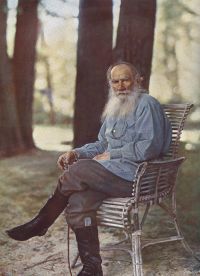 Leo Tolstoy,
Anna Karenina
(1877)
“ “And don’t all the theories of philosophy do the same, trying by the path of thought, which is strange and not natural to man, to bring him to a knowledge of what he has known long ago, and knows so certainly that he could not live at all without it? Isn’t it distinctly to be seen in the development of each philosopher’s theory, that he knows what is the chief significance of life beforehand, just as positively as the peasant Fyodor, and not a bit more clearly than he, and is simply trying by a dubious intellectual path to come back to what everyone knows? ”
 Ralph Barton Perry,
The Harvard Classics Vol. 51
(1914)
“ What is needed is a thoughtful comparison of ideals, a critical examination of the whole question of values and of the meaning of life. One who undertakes such a study, every one who has made even a beginning of such a study in the hope of solving his own personal problem, is ipso facto a moral philosopher. He is following in the steps of Plato and of Kant, of Mill and of Nietzsche, and he will do well to walk for at least a part of the way with them. Or suppose that our doubter questions, not the correctness of the traditional ideal, but the certainty of its triumph. ”
 Anicius Manlius Severinus Boethius,
The Consolation of Philosophy
(1897)
“ A certain man assailed one who had put on the name of philosopher as a cloak to pride and vain-glory, not for the practice of real virtue, and added: "Now shall I know if thou art a philosopher if thou bearest reproaches calmly and patiently." ”
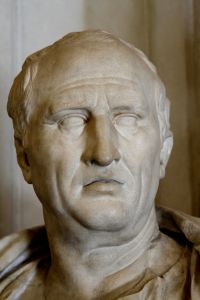 Marcus Tullius Cicero,
On Oratory (Guthrie) — The First Conference
(1822)
“ In short, the philosopher himself, who alone challenges to his own power and sagacity almost the monopoly of all good qualities, may yet be defined as a person who endeavours at the knowledge of the powers, the nature, and the principles of all subjects, divine and human, with the possession and practice of the whole system of living well in the world. ”
Charles Kingsley,
Alexandria and Her Schools
“ But this we do know of the later sets, that they gradually gave up the search for truth, and propounded to themselves as the great type for a philosopher, How shall a man save his own soul from this evil world? They may have been right; it may have been the best thing to think about in those exhausted and decaying times: but it was a question of ethics, not of philosophy, in the sense which the old Greek sages put on that latter word. ”
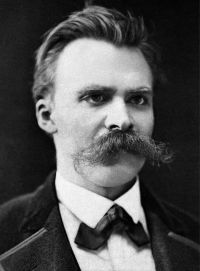 Friedrich Wilhelm Nietzsche,
On the Future of our Educational Institutions
“ The philosopher does not wish to prevent your philosophising: but refrain at least from disconcerting him with your pistol-shots. Try to imitate the Pythagoreans to-day: they, as servants of a true philosophy, had to remain silent for five years—possibly you may also be able to remain silent for five times fifteen minutes, as servants of your own future culture, about which you seem so concerned. ”
 Ernst Haeckel,
Last Words on Evolution: A Popular Retrospect and Summary
“ Critical philosophy, moreover, long ago pronounced its doom. In the first place, the most famous critical thinker, Immanuel Kant, proved in his Critique of Pure Reason that absolute science affords no support to the three central dogmas of metaphysics, the personal God, the immortality of the soul, and the freedom of the will. ”
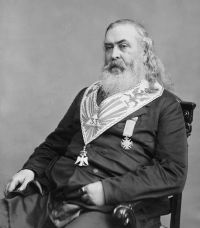 Albert Pike,
Morals and Dogma of the Ancient and Accepted Scottish Rite of Freemasonry
“ Fearlessly launching into the problem of universal being, the first philosophy attempted to supply a compendious and decisive solution of every doubt. To do this, it was obliged to make the most sweeping assumptions; and as poetry had already filled the vast void between the human and the divine, by personifying its Deity as man, so philosophy bowed down before the supposed reflection of the divine image in the mind of the inquirer, who, in worshipping his own notions, had unconsciously deified himself. Nature thus was enslaved to common notions, and notions very often to words. ”
Immanuel Kant,
Critique of Pure Reason
(1855)
“ What I have termed an ideal was in Plato's philosophy an idea of the divine mind—an individual object present to its pure intuition, the most perfect of every kind of possible beings, and the archetype of all phenomenal existences. Without rising to these speculative heights, we are bound to confess that human reason contains not only ideas, but ideals, which possess, not, like those of Plato, creative, but certainly practical power—as regulative principles, and form the basis of the perfectibility of certain actions. ”
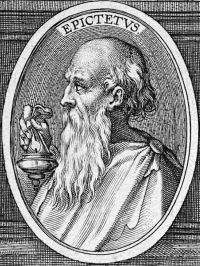 Epictetus,
The Golden Sayings of Epictetus…
“ If what charms you is nothing but abstract principles, sit down and turn them over quietly in your mind: but never dub yourself a Philosopher, nor suffer others to call you so. Say rather: He is in error; for my desires, my impulses are unaltered. I give in my adhesion to what I did before; nor has my mode of dealing with the things of sense undergone any change. ”
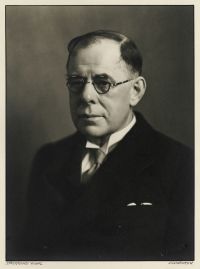 A. E. Taylor,
Elements of metaphysics
(1903)
“ Why, then, should the metaphysician assume that the universe is more specially bound to satisfy the demands of the logical intellect than those of the “practical reason” of morality and religion or the “creative reason” of art? Must we not say that the demand of the logician that the world shall be intelligible stands precisely on the same footing as the moralist’s demand that it shall be righteous, or the artist’s that it shall be beautiful, and that all three are no more than “postulates” which we make, in the last resort, simply because it satisfies our deepest feelings to make them? ”
Epictetus,
All the Works of Epictetus, Which Are Now Extant…
(1759)
“ If you have an earnest Desire of attaining to Philosophy, prepare yourself from the very first, to be laughed at, to be sneered by the Multitude, to hear them say, "He is returned to us a Philosopher all at once;" and, "Whence this supercilious Look?" Now, for your Part, do not have a supercilious Look indeed; but keep steadily to those Things which appear best to you, as one appointed by God to this Station. For remember, that, if you adhere to the same Point, those very Persons who at first ridiculed, will afterwards admire you. ”
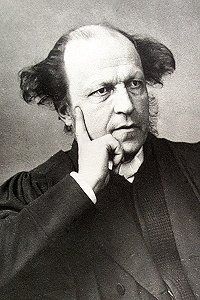 Edwin Hatch,
The influence of Greek ideas and usages upon the Christian church
(1914)
“ The study of literature, of what the great masters of philosophy had taught, was superseding the moral practice which such [143] study was intended to help and foster. The Stoics of the time could construct ingenious fallacies and compose elegant moral discourses; but they were ceasing to regard the actual “living according to nature” as the main object of their lives. The revival of Cynicism was a re-assertion of the supremacy of ethics over logic, and of conduct over literary knowledge. ”
 John Stuart Mill,
Utilitarianism
“ These considerations are relevant, not to the estimation of actions, but of persons; and there is nothing in the utilitarian theory inconsistent with the fact that there are other things which interest us in persons besides the rightness and wrongness of their actions. The Stoics, indeed, with the paradoxical misuse of language which was part of their system, and by which they strove to raise themselves above all concern about anything but virtue, were fond of saying that he who has that has everything; that he, and only he, is rich, is beautiful, is a king. ”
Immanuel Kant,
Literary and Philosophical Essays…
“ But the question is, if a spirit thus absorbed in pure reason and intuition will be able to emancipate itself from the rigorous fetters of logic, to take the free action of poetry, and seize the individuality of things with a faithful and chaste sense? Here nature imposes even on the most universal genius a limit it cannot pass, and truth will make martyrs as long as philosophy will be reduced to make its principal occupation the search for arms against errors. ”
Immanuel Kant,
Critique of Pure Reason
(1791)
“ I shall not here eulogize philosophy for the benefits which the laborious efforts of its criticism have conferred on human reason—even granting that its merit should turn out in the end to be only negative—for on this point something more will be said in the next section. But, I ask, do you require that that knowledge which concerns all men, should transcend the common understanding, and should only be revealed to you by philosophers? ”
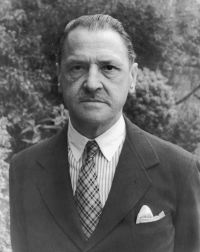 W. Somerset Maugham,
On a Chinese Screen
“ I was interested in this because it bore out an opinion of mine that philosophy is an affair of character rather than of logic: the philosopher believes not according to evidence, but according to his own temperament; and his thinking merely serves to make reasonable what his instinct regards as true. ”
Benjamin Moore Norman, Rambles in Yucatan; or, Notes of Travel Through the Peninsula
“ With the intuitive perception of genius, he unfolds to us the mechanism of each system of ancient philosophy that spent its ephemeral breath in struggling for a supremacy, which, if temporarily attained, was early lost from the want of an innate, self-sustaining, vital principle. ”
John Stuart Mill,
Autobiography (Mill) — Chapter VII. 1840-1870
(1874)
“ There is therefore a natural hostility between him and a philosophy which discourages the explanation of feelings and moral facts by circumstances and association, and prefers to treat them as ultimate elements of human nature; a philosophy which is addicted to holding up favourite doctrines as intuitive truths, and deems intuition to be the voice of Nature and of God, speaking with an authority higher than that of our reason. ”
Albert Pike,
Morals and Dogma of the Ancient and Accepted Scottish Rite of Freemasonry
“ We have the same consciousness of a Power on which we are dependent; which we can define and form an idea or picture of, as little as we can of the soul, and yet which we feel, and therefore know, exists. True and correct ideas of that Power, of the Absolute Existence from which all proceeds, we cannot trace; if by true and correct we mean adequate ideas; for of such we are not, with our limited faculties, capable. And ideas of His nature, so far correct as we are capable of entertaining, can only be attained either by direct inspiration or by the investigations of philosophy. ”
 William Ralph Inge,
Outspoken Essays
“ Hence arose the philosophy of 'concepts'; they idealised nature by considering it sub specie æternitatis. Reality resided in the unchanging ideas; the mutable, the particular, the individual was for them an embarrassment, a 'scandal of thought.' The sage always tries to escape from the moving world of becoming into the static world of being. But an ideal world, so conceived, can only be an abstraction, an impoverishment of reality. Such an idealism gives us neither a science of origins nor a science of ends. ”
 Aristotle,
On the Vital Principle
(1855)
“ But we are at a loss to know what that is which individualizes things: the elements are like matter; but that, whatever it be which binds the others together, must of all be the most influential. Now, it is scarcely possible that any thing should be more influential and dominant than the Vital Principle, and quite impossible that any thing should be more so than the mind; for it is probable that the mind was the first-born and sovereign in nature, while these philosophers maintain that the elements were the first of entities. ”
Related terms
Authors who wrote about “philosopher-king”
Epictetus Plato
 Friedrich NietzscheCharles MackayMarcus Tullius CiceroRalph Barton PerryFriedrich Wilhelm NietzscheJean Paul Friedrich Richter
 Bertrand RussellJoseph DietzgenImmanuel KantCharles KingsleyWilliam JamesLudvig HolbergJosiah RoyceVernon LeeAnicius Manlius Severinus BoethiusLeo TolstoyW. Somerset MaughamJohn Stuart Mill
