Physical law

Definition and stakes

P. Coffey,  Ontology, or the Theory of Being

“ But this leaves for explanation something which the mechanist cannot explain. He regards a physical law merely as a generalization, beyond experience, of some experienced uniformity; and he holds that all our physical laws are provisional in the sense that a wider and deeper knowledge of the actual conditions of interaction among the physical forces of the universe would enable us to eliminate exceptions—which are all apparent, not real—by restating our laws in such a comprehensive way as to include all such cases. ”
Source: Gutenberg

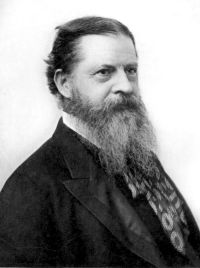
Portrait of Charles S. Peirce Charles S. Peirce,  Chance, Love, and Logic: Philosophical Essays

“ General conceptions arise upon the formation of habits in the nerve-matter, which are molecular changes consequent upon its activity and probably connected with its nutrition.
The law of habit exhibits a striking contrast to all physical laws in the character of its commands. A physical law is absolute. What it requires is an exact relation. Thus, a physical force introduces into a motion a component motion to be combined with the rest by the parallelogram of forces; but the component motion must actually take place exactly as required by the law of force.
”
Source: Gutenberg

Get perspective with Kwize: daily news enlightened by great literature