Maria Mitchell, Maria Mitchell: Life, Letters, and Journals
“ "The phrase 'popular science' has in itself a touch of absurdity. That knowledge which is popular is not scientific. ”
Maria Mitchell, Maria Mitchell: Life, Letters, and Journals
“ "The phrase 'popular science' has in itself a touch of absurdity. That knowledge which is popular is not scientific. ”
Popular Science Monthly (1873)
“ At the outset we rejected this view as narrow and false, holding that science, instead of pertaining to certain things, consists in a method of knowing, which applies to all things that can be known, and that popular science must be equally comprehensive. Science itself being progressive, its great army of workers is constantly engaged in extending and correcting it by numberless processes of original investigation, while it is the office of popular science to bring its conclusions, applications, and results, into the sphere of common thought. ”
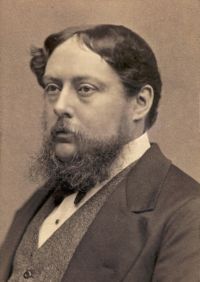 Richard Anthony Proctor,
Popular Science Monthly
(1875)
Richard Anthony Proctor,
Popular Science Monthly
(1875)
“ I consider only the question whether science deserves public recognition; and, 2. I suppose the question submitted only to those who can properly consider it—those, namely, who are at least acquainted with scientific methods, if not versed in scientific subjects. To many it may probably appear a matter of small importance whether science advance or stand still. The general public scarcely recognizes the position which Science has already taken, still less the position she is about to take. ”
Various, Blackwood's Edinburgh Magazine…
“ We found him congratulating himself on the possession of a power with which few really scientific men are gifted—that of making science popular—of drawing to himself, and to the knowledge he had to diffuse, the regard and attention of the masses of the people in his own and other countries, by a clear method, and an agreeable and attractive style in writing. “To make discoveries plain and popular is, perhaps, more difficult,” he said to us, “than to make the discoveries themselves.” ”
Richard Anthony Proctor,
Popular Science Monthly
(1875)
“ But it proves nothing concerning the effect of the popularization of science in the best sense of the word—and as distinguished from what is often so called, but might more correctly be termed the vulgarization of science. It seems to me undeniable that the great improvement which has of late taken place in the work of correct scientific exposition has synchronized with a great increase in the amount of fruitful original research. ”
Victor Verasius Branford, Science and Citizenship : A Lecture delivered before the Manchester Sociological Society November 13th… (1906)
“ Is, then, this popular conception of the vital civic importance of the university a useful starting-point for the sociological investigator? In any case, it is a well-recognised truth that popular conceptions are, for science, more convenient points of departure than culture ones, since they are nearer to that naked and unadorned order of nature, to which the scientist must constantly return for the verification of his thought. ”
Popular Science Monthly (1879)
“ We wish to make science popular, not by deceiving idlers into the belief that any thorough knowledge can be easy, but by exciting interest in its objects, and appreciation of its methods. In the popular evening lectures you will hear those who are best qualified to speak upon their several subjects, not preaching with the dry austerity of a pedant, but bringing their own enthusiasm to kindle a contagious fire in those who hear them. ”
 Burton Egbert Stevenson,
American Men of Mind
Burton Egbert Stevenson,
American Men of Mind
“ He did much to increase public interest in and knowledge of the development of the science by frequent popular articles in the leading magazines, in addition to more technical books and memoirs intended especially for scientists.Of living scientists, we can do no more than mention a few. ”
Various, Popular Science Monthly (1915)
“ In the very closing years of the last century and the first decade of the present, physics, which in popular favor had suffered a temporary eclipse by biology and psychology, was revivified by the discoveries of Röntgen and Madame Curie, and now disports itself with a youthful exuberance suggestive of the renaissance, while chemistry and all the sciences allied to medicine engage men and money in a fabulous way. In the field of human affairs, we are attempting to apply the methods of science not only to health, but to education, to industry, and commerce, to marriage, religion and government. ”
Joseph Henry, Popular Science Monthly (1873)
“ In an age and country which boasts of its intelligence it might seem superfluous to say a word in regard to the importance of the cultivation of science, or, in other words, of a knowledge of the laws of the phenomena of the universe of which we form a part, yet it is lamentably the case that few comparatively, especially among statesmen and politicians, and even among those devoted to literature and the fine arts, properly appreciate the influence of abstract science on the present condition of the civilization of the world. ”
Leonard Huxley, Thomas Henry Huxley: A Character Sketch
“ IX POPULAR EDUCATION These lectures to working men, no less than his profound interest and exhausting work on behalf of popular education, illustrate his intense belief that science is not solely a thing of the laboratory, but a vital factor in right living. ”
Thomas Welbank Fowle, Popular Science Monthly (1872)
“ But then it is as clear as the day that, as science is getting a more and more practical hold upon men's minds by a thousand avenues, and mastering them by a series of brilliant successes, this temper is rapidly passing from the few into the popular mind; that it is becoming part of the furniture of the human intellect, and is powerfully influencing the very conditions of human nature. ”
Various, Popular Science Monthly (1903)
“ It has become the fashion lately in certain quarters to disparage the work of that splendid band of truth seekers who created modern science, not only by what they contributed in exact knowledge, but by the inspiration they afforded others and the impetus they gave to rational methods of research and speculation. ”
 William Whewell,
History of the inductive sciences…
(1875)
William Whewell,
History of the inductive sciences…
(1875)
“ At such a period, a large and popular circle of spectators and amateurs feel themselves nearly upon a level, in the value of their trials and speculations, with more profound thinkers: at a later period, when the subject is become a science, that is, a study in which all must be left far behind who do not come to it with disciplined, informed, and logical minds, the cultivators are far more few, and the shout of applause less tumultuous and less loud. ”
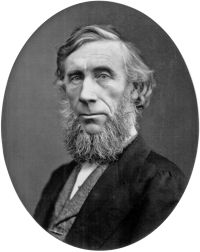 John Tyndall,
Popular Science Monthly
(1879)
John Tyndall,
Popular Science Monthly
(1879)
“ I need no other proof of this than the frequent employment in lectures, speeches, and official language of the erroneous expression, 'applied science.' A statesman of the greatest talent stated some time ago that in our day the reign of theoretic science had rightly yielded place to that of applied science. Nothing, I venture to say, could be more dangerous, even to practical life, than the consequences which might flow from these words. ”
Various, Popular Science Monthly (1911)
“ I need not say that within that century what we call science, pure and applied, has transformed the world as the scene of the human drama; and that it is this transformation that has compelled the recognition of natural science as a fundamental necessity in liberal education."—Eliot, "Education for Efficiency," p. ”
James Rush Black, Popular Science Monthly (1873)
“ Its truths, if applied at all, must be mainly applied by those who desire its benefits; or every one must apply the science for himself or herself, else nearly all the knowledge there may be on the subject will be as if it were not. Here we have plainly before the mind the great and peculiarly weak point, so far as the practical benefits are concerned, which this science may be capable of conferring. To make it profitable and useful, or, in other words, to make it an applied science in a community, that community must be made, one and all, experts in its knowledge and in its applications. ”
 Thomas Henry Huxley,
Popular Science Monthly
(1877)
Thomas Henry Huxley,
Popular Science Monthly
(1877)
“ What the public want is easy and unhindered access to such a collection as they can understand and appreciate; and what the men of science want is similar access to the materials of science. To this end the vast mass of objects of natural history should be divided into two parts—one open to the public, the other to men of science, every day, and all day long. ”
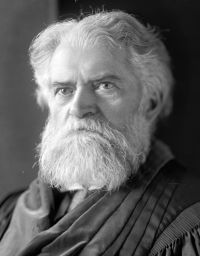 Simon Newcomb,
Side-Lights on Astronomy and Kindred Fields of Popular Science
Simon Newcomb,
Side-Lights on Astronomy and Kindred Fields of Popular Science
“ I make bold to say that the greatest want of the day, from a purely practical point of view, is the more general introduction of the scientific method and the scientific spirit into the discussion of those political and social problems which we encounter on our road to a higher plane of public well being. ”
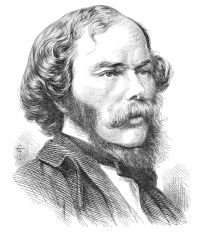 George Henry Lewes,
Popular Science Monthly
(1878)
George Henry Lewes,
Popular Science Monthly
(1878)
“ I shall be told, perhaps, that the growing demand for popular expositions of scientific results and the increasing diffusion of scientific inquiry point to a different conclusion. It is true that there never was a time when science was so popular. It is true that every year the attendance on lectures and the meetings of scientific associations is larger. ”
Joseph Henry, Popular Science Monthly (1873)
“ The results we have mentioned are frequently attributed by superficial observation to immediate practical invention of persons having little or no knowledge of abstract science. But, in regard to this, it must be recollected that our whole civilization is pervaded by a knowledge of facts primarily derived from scientific investigation. Such inventions as those we have alluded to are not produced in a barbarous country, or even in those of a comparative high civilization without science. ”
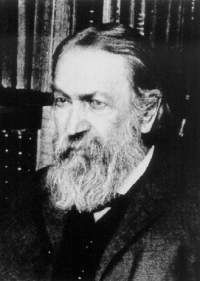 Ernst Mach,
Popular scientific lectures
Ernst Mach,
Popular scientific lectures
“ Our author has lifted what, to many of us, was at one time a course of seemingly unprofitable mental gymnastics, encompassed only at vast expenditure of intellectual effort, into a study possessing a deep philosophical value and instinct with life and interest. 'No profit grows where is no pleasure ta'en,' and the emancipated collegian will turn with pleasure from the narrow methods of the text-book to where the science is made to illustrate, by a treatment at once broad and deep, the fundamental connexion between all the physical sciences, taken together."—The Mining Journal, London, England. ”
Jr. Josiah P. Cooke, Scientific Culture, and Other Essays
“ But even enthusiastic interest in popular lectures is not scientific culture. A few men in every class always have been, and will continue to be, so far interested as to make the cultivation of science the business of their lives. ”
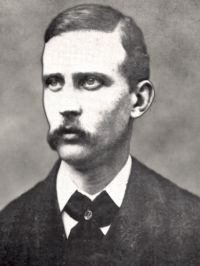 H. Newell Martin,
Popular Science Monthly
(1877)
H. Newell Martin,
Popular Science Monthly
(1877)
“ The liberal space at our disposal will permit us, at any rate for the present, to accommodate both classes of workers, without risk of the extermination of either. Meanwhile I have, then, to occupy your time with a few words on two subjects: on biological research, and on biological teaching. One hears a good deal talked nowadays of scientific research, and among it a good deal of what I cannot but think mischievous nonsense about the peculiar powers required by scientific investigators. ”
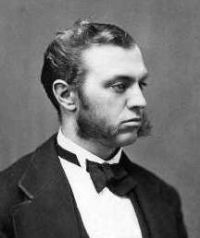 Ira Remsen,
Popular Science Monthly
(1877)
Ira Remsen,
Popular Science Monthly
(1877)
“ This consists in popular presentations of the higher truths of the science, either in the form of lectures or of articles in magazines which are read by the public. A great deal of good can be accomplished in this way, if the work is properly done. There are chapters of great inherent interest treating of matter which belongs in the domain of the science of chemistry, and these are rarely alluded to in popular lectures or articles. ”
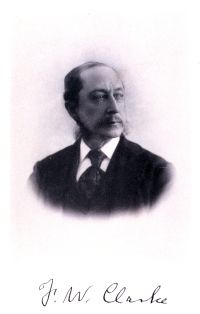 Frank Wigglesworth Clarke,
Popular Science Monthly
(1876)
Frank Wigglesworth Clarke,
Popular Science Monthly
(1876)
“ Now, what effect has this unfair distribution of studies produced upon American science? Plainly, a very bad effect. Our scientific men must be recruited mainly from among the ranks of our college graduates, and hence the latter ought to be imbued with something of the scientific spirit. ”
Sheldon Amos, Popular Science Monthly (1883)
“ But most or all of these reasons have been seen to be of a kind which hold out a good promise for the future, and thereby afford an ample encouragement to the use of a strictly logical method in political investigations, and to the attempt to create a scientific structure of ever-increasing completeness in this region, as well as in others more familiarly associated with the name of Science. ”
 Oscar Wilde,
Man or the State? — The Soul of Man Under Socialism
(1919)
Oscar Wilde,
Man or the State? — The Soul of Man Under Socialism
(1919)
“ If a man of science were told that the results of his experiments, and the conclusions that he arrived at, should be of such a character that they would not upset the received popular notions on the subject, or disturb popular prejudice, or hurt the sensibilities of people who knew nothing about science ”
Popular Science Monthly (1879)
“ The purpose was to have a series of books written by the best men of the time, in all the various sciences, which should treat of certain small divisions of the sciences that are in states of rapid growth—giving to the public, in popular form, the highest and latest results ”
Popular Science Monthly (1873)
“ While pursuing the general plan now entered upon, we expect to enlarge its resources, to make more prominent the applications of science to common life, to give a more popular form to its discussions, and, in short, to make it a magazine that no family with brains in it can afford to do without. ”
Thomas Henry Huxley,
Popular Science Monthly
(1874)
“ Happily, the reputation and real success of a votary of the physical sciences are now wholly independent of the periodicals which are pleased to call themselves "influential organs of public opinion." ”
Frank Wigglesworth Clarke,
Popular Science Monthly
(1876)
“ Personally, every worker in science should strive to awaken in the community about him a comprehension of the value and the purposes of his particular branch. In other words, the real investigators ought to do more toward popularizing their discoveries, instead of leaving the task to amateurs or charlatans. At present, unfortunately, too many able scientific men depreciate popular work and hold aloof from it. ”
Popular Science Monthly (1877)
“ It might embrace literature, local history, political economy, and various social questions, among its objects. We only urge that the popular diffusion of scientific information should be an essential element and a clearly-recognized object. From such modest and perhaps ill-defined beginnings valuable and lasting institutions have often arisen. ”
Various, Popular Science Monthly (1893)
“ In their main outlines the conquests of science, in the hands of a skilled exponent, never fail to awaken the enthusiasm of popular audiences. To the essential democracy of the sympathies of research, conceived on broad lines, let the thousands testify who have seen Prof. ”
Marion Zimmer Bradley, The Door Through Space
“ By and large, the kind of science-fiction which makes tomorrow's headlines as near as this morning's coffee, has enlarged popular awareness of the modern, miraculous world of science we live in. It has helped generations of young people feel at ease with a rapidly changing world.But fashions change, old loves return, and now that Sputniks clutter up the sky with new and unfamiliar moons, the readers of science-fiction are willing to wait for tomorrow to read tomorrow's headlines. Once again, I think, there is a place, a wish, a need and hunger for the wonder and color of the world way out. ”
 Charles Darwin,
Life and Letters of Charles Darwin…
Charles Darwin,
Life and Letters of Charles Darwin…
“ On the other hand I sometimes think that general and popular treatises are almost as important for the progress of science as original work." ”
 Gustave Le Bon,
The Crowd: A Study of the Popular Mind
Gustave Le Bon,
The Crowd: A Study of the Popular Mind
“ Science promised us truth, or at least a knowledge of such relations as our intelligence can seize: it never promised us peace or happiness. Sovereignly indifferent to our feelings, it is deaf to our lamentations. It is for us to endeavour to live with science, since nothing can bring back the illusions it has destroyed. ”
William Sanford Nye, Bill Nye Opening Statement in 1998 Testimony to United States Congress (1998)
“ Fundamentally, I just think that we are all scientists. Every human who is successful on the Earth thinks scientifically, evaluates the world around him, decides what to do each and every day based on trial and error, and what we would call traditionally, the scientific method.Now people ask me all the time, people ask me very often: What is your secret? How do you combine science and entertainment? How do combine a show about science with something that's so fun and interesting? ”
Various, The Continental Monthly, Vol. 5…
“ Thus shall science and philosophy enlarge their duties and help the farmer in his devotion to his noble work. The public press shall herald far and wide each new discovery, each new suggestion, and the results of each new experiment, not in the technical language of the schools, but clothed in the simplest vernacular, which alone can make such study valuable to practical men. ”
Thomas Henry HuxleyJoseph HenryVariousWilliam Sanford Nye Charles BabbageFrank Wigglesworth ClarkeRichard Anthony Proctor
 Henri PoincaréJr. Josiah P. CookeWilliam Whewell
 Alfred North Whitehead
 Alfred H. Lloyd
 Bertrand RussellLeonard HuxleyIra RemsenVictor Verasius Branford
 Luther BurbankMrs. Bloomfield H. MooreErnst Mach
 Edward Salisbury Dana