Remonstration

Definition and stakes

Jean François Paul de Gondi de Retz,  Memoirs of Jean François Paul de Gondi…

“ I have come to tell you that if you resign you will do a dishonourable thing, and that it behooves you on this occasion to answer the great expectation the world is now in on your account, even to the hazarding of your life, and of your liberty, which I am persuaded you value more than life itself. Now is the time for you to put forward more than ever those maxims for which we have so much combated you: 'I dread no poison nor sword! Nothing can hurt me but what is within me! It matters not where one dies!' Thus you ought to answer those who speak to you about your resignation. ”
Source: Gutenberg

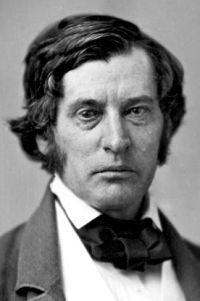
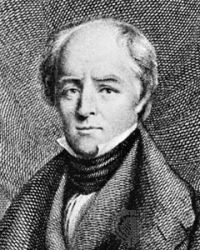
Portrait of Victor Cousin Victor Cousin,  Lectures on the true, the beautiful and the good

“ Remorse contains the idea of good and evil, of an obligatory law, of liberty, of merit and demerit. All these ideas were already in the struggle between{280} good and evil; they reappear in remorse. In vain interest counselled me to appropriate the deposit that had been confided to me; something said to me, and still says to me, that to appropriate it is to do evil, is to commit an injustice; I judged, and judge, thus, not such a day, but always, not under such a circumstance, but under all circumstances. ”
Source: Gutenberg

Beatrice Webb,  English Poor Law Policy

“ This relation to a man's whole capacity for self-management, his "moral," is a distinctive feature, I take it, which separates the treatment required by the destitute or necessitous from anything that can be offered to citizens who are maintaining themselves in a normal course of life." [865]
In this cogent argument for the retention of the Category of the Destitute, and of one Authority, and one Authority only, for all classes of destitute persons, we see two distinct and separate assumptions, one as to fact, and the other as to social expediency.
”
Source: Gutenberg

Get perspective with Kwize: daily news enlightened by great literature