Rhyolite

Definition and stakes

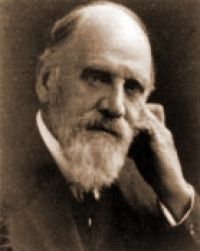
Portrait of William Herbert Hobbs William Herbert Hobbs,  Earth Features and Their Meaning

“ The porphyritic appearance is given the rock by large crystals of a glassy, unstriated feldspar and crystals of quartz. Rhyolite is a very siliceous lava containing rather more silica than granite, to which of the intrusive rocks it is most closely related, and from which it differs in its texture and in the manner of its occurrence in nature. Whereas granite is found in great batholites, laccolites, and bysmalites, and consolidated in most cases beneath the earth’s surface, rhyolite generally occurs in sheets, flows, or dikes, and consolidated either above or in fissures near to the surface. ”
Source: Gutenberg

William O. Crosby,  Common Minerals and Rocks

“ The orthoclase in rhyolite, and generally in volcanic rocks, is the clear, pellucid variety—sanidine. It is more difficult to separate from quartz than ordinary orthoclase, the chief distinguishing feature being its cleavage. Plagioclase and hornblende are common, but not abundant, constituents. The mica, when present, is usually biotite. The texture of rhyolite is often more or less distinctly porphyritic, having a finely crystalline or granular matrix, with interspersed crystals of sanidine and quartz. The rock has usually a rough, harsh feel ”
Source: Gutenberg

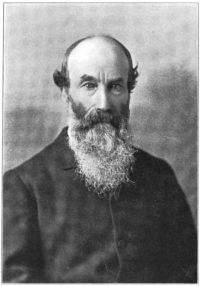
Portrait of Archibald Geikie Archibald Geikie,  The Ancient Volcanoes of Great Britain… (1897)

“ The largest and most interesting of the Antrim rhyolite tracts covers a space of about ten square miles in the heart of the basalt-plateau to the north-east of the town of Antrim. It rises to about 1000 feet above the sea, and forms a few featureless hills, some of which are capped with basalt. The best known localities in this tract are Tardree and Carnearny. The rock is chiefly a somewhat coarse-textured lithoidal rhyolite, but includes also vitreous portions. ”
Source: Gutenberg

Get perspective with Kwize: daily news enlightened by great literature