Scale (balance)

Definition and stakes

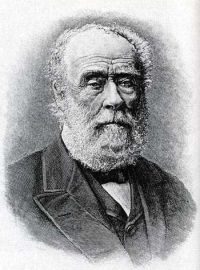
Worthington Hooker,  Science for the School and Family…

“ Scales and Steelyards.—In the common scale-beam we have a lever, the two arms of which are equal, and therefore equal weights suspended at the ends balance. If they be not exactly equal, a heavier weight will be necessary on the shorter arm than on the longer. The inequality will injure the buyer if the prop be too near the scale in which the weights are placed, and the seller if it be too near that which holds the article to be sold. ”
Source: Gutenberg

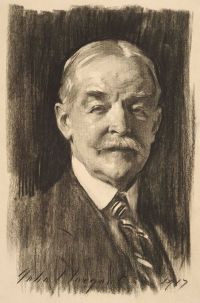
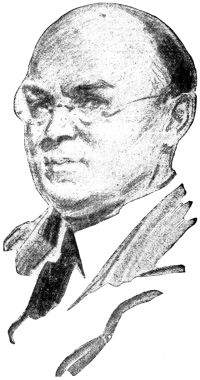
Portrait of Edwin Balmer Edwin Balmer,  The Man Higher Up (1926)

“ Yes; everything on which there is a duty when it is taken off the boats has to be weighed, and to do this there are big scales, and for each one a scale house. When a scale is being used there are two men in the scale house. One of these is the Government weigher, who sets the scale to a balance and notes down the weight in a book. The other man, who is an employee of the company, writes the weight also in a book of his own; and he is called the company’s checker. But though there are half a dozen scales, almost everything, when it is possible, is unloaded in front of Scale No. ”
Source: Gutenberg

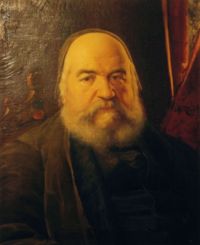
Portrait of William Stanley Jevons William Stanley Jevons,  The principles of science

“ It is upon this principle, as we shall see, that all accurate processes of measurement depend. If for a weight in a scale of a balance we substitute another weight, and the equilibrium remains entirely unchanged, then the weights must be exactly equal. The general test of equality is substitution. Objects are equally bright when on replacing one by the other the eye perceives no difference. Objects are equal in dimensions when tested by the same gauge they fit in the same manner. ”
Source: Gutenberg

Get perspective with Kwize: daily news enlightened by great literature