School voucher

Definition and stakes

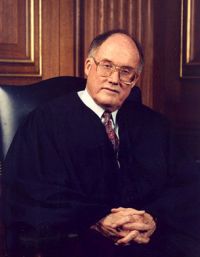
Portrait of Sandra Day O'Connor Sandra Day O'Connor,  Zelman v. Simmons-Harris — Concurring Opinion

“ The best evidence of this is that many parents with vouchers selected nonreligious private schools over religious alternatives and an even larger number of parents send their children to community and magnet schools rather than seeking vouchers at all. Supra, at 2. More over, there is no record evidence that any voucher-eligible student was turned away from a nonreligious private school in the voucher program, let alone a community or magnet school. ”

Source: Wikisource

David Souter,  Zelman v. Simmons-Harris — Dissenting Opinion

“ To be fair, community schools do exhibit some features of private schools: they are autonomously managed without any interference from the school district or State and two have prior histories as private schools. It may be, then, that community schools might arguably count as choices because they are not like other public schools run by the State or municipality, but in substance merely private schools with state funding outside the voucher program. But once any public school is deemed a relevant object of choice, there is no stopping this progression. ”
Source: Wikisource

Portrait of Stephen Breyer Stephen Breyer,  Zelman v. Simmons-Harris — Dissenting Opinion

“ It will not satisfy groups whose religious beliefs preclude them from participating in a government-sponsored program, and who may well feel ignored as government funds primarily support the education of children in the doctrines of the dominant religions. And it does little to ameliorate the entanglement problems or the related problems of social division that Part II, supra, describes. Consequently, the fact that the parent may choose which school can cash the government’s voucher check does not alleviate the Establishment Clause concerns associated with voucher programs. ”
Source: Wikisource

Get perspective with Kwize: daily news enlightened by great literature