Schoolwork

Definition and stakes

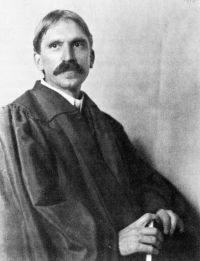
Portrait of John Dewey John Dewey,  The school and society

“ THE SCHOOL AND SOCIAL PROGRESS We are apt to look at the school from an individualistic standpoint, as something between teacher and pupil, or between teacher and parent. That which interests us most is naturally the progress made by the individual child of our acquaintance, his normal physical development, his advance in ability to read, write, and figure, his growth in the knowledge of geography and history, improvement in manners, habits of promptness, order, and industry—it is from such standards as these that we judge the work of the school. ”
Source: Gutenberg

Edmond Holmes,  What Is and What Might Be

“ What, then, are the faculties which education is supposed to train? In my attempt to answer this question I will confine myself to the elementary school,—the only school which I can pretend to know well. A glance at the time-table of an ordinary elementary school might suggest to us that there were two chief groups of faculties to be trained—those which perceive and those which express, those which take in and those which give out. When such subjects as History, Geography, or Science are being taught, the child's perceptive faculties are being trained. ”
Source: Gutenberg

Various,  Lippincott's Magazine of Popular Literature and Science…

“ There it is first sought to develop the child's intellectual faculties, prepare it for school, inculcate habits of cleanliness and morality, and instruct it in the rudiments of reading and writing. Between the ages of six and fourteen children are admitted into the schools, and, nominally at least, go through the plan of study drawn up by the board of primary education, and which is as follows: Reading, writing, geography, spelling, arithmetic, compendium of sacred and French history, linear drawing, singing, the rudiments of physics, geometry and natural history, and calligraphy. ”
Source: Gutenberg

Get perspective with Kwize: daily news enlightened by great literature