“ Let them go to the stable and look at a poor, thin, emaciated animal, lashing his sunken sides with his restless tail, sniffing with terror and contempt at the fodder that is put before him, his eyes always turned toward the door, pawing the empty place beside him, smelling the yoke and chains his companion wore, and calling him incessantly with a pitiful bellow. ”
Stable (animal)
Definition and stakes
The theme of “stable (animal)” has been addressed by authors such as Kenneth Grahame, John Gilmer Speed, Thomas Henry Huxley, Jack London and Charles Darwin. It is often associated with terms like horse, bird, instinct, wild and prey.
Quotes about “stable (animal)”
“ But, as soon as a load has once been bound on the back of one of these furious creatures, the wild spirit dies out of it, the head droops, the gait becomes steady, and the animal behaves as if it had led a domesticated life all its days. ”
J. Giles Powell, The narrative of a voyage to the Swan River… (1831)
“ Thus, even from the little that is known of the habits of those singular animals, we have in the larger ones a means of defence as singular as their form is, compared with that of European animals. Of these, they certainly approximate nearer to the stag than those of any other; though the form of the animal makes the means of putting the instinct in execution quite different. ”
R. Elton Smile, The Manatitlans
“ But that there may be no cavilings, with the hue and cry of barbarous excess in punishment, we have provided accommodations adapted to the specie degradation of the lower orders of animal instinct, of sufficient capacity for associate occupation by human emulators of bestiality in kind; through all the gradations from the omnium gatherum ‘swine,’ blood thirsty ‘tiger,’ down to the reptile conservators of poison. ”
 Georg Wilhelm Friedrich Hegel,
The Philosophy of Fine Art, volume 1…
“ We find, moreover, intermediate strains, such as swimming birds and suckling animals, which live in the water, amphibious species and others which still further mediate between the more obviously generic. These are, however, mere confusions of race, and indicate no higher mediation of considerable range. Throughout we find the animal subject in its self-preservation to the absolute necessities of external nature, cold, drought, or insufficient supply of the means of nourishment. ”
Linnean Society of London, Journal of the Proceedings of the Linnean Society - Vol…
“ A wild animal has to search, and often to labour, for every mouthful of food—to exercise sight, hearing, and smell in seeking it, and in avoiding dangers, in procuring shelter from the inclemency of the seasons, and in providing for the subsistence and safety of its offspring. ”
Various, Popular Science Monthly (1891)
“ They devour, and they gorge themselves, without taking any care to protect their existence against aggressors from without. But a more provident minority construct shelters for themselves—little movable houses which the animal carries with itself, and within which it withdraws in case of danger, like a turtle in its shell. The larva fixes itself to this refuge by means of its membranous legs, and moves without by its articulated legs. ”
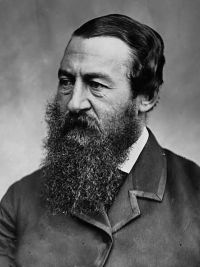 Sir Samuel White Baker,
Wild Beasts and Their Ways, Reminiscences of Europe…
“ Most animals have the same instinct, which induces them to seek the shelter of some spot remote from all disturbance; and should we find their remains, it will be near water, where the thirst of disease has been assuaged at the last moment. ”
J. S. Rarey, A New Illustrated Edition of J. S. Rarey's Art of Taming Horses
“ They see a fiery caprioling animal, sleek as a mole, gentle, but full of fire, come out of a nobleman’s stud, where he was nursed like a child, and only ridden or driven in his turn, with half-a-dozen others. Seduced by his lively appearance, they purchase him, and place him under the care of a gardener-groom, or at livery, work him every day, early and late, and are surprised to find his flesh melt, his coat lose its bloom, and his lively pace exchanged for a dull shamble. ”
Charles Morris, Popular Science Monthly (1881)
“ He has no cortical defense against the attack of his animal foes. His limbs have become adapted to grasping and to support, but have lost their character as offensive weapons. Finally, his adaptation to an arboreal residence has become imperfect. He can not climb like a monkey, run like a deer, swim like an otter, mine like a mole, or crouch like a cat. ”
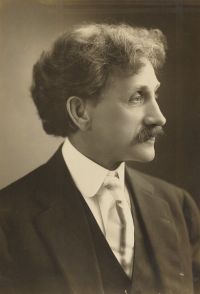 J. Howard Moore,
The Universal Kinship
“ The restlessness of cage-birds and domestic fowls at migrating time, the mimic dipping and sporting of ducks when confined to a terrestrial habitat, the grave marshalling of geese by the chief gander of the band, the ferocity of cows, ewes, and the females of other domestic animals during the first few days of motherhood, the hunting instinct of dogs kept as shepherds and pets, the squatting of young pigs when suddenly alarmed—all of these are vestigial instincts, functional in the wild state, but now useless and absurd. ”
 William J. Long,
How animals talk
(1919)
“ From such experiences I judge that the feeling of unsensed danger, or the more subtle feel of a living thing, is as variable in the animals as are their instincts or their social habits. It may be dull in one creature and keen in another of the same species, or alternately awake and asleep in the same creature; but there is no longer any doubt in my mind that it is a widespread gift among birds and beasts. ”
 C. Lloyd Morgan,
Animal Behaviour
“ It is the rule, the law of nature, and it reaches its fullest development with the higher vertebrates. Those species which live solitary, or in small families only, are relatively few, and their numbers are limited.” [111] “Life in societies enables the feeblest insects, the feeblest birds, and the feeblest mammals to resist, or to protect themselves from, the most terrible birds and beasts of prey; it permits longevity; it enables the species to rear its progeny with the least waste of energy, and to maintain its numbers, albeit with a very slow birth-rate ”
 Francis William Lauderdale Adams,
Essays in Modernity: Criticisms and Dialogues
(1899)
“ They have at least blood in their veins, not mud, and their life is the wild life of animals, with wild animal pleasures and pains; not the slow corroding cark and care and secret viciousness which so often reduce the struggling shopman below the level of even a healthy bestiality. ”
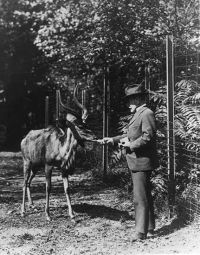 William T. Hornaday,
The Minds and Manners of Wild Animals…
“ By the manager of wild animals in captivity, wild-animal temperament universally is recognized and treated as a factor of great practical importance. Mistakes in judging the temper of dangerous animals easily lead to tragedies and sudden death. ”
 James Fenimore Cooper,
The Headsman; Or, The Abbaye des Vignerons
“ He ran from one to another, rubbed his glossy and solid side against the limbs of all, wagged his tail, and betrayed the usual signs that creatures of his species manifest, when their instinct is most alive. ”
George John Romanes, Animal Intelligence
“ They usually approach each other with averted heads and a great many false passes before either one or the other takes the initiative by gripping; the heads are darted out and back as quick as flash, their hoarse roaring and shrill piping whistle never ceases, while their fat [343] bodies writhe and swell with exertion and rage, fur flying in air and blood streaming down—all combined make a picture fierce and savage enough, and, from its great novelty, exceedingly strange at first sight. ”
E. Daumas, The Horses of the Sahara and the Manners of the Desert
“ The convenient disposition of their saddles enables them to keep their seat in spite of the obstinate "defences" of the animal, they are consequently never taken by surprise, nor frightened, and always end by mastering the animal completely. ”
Various, Chambers's Edinburgh Journal, No…
“ The Feline Animal, we say, is one idea of the Creator—a destructive creature of wonderful strength in comparison with its bulk—of immense agility, furtive in its movements, furnished with great powers for the destruction of others. ”
W. H. Maxwell, The Field Book: or, Sports and pastimes of the United Kingdom
“ It has been said, in a general way, that close unwholesome stables, hard work, and bad provender, sudden changes from cold and wet weather to hot close stables, hard work, and insufficient keep, and, in short, any thing that will weaken the animal considerably, is likely to produce glanders or farcy. ”
Phebe Westcott Humphreys, A Natural History for Young People…
“ We then recognize that there is in them no want of harmony, and that they, like every other creature, possess the means of protecting themselves from the attacks of their enemies. They embrace the branches with their strong arms, and bury in the bark the enormous claws which terminate their four limbs. ”
C. Lloyd Morgan,
Animal Behaviour
“ Learning, from frequent repetition of the fright, that the ground is a dangerous place, it has acquired the habit of building, roosting, and feeding on the high trees; and this habit is now operating for the preservation of this interesting bird, which a few years ago was almost extinct.” [104] Now, in this case, the young birds which followed the lead of those who, under experience, had acquired the habit, would stand a better chance of survival than those who, failing to do so, were caught napping on the ground. ”
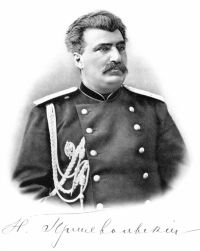 Nikolay Przhevalsky,
From Kulja, across the Tian Shan to Lob-Nor
(1879)
“ It is true that besides the peculiarities we have already enumerated, this animal in its wild state possesses those qualifications developed in the highest degree which should enable it in its struggle for life to have every chance of preserving itself and its young. ”
 W. H. Hudson,
The Naturalist in La Plata
“ We may readily imagine that the instinct displayed by many herbivorous animals of goring sick and wounded companions, is really of use in countries where the presence of weak members in a herd is a source of danger to the herd from the prevalence of wild beasts. ”
 Isabella Beeton,
Mrs. Beeton's Book of Household Management
(1907)
“ Even our pets, such as cage-birds, pigeons, poultry, dogs, cats, rabbits, mice, rats, etc., produce young which break into new colours and new properties. The uniformity of Nature is disturbed and variation is the result, and that in almost every conceivable direction. ”
 Jack London,
White Fang
(1906)
“ They were his environment, these men, and they were moulding the clay of him into a more ferocious thing than had been intended by Nature. Nevertheless, Nature had given him plasticity. Where many another animal would have died or had its spirit broken, he adjusted himself and lived, and at no expense of the spirit. ”
Thomas Roscoe Rede Stebbing, Essays on Darwinism
“ The shelter of the savage is in many cases a less finished contrivance than the nest which the bird prepares for its young. The featherless biped, like the feathered one, takes the materials readiest to its digits. ”
 Boris Sidis,
Nervous Ills, Their Cause and Cure
“ When the source is unfamiliar, the animal becomes prepared for action. The energies are aroused for attack, or for hiding, freezing, or running, according to the mode of defense to which the animal has [28] been adapted in its adjustments to the stimulations of its environment. The lion, the tiger, the skunk, the snake, the bird, the rabbit, the squirrel will act differently, according to their natural disposition in response to external objects and stimuli. ”
 Charles Darwin,
On the tendency of species to form varieties
(1858)
“ The domestic animal, on the other hand, has food provided for it, is sheltered, and often confined, to guard it against the vicissitudes of the seasons, is carefully secured from the attacks of its natural enemies, and seldom even rears its young without human assistance. ”
William T. Hornaday,
The Minds and Manners of Wild Animals…
“ In the minds of wild animals, birds and reptiles, great numbers of individuals massed together make for general security from predatory attacks. The herd with its many eyes and ears feels far greater security, and less harrowing fear, than the solitary individual who must depend upon his own two pair. The herd members relax and enjoy life; but the solitary bear, deer, sheep, goat or elephant does not. His nerves always are strung up to concert pitch, and while he feeds or drinks, or travels, he watches his step. ”
W. H. Hudson,
Birds in Town & Village
“ The instinct which in character comes nearest to that of the parent simulating the action of a wounded and terrified bird struggling to escape in order to safeguard its young, is that one, very strong in all ground-breeding species, of sitting close on the nest in the presence of danger. ”
Charles Darwin,
The Variation of Animals and Plants under Domestication
“ It is obvious that a host of artificial races could never survive in a state of nature;—such as Italian greyhounds,—hairless and almost toothless Turkish dogs,—fantail pigeons, which cannot fly well against a strong wind,—barbs and Polish fowls, with their vision impeded by their eye wattles and great topknots,—hornless bulls and rams, which consequently cannot cope with other males, and thus have a poor chance of leaving offspring,—seedless plants, and many other such cases. ”
Matthew Henry, Matthew Henry's Commentary on the Whole Bible… (1700s)
“ The beasts also retire to their dens and remain in their close places, v. 8. It is meant of the wild beasts, which, being wild, must seek a shelter for themselves, to which by instinct they are directed, while the tame beasts, which are serviceable to man, are housed and protected by his care, as Exod. ix. 20. The ass has no den but his master's crib, and thither he goes, not only to be safe and warm, but to be fed. Nature directs all creatures to shelter themselves from a storm; and shall man alone be unprovided with an ark? ”
 Jean-Henri Fabre,
The Life of the Fly; With Which are Interspersed Some Chapters of Autobiography
“ The carcasses of furred and feathered animals are the favorite victuals, probably because of their richness, which allows of plentiful layings; but, should the occasion demand it, the others are also accepted, without inconvenience. Any carrion that has lived the life of an animal comes within the domain of these scavengers. ”
J. G. Wood, Story of the Bible Animals
“ As soon as it is fairly out, the man seizes it by the end of the tail, and holds it up in the air at arm's length. In this position it is helpless, having no leverage, and merely wriggles about in fruitless struggles to escape. Having allowed it to exhaust its strength by its efforts, the man lowers it into a basket, where it is only too glad to find a refuge, and closes the lid. ”
 Thomas Henry Huxley,
Man's Place in Nature, and Other Essays
“ At first they reject flesh, but easily acquire a fondness for it. The canines are early developed, and evidently designed to act the important part of weapons of defence. When in contact with man almost the first effort of the animal is—to bite.“They avoid the abodes of men, and build their habitations in trees. Their construction is more that of nests than hut, as they have been erroneously termed by some naturalists. They generally build not far above the ground. ”
William James, The Principles of Psychology, Volume 2…
“ The whole story of our dealings with the lower wild animals is the history of our taking advantage of the way in which they judge of everything by its mere label, as it were, so as to ensnare or kill them. Nature, in them, has left matters in this rough way, and made them act always in the manner which would be oftenest right. ”
C. Lloyd Morgan,
Animal Behaviour
“ And it is clear that many wild animals must be not infrequently placed in such circumstances as will subject their muscular structures and the functional activity of their organs of circulation and respiration to a strain nearly up to their extreme limits of endurance. The carnivorous hunter would often fail to secure his prey if his organization were unequal to a hard and prolonged chase; the hunted prey would not survive to procreate his kind if he fell a victim to the first pursuer through inability to stand the exertion necessary to enable him to make good his escape. ”
 Gordon Stables,
In Touch with Nature: Tales and Sketches from the Life
“ I pick up one of those pebbles and throw it—well, just in yonder among the whins; where the stone has alighted a wild old fox has a den, and she has cubs too in spring-time; so I am not the only wild creature that frequents these solitudes. Oh no; for apart from the birds, who all know me, and do pretty much as they please, there are mice and moles in the grass, and high aloft orange-brown squirrels that leap from tree to tree, besides rabbits in dozens that scurry around the hillocks and play at hide-and-seek. ”
W.H.R.Rivers, Instinct and the Unconscious (1920)
“ If, as I have supposed, suggestion forms the essential controlling factor in such creatures as insects, one may suppose that in them such stable equilibrium has been attained. The high degree of adaptation of means to ends in these animals and the perfection of their social organisation would be results and aspects of this equilibrium. ”
J. G. Wood, The uncivilized races of men in all countries of the world… (1875)
“ Taking advantage of every cover, he slips noiselessly forward, always taking care to approach the animal against the wind, so that it shall not be able to detect his presence by the nostrils, and gliding along with studied avoidance of withered leaves, dry twigs, and the other natural objects which, by their rustling and snapping, warn the animal that danger is at hand. ”
Related terms
Authors who wrote about “stable (animal)”
 Kenneth Grahame
 John Gilmer SpeedThomas Henry HuxleyJack LondonCharles Darwin
 George OrwellVariousJ. G. WoodLinnean Society of London
 George SandFrancis William Lauderdale AdamsCharles MorrisWilliam T. HornadayE. DaumasNikolay PrzhevalskyJ. S. RareyGeorg Wilhelm Friedrich HegelJ. Giles PowellR. Elton SmileJean-Henri Fabre
