“ And the Holbein century is one of stupendous Transitions because the time was ripe; and not simply because printing was invented, or Greek scholars were driven from Constantinople to scatter abroad in Europe, or Ferdinand and Isabella wanted a direct route to Cathay, or Friar Martin nailed ninety-five Theses to the door of Wittenberg's church, and built himself thereby an everlasting name as Luther. ”
Theses
Definition and stakes
The theme of “theses” has been addressed by authors such as Carl E. Koppenhaver, Beatrice Fortescue, Andrew Martin Fairbairn and By A. W. Ward, G. W. Prothero and Stanley Leathes. It is often associated with terms like history, philosophy, essence, character and idea.
Quotes about “theses”
Carl E. Koppenhaver, Martin Luther
“ Wide distribution of the Ninety-five Theses and other writings, as well as prominence resulting from the Leipzig encounter, had fixed the eyes of many Germans upon Luther. When Charles failed to step into the role of national figure they switched their enthusiasm to Luther. Few understood his ideas on Christianity but they believed he could lead them to political, intellectual, and economic freedom. Scholars, princes, knights, and commoners gathered about the Wittenberg professor who had demonstrated his fearlessness in the face of tyranny. ”
Carl E. Koppenhaver, Martin Luther
“ Luther maintained, in his theses, that repentance should be a lifelong experience and should manifest itself in a continuing effort to overcome sinful desires. Indulgences, he said, are simply remissions of penalties which the church has imposed. They have no effect on the souls of the departed and they don’t remit sin; only God can do that.Luther believed he was being a loyal defender of the Roman Church by attempting to correct these abuses, and correspondence 17 revealed that he thought the pope was unaware of what was going on. ”
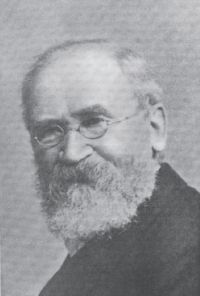 Andrew Martin Fairbairn,
The Cambridge Modern History, Volume 2…
(1904)
Andrew Martin Fairbairn,
The Cambridge Modern History, Volume 2…
(1904)
“ No man ever clung with more tender intensity to the customs and beliefs that could be saved from the wreckage of the past. But he did his work as a Reformer the more thoroughly because he did it from nature rather than from choice. It is doubtful if in the whole of history any man ever showed more of the insight that changes audacity into courage. By the publication of his Theses he proclaimed a doctrine of grace that broke up the system which Europe had for centuries believed and obeyed. ”
By A. W. Ward, G. W. Prothero and Stanley Leathes, The Cambridge Modern History, Volume 2… (1904)
“ In international politics the battle of Marignano made an appropriate close to our first volume; the Treaty of Cateau-Cambrésis forms a still more conspicuous landmark for the conclusion of our second. The religious history of the Reformation period opens with the abortive Fifth Lateran Council, and Luther’s Theses follow close. Some sort of religious settlement was reached in Germany by the Treaty of Augsburg, in England by the great measures of Elizabeth, for the Roman Church by the close of the Council of Trent ”
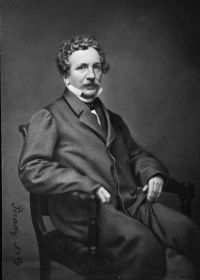 G. P. R. James,
Morley Ernstein; or, the Tenants of the Heart
G. P. R. James,
Morley Ernstein; or, the Tenants of the Heart
“ He stood and gazed, then, with his arms folded on his chest, while the people walking to and fro passed and repassed him, and many a one commented as they went, and assigned him a history and a character from their own imagination. How seldom is it, in the busy world with which we mingle, that any of the conjectures regarding our thoughts, our feelings, our state of existence, are correct! ”
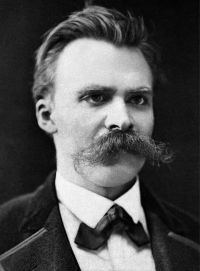 Friedrich Wilhelm Nietzsche,
The Joyful Wisdom ("La Gaya Scienza"…
Friedrich Wilhelm Nietzsche,
The Joyful Wisdom ("La Gaya Scienza"…
“ The reputation, the name and appearance, the importance, the usual measure and weight of things—each being in origin most frequently an error and arbitrariness thrown over the things like a garment, and quite alien to their essence and even to their exterior—have gradually, by the belief therein and its continuous growth from generation to generation, grown as it were on-and-into things and become their very body; the appearance at the very beginning becomes almost always the essence in the end, and operates as the essence! ”
Henry Gally, A Critical Essay on Characteristic-Writings
“ Rusticity, Avarice and Impudence, are in their own Nature distinct Vices, but yet there is a very near Relation between them, which has a real Foundation in the Actions of Men. And, as on the one Hand, Theophrastus 36 has drawn distinct Characters of these Vices, so, on the other Hand, he has made the peculiar Features of one or more of these Vices enter into the Characters of the other. ”
James Ward, The Realm of Ends or Pluralism and Theism (1911)
“ On the contrary, the higher, over-individual ends, as they are sometimes called, — politics, industry, science, literature, art — imply a differentiation among men that in spite of its significance would defy classification. ”
 Sabine Baring-Gould,
Court Royal
(1887)
Sabine Baring-Gould,
Court Royal
(1887)
“ Such, then, is the history of the genesis of this story, and the reader is requested to bear its purpose in mind as he skims it. Two types in two groups are opposed to each other; each group represents a set of ideas, social and moral, the one coming on, conquering, overwhelming, the other disappearing and likely soon to be looked back upon as having become extinct in the moral world like asceticism and mysticism. ”
 John Stuart Mill,
A System of Logic, Ratiocinative and Inductive
(1881)
John Stuart Mill,
A System of Logic, Ratiocinative and Inductive
(1881)
“ As applied to individuals, the word Essence, we found, has no meaning, except in connection with the exploded tenets of the Realists; and what the schoolmen chose to call the essence of an individual, was simply the essence of the class to which that individual was most familiarly referred. ”
Harry F. Marks, Harry F. Marks Catalogue No. 4…
“ Forming a History of the Private Life, Intrigues, and Amours of many Characters in the most elevated Sphere; every Scene and Transaction, however ridiculous, whimsical, or extraordinary, being fairly represented, as becomes a faithful Historian, who is fully determined not to sacrifice Truth at the shrine of Guilt and Folly. ”
G. W. F. Hegel, The Phenomenology of Mind — Introduction
“ This dialectic process which consciousness executes on itself—on its knowledge as well as on its object—in the sense that out of it the new and true object arises, is precisely what is termed Experience. ”
William Armes, A Defence of the Inquiry into Mesmerism & Phrenology
“ They have, in pursuance of their Theory, mapped out the human scull into compartments, to each of which they have assigned a particular faculty or sentiment, and they profess to tell, with some degree of accuracy, the individual character by the peculiar formation of the head. ”
 Arthur Morrison,
The Red Triangle
(1903)
Arthur Morrison,
The Red Triangle
(1903)
“ The tales deal chiefly with those elemental problems of the mysteries of life,—pain, the unknown, the strange kinship of man and beast in the struggle for existence,—the enigmas which occur chiefly to the primitive folk on the backwoods fringe of civilization, and they arrest attention for their sincerity, their freshness of first-hand knowledge, and their superior craft. ”
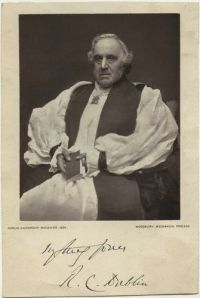 Richard Chenevix Trench,
Proverbs and Their Lessons
Richard Chenevix Trench,
Proverbs and Their Lessons
“ Those who have occupied themselves herein have sought to trace historically the circumstances out of which various proverbs have sprung, and to which they owe their existence; that so by the analogy of these we might realize to ourselves the rise of others whose origins lie out of our vision, obscure and unknown. ”
 John La Farge,
An Artist's Letters from Japan
John La Farge,
An Artist's Letters from Japan
“ In these pantheistic sympathies I dimly recall that another sect finds three great mysteries in its esoteric view of the world. The wind whistling through the trees, the river breaking over its rocks, the movements of man and his voice,—or, indeed, his silence,—are the expression of the great mysteries of body, of word, and of thought. ”
 Friedrich Nietzsche,
The Antichrist
(1895)
Friedrich Nietzsche,
The Antichrist
(1895)
“ The problem lies exactly here.—At a certain point in the evolution of a people, the class within it of the greatest insight, which is to say, the greatest hindsight and foresight, declares that the series of experiences determining how all shall live—or can live—has come to an end. ”
Richard Chenevix Trench,
The Story of Justin Martyr, and Other Poems
“ When they who go before Go furnished—or because their span was brief, When in the acquist of what is life’s true gage, Truth, knowledge, and that other worthiest lore, They had fulfilled already a long age. ”
Ernst Eckstein, The Chaldean Magician
“ Have you, in contradiction to your whole past, thrown yourself into the study of philosophy? Have you come in contact with some saint of the sect of the Nazarenes and thus acquired a taste for the beautiful legends of the East? ”
 William Bodham Donne,
Euripides
(1872)
William Bodham Donne,
Euripides
(1872)
“ Of the form and spirit of their generation, they are the representatives to later ages—throwing light on its history, on the state of its language and cultivation, and in return receiving light from those sources. ”
Richard Chenevix Trench,
On the Study of Words
“ Language may be, and indeed is, this 'fossil poetry'; but it may be affirmed of it with exactly the same truth that it is fossil ethics, or fossil history. Words quite as often and as effectually embody facts of history, or convictions of the moral sense, as of the imagination or passion of men; even as, so far as that moral sense may be perverted, they will bear witness and keep a record of that perversion. On all these points I shall enter at full in after lectures ”
 Henry Rowe Schoolcraft,
Incentives to the Study of the Ancient Period of American History
Henry Rowe Schoolcraft,
Incentives to the Study of the Ancient Period of American History
“ These traits are so intimately interwoven in the woof of the mind, and so firmly interlaced in the structure and tendencies to action of the whole organization of the man, that they can be detected and generalized after long eras of separation, and the most severe mutations of history. ”
 William Wordsworth,
Poems
(1815)
William Wordsworth,
Poems
(1815)
“ To a babbling wanderer sent; Like her ordinary cry, Like—but oh how different! Hears not also mortal Life? Hear not we, unthinking Creatures! Slaves of Folly, Love, or Strife, Voices of two different Natures? ”
 Rudolf Hermann Lotze,
Outlines of Metaphysic — Third Principal DivisionPhenomenology
(1883)
Rudolf Hermann Lotze,
Outlines of Metaphysic — Third Principal DivisionPhenomenology
(1883)
“ Herein lies the truth, that the essence and Being of Things cannot be opposed to the essence and Being of Spirit, as though the former were a second principal division of the world and a perfect stranger to the latter. ”
Hutcheson Macaulay Posnett, Comparative Literature (1886)
“ Is there one universal type of human character embracing and reconciling all the conflicting differences of human types in the living world and in its historic or prehistoric past? Can really scientific reasons be advanced in support of the sentimental belief in that colossal personage called "man," whose abstract unity is allowed to put on new phases of external form, but whose "essence" is declared to remain unaltered? ”
 C. Lloyd Morgan,
Spencer's Philosophy of Science
C. Lloyd Morgan,
Spencer's Philosophy of Science
“ And then we are told that the aggregate of the faint is what we call the mind, the subject, the ego; the aggregate of the vivid is what we call the external world, the object, the non-ego. [69] It would seem, then, that the aggregate of vivid subjective affections is the objective world so far as knowable. ”
 James Owen Dorsey,
A Study of Siouan Cults
James Owen Dorsey,
A Study of Siouan Cults
“ Some of these persons pretend to a recollection of former states of existence, even naming the particular body in which they formerly lived. Others assert their power over nature, and their faculty of seeing into futurity, and of conversing with the deities. ”
William James, A Pluralistic Universe
“ All real units of experience overlap. Let a row of equidistant dots on a sheet of paper symbolize the concepts by which we intellectualize the world. Let a ruler long enough to cover at least three dots stand for our sensible experience. Then the conceived changes of the sensible experience can be symbolized by sliding the ruler along the line of dots. ”
 William Ernest Henley,
Views and Reviews: Essays in appreciation…
William Ernest Henley,
Views and Reviews: Essays in appreciation…
“ Human and interesting in themselves, the ideas apparelled in his verse are completely apprehended; natural in themselves, the experiences he pictures are intimately felt and thoroughly perceived. They have been resolved into their elements by the operation of an almost Sophoclean faculty of selection, and the effect of their presentation is akin to that of a gallery of Greek marbles. ”
Sara Weiss, Journeys to the Planet Mars; or…
“ De L'Ester—Recall a lecture you heard in the Galarēsa̤, in which it was stated that not only is art long, but that form in its manifold expressions is universal. It is the manifestation of a natural law, and in accordance with the degree of their evolvement, everywhere, not only humans, but all orders of life express it in finer or cruder fashion. ”
 Aristotle,
Aristotle's Psychology (On the Soul…
Aristotle,
Aristotle's Psychology (On the Soul…
“ The first point however which demands our attention is to determine in which of the higher classes soul is included and what is its generic character — whether, in other words, it is an individual thing and real substance or a quality or quantity or any other of the categories as they have been distinguished. ”
 Georg Wilhelm Friedrich Hegel,
The Philosophy of Fine Art, volume 2…
Georg Wilhelm Friedrich Hegel,
The Philosophy of Fine Art, volume 2…
“ From a review of particular demands, actions, circumstances, modes of appearance, and traits of demeanour, we are led to infer from these poems that this content is in great measure borrowed from actual events, that is from the exploits of ancient kings who exercised a powerful influence in creating new conditions of law and order; we find ourselves surrounded by a thoroughly human atmosphere and on the firm ground of reality. ”
John Webster, The displaying of supposed witchcraft (1676)
“ And so characters whether ingraven in metals, gemms, stones, clay, plaister or wood, or written upon parchment, paper, or the like, of what figure or form soever they be, are but qualities, and do qualifie the matter according to the form and figure impressed in the subject matter, which being artificially done, the matter is the patient, the figure or character is the exemplar cause, and the force that maketh the impression is the efficient cause, and that these as qualities have some efficacy, no rational man can deny. ”
Charles J. Herr, See America First
“ Here are doubtless wondrous scenes, but our standpoint is removed by time so vast that only the rude outlines can be determined. The delicate tracery, the body of the picture, are hidden from our eye. The question as to the antiquity and primitive history of man is full of interest in proportion as the solution is set with difficulties. ”
 Jeremy Bentham,
Not Paul, But Jesus
Jeremy Bentham,
Not Paul, But Jesus
“ By the tokens of carelessness afforded by the omission of so many particulars, which in every work of an historical nature the reader will naturally expect to see specified; such as the name of the historian, the particulars, occasion and manner of his being taken into the company of the illustrious missionary, and the time of that event;—by these tokens, two inferences, how different soever their tendency, seem at once to be suggested. One is, the genuineness of the narrative. ”
Friedrich Wilhelm Nietzsche,
The Dawn of Day
“ Almost all the eminent men of antiquity have given themselves up to this dreadful mode of reasoning: a secret doctrine of artifices and dietetic jugglery grew up around this subject and was handed down from generation to generation, together with the feeling of the innocence, even sanctity, of such plans and meditations. ”
 Joseph Deniker,
The Races of Man: An Outline of Anthropology and Ethnography
Joseph Deniker,
The Races of Man: An Outline of Anthropology and Ethnography
“ On the other hand, distinguished personages, great scholars, orators, men of action, exhibit a complexity, sometimes truly remarkable, of certain convolutions. I say expressly certain convolutions, for all these folds, arranged according to a certain plan, common to all men, have not the same value from the physiological point of view. ”
 George Grote,
History of Greece, Volume 01 (of 12…
George Grote,
History of Greece, Volume 01 (of 12…
“ Other sentiments also, as well as the religious, provided they be fervent and widely diffused, will find expression in current narrative, and become portions of the general public belief—every celebrated and notorious character is the source of a thousand fictions exemplifying his peculiarities. ”
Georg Wilhelm Friedrich Hegel,
Science of Logic
(1816)
“ Pragmatic reflections, however abstract they be, are thus in reality the present, and vivify the tales of the past with the life of to-day.—Here too a word should specially be given to the moralising and the moral instructions to be gained through history,—for which it was often studied.... Rulers, statesmen, nations, are especially bidden learn from the experience of history. ”
Friedrich Nietzsche,
Beyond Good and Evil
(1886)
“ Whichever groups of sensations within a soul awaken most readily, begin to speak, and give the word of command—these decide as to the general order of rank of its values, and determine ultimately its list of desirable things. ”
Augustus J. Thébaud, The Irish Race in the Past and the Present
“ But what we must chiefly insist upon in the investigation we are Now undertaking is, that the life of each is manifested by a special physiognomy deeply imprinted in their whole history, which we here call character. ”
Charles Owen, An essay towards a natural history of serpents (1742)
“ If we consider the strange Things done by Force of Words, so much extoll’d in Antiquity, it will be no wonder to see Letters, out of which Words are form’d, made the Rudiment and first Study of human Life: But as to the Mode of Operation by Words, the Learned are not agreed. ”
Henry Rowe Schoolcraft,
Summary Narrative of an Exploratory Expedition to the Sources of the Mississippi River…
“ And not only so, but, by the figurative use of these forms, to exalt inanimate masses into the class of living beings, or to strip the latter of its properties of life—a principle of much importance to their public speakers. ”
