Tip (money)

Definition and stakes

Chester Arthur Phillips,  Readings in Money and Banking

“ The Sources of Currency Supply.—It is, then, clear that the larger part of the circulating medium of society is not money; that not all of the money that there is is bullion money; and that not even all of the bullion money need be ultimate money—redemption money of the highest rank. The sources of currency in society are various—some of it bullion, with a cost of production limit upon its supply, some of it government paper, substantially free of cost, some of it banking credit with certain peculiar and appropriate costs attending its issue. ”

Source: Gutenberg

Lawrence Dundas,  A wandering student in the Far East… (1908)

“ The village money-changer keeps a pair of scales, or rather two pairs of scales, one for buying and one for selling, and having weighed the lump of silver in exchange for which cash are desired, hands over the equivalent number of hundreds, less a few cash by way of commission, to his victim. Pleasing complications are introduced into the pastime of money-changing by the fact that a nominal 100 cash does not as a matter of actual fact consist of 100, but varies from 98 to 33 according to the part of the empire in which you happen to be. ”
Source: Wikisource

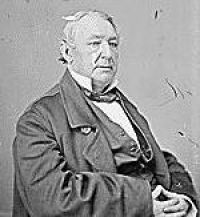
Portrait of Charles Sumner Charles Sumner,  Charles Sumner: his complete works…

“ By the latter the currency is enlarged at the expense of the people,—being at once a tax and a derangement of values. You pamper the morbid appetite for paper money, and play the discarded part of John Law. You blow up a bladder, without thinking that it is nothing but a bladder, ready to burst. As the volume of currency is increased, the purchasing power of each dollar is reduced in proportion. As you add to the currency, you take from the dollar. You do little more than mark your goods at [Pg 293] higher prices, and imagine that they have increased in value. ”
Source: Gutenberg

Get perspective with Kwize: daily news enlightened by great literature