“ That umiak has been hauled out of the ice!”“Hau! There must be a strong man among us!”“Who can it be that is so strong?”“Here is the mighty one, without a doubt,” said Umerdlugtoq, pointing to little Kâgssagssuk. ”
Umiak
Definition and stakes
The theme of “umiak” has been addressed by authors such as Lucien M. Turner, Benjamin Brewster, Knud Rasmussen, John Murdoch and Winthrop Packard. It is often associated with terms like fever, wine, cough, kayak and disease.
Quotes about “umiak”
Lucien M. Turner, Ethnology of the Ungava District…
“ A fair wind only can be used to advantage as the oomiak, from its flat bottom, is unable to go to windward. With a breeze nearly aft they can be made to sail at a good speed.The covering of the umiak is made of skins of the largest seals. The skins are freed from hair and all adhering flesh and fat, and stretched to their utmost tension.They are then cut into the proper shape and sewed together. The edge of one skin overlaps that of the other and the lap is then tacked over the shorter edge and attached to the other skin so as to form two seams at each junction. ”
Benjamin Brewster, The First Book of Eskimos
“ Eagerly the men and boys waited along the edges of the leads. Who would see the first walrus? The day Hilltop went with the men in an umiak to hunt whales in a lead was even more exciting. The men paddled a long time before they saw a whale blowing its waterspout in the distance. Then they quickly pulled the umiak out onto the ice and waited.Suddenly the whale came up to blow again, not far away. The men all fired their guns at once, aiming at its heart, which was deep in its body and as big as a barrel.a Copper Eskimo bowIt took everybody in the village to pull the whale out onto the ice. ”
Benjamin Brewster, The First Book of Eskimos
“ In summer, whales and walruses swam back from warmer water into the Arctic Ocean. To catch them, an Eskimo hunter used a big harpoon. Sometimes he could harpoon a whale from land or from big cakes of ice near land. Often several men went hunting together in an umiak, which had oars and a sail made of seal intestines sewed together. The boat was so light that two men could lift it, but so strong that it could hold two or three tons of whale meat.Papik hunted these big animals with bow and arrows. [Pg 24] The umiak towed the whale to shore. ”
John Murdoch, Ethnological results of the Point Barrow expedition
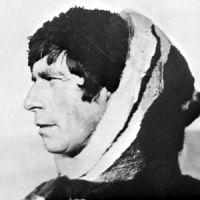
“ At all events it is certain that the people depend mainly on the umiak, not only for traveling, but for hunting and fishing as well, which places them in strong contrast with the Greenlanders, who are essentially a race of kaiakers and have consequently developed the boat and its appendages to a high state of perfection. ”
 Knud Rasmussen,
Eskimo Folk-Tales
(1921)
Knud Rasmussen,
Eskimo Folk-Tales
(1921)
“ Then seeing there was no other thing to be done, he covered up the body at the foot of the cliff below the guillemot’s nest, and went home. And told the others of his place that he had covered him there below the guillemot’s nest because he was dead. And the umiak and its crew of women stayed there, and wintered in that place. ”
Winthrop Packard, The Young Ice Whalers (1903)
“ The germs of it had been planted in their systems by the purchase of the singular nugget from the old Kowak River chief; now the sight of some mica in a stream had stirred the dormant microbes into action.They tore back to camp and brought the umiak paddle to use as a rude shovel. They had nothing better. Harry also brought their one pan. Hunger was not to be thought of, home and civilization could wait; they had the gold fever. There is surely something in the Alaskan air that makes men peculiarly susceptible to this disease. ”
Lucien M. Turner, Ethnology of the Ungava District…
“ If he has the energy to become a successful hunter he will soon be able to make a kaiak, and thus procure the marine mammals whose skins will afford a covering for an umiak and in the course of time additional skins for a tent. ”
Lucien M. Turner, Ethnology of the Ungava District…
“ This hunting lasts until the deer have begun to rut and the males have lost the fat from the small of the back. The season is now so far advanced that the ice is already forming along the shore, and unless the hunter intends to remain in that locality he would better begin to descend the river to a place nearer the sea. The river may freeze in a single night and the umiak be unable to withstand the constant strain of the sharp-edged cakes of floating ice. ”
John Murdoch, Ethnological results of the Point Barrow expedition
“ All these men are or have been captains of whaling umiaks, and the title umialiks appears to be applied to them in this capacity, since many of the poorer men, who, as far as we could learn, were not considered umialiks, own umiaks which they do not fit out for whaling, but use only to transport their families from place to place in the summer. ”
“ And the strong man of Amerdloq did not catch a whale at all until after Qujâvârssuk had caught another one.For a whole year Qujâvârssuk stayed at Amerdloq, and when it was spring, he went back southward to his home. He came to his own land, and there at a later time he died.And that is all. [38] 1 According to custom. It is believed that the qualities of the dead are thus transferred to the living namesake.2 Umiak: a large boat, as distinct from the small kayak. ”
Frederick Albert Cook, My Attainment of the Pole
“ Dried musk ox meat and strips of musk fat made a steady diet. Moulded tallow served as fuel in a crescent-shaped disk of tin, in which carefully prepared moss was crushed and arranged as a wick. Over this primitive fire we managed to melt enough ice to quench thirst, and also to make an occasional pot of broth as a luxury. While the drink was liquefying, the chill of the snow igloo was also moderated, and we crept into the bags of musk ox skins, where agreeable repose and home dreams made us forget the cry of the stomach and the torment of the cold. ”
 William Buchan,
Domestic medicine
(1791)
William Buchan,
Domestic medicine
(1791)
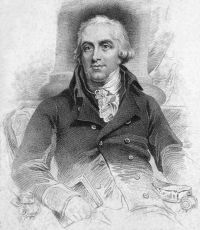
“ Thus fifteen grains of musk, with three grains of camphire, and six grains of salt of hartshorn, may be made into a bolus with a little syrup, and given as above.If the fever should happen to intermit, which it frequently does towards the decline, or if the patient’s strength should be wasted with colliquative sweats, &c. it will be necessary to give him the Peruvian bark. Half a drachm, or a whole drachm, if the stomach will bear it, of the bark in fine powder, may be given four or five times a-day in a glass of red port or claret. ”
Various, Chambers's Journal of Popular Literature…
“ Get up that combination—a hot day, a dank, humid, and suffocating greenhouse given up to the musk-plant, and you will have the full effect of only one full-blown musky. The odour of the plant, heavy when close, is delicate when diffused; the scent of the musk-rat, on the other hand, is heavy when diffused, and insupportable when near. The marvellous diffusibility of this odour is illustrated in many ways. It has long been maintained that the musk-rat has only to pass over a closely corked bottle of wine to destroy its contents. ”
 Charles Godfrey Leland,
Gypsy Sorcery and Fortune Telling…
(1891)
Charles Godfrey Leland,
Gypsy Sorcery and Fortune Telling…
(1891)
“ WLISLOCKI translates this last line, "When there is no more water in the river," which is certainly what is meant. "While water runs or grass grows," &c. is a formula common to ail countries. Another cure for fever is this: the patient must take a kreutzer, an egg, and a handful of salt, and before sunrise go with them to a cross-road, throw them away backwards, and repeat:--"Káná ádálá kiyá mánge áven Âvâ tu kiyâ mánge shilályi." ”
 John Gregory Bourke,
Popular medicine, customs and superstitions of the Rio Grande
(1894)
John Gregory Bourke,
Popular medicine, customs and superstitions of the Rio Grande
(1894)
“ To cure Asthma ("Orguilla") .—Take a talcoyote (badger) , bake it in the oven until perfectly dry, grind it up, mix on a "metate" with clean flour, add a stew made of the Rio Grande jackdaw, locally known as the orraca, add a trifle of sugar, and put a little of the above mixture in the patient's food. Give in the moon's first quarter. When the moon ends, the disease will end. All diseases which have had their beginning with a new moon can be made to go out with a waning moon. (Maria Antonia.) Asthma.—Make a drink of hot water and the ripe (black) beans of the ebony roasted. ”
Cornélis De Witt Willcox, The Head Hunters of Northern Luzon
“ I come down Mánaháut; I drink the rice-wine; I will deceive your enemies, but I will not deceive you,’ The old man, possessed, jumps up and, with characteristic Ifugao dance step, dances about the rice-wine jar and about the pig. Quickly follows him a feaster who has called Umalgo, the Spirit of the Sun, and was possessed by him. Mánaháut dances ahead of Umalgo to show him the pig. Umalgo seizes a spear, dances about the pig two or three [99] times, when he steps over to it and with a thrust, seemingly without effort, pierces its heart. ”
 Lucy Hamilton Hooper,
The Tsar's Window
(1881)
Lucy Hamilton Hooper,
The Tsar's Window
(1881)
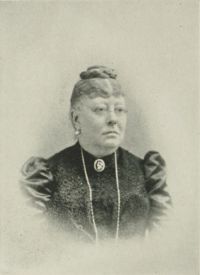
“ But the moujik makes up for his indulgence by the severity of his fast. He eats no meat, eggs, milk, or butter; and as good fish is expensive, he takes it salt, dried, or stale. If he falls ill, no power on earth can induce him to break his fast. He would rather die than to commit the sin of taking a mouthful of beef or wine. As there are four Lents a year in the Greek Church, I for one do not begrudge the Russian peasant his little indulgences between. ”
 Susanna Moodie,
Roughing It in the Bush
Susanna Moodie,
Roughing It in the Bush
“ November passed on, and as all our firewood had to be chopped by old Jenny during the lameness of my husband, I was truly grateful to God for the continued mildness of the weather. On the 4th of December—that great day of the outbreak—Moodie was determined to take advantage of the open state of the lake to carry a large grist up to Y——'s mill. I urged upon him the danger of a man attempting to manage a canoe in rapid water, who was unable to stand without crutches; but Moodie saw that the children would need bread, and he was anxious to make the experiment. ”
 Pehr Kalm,
Travels into North America, Volume 1…
(1770)
Pehr Kalm,
Travels into North America, Volume 1…
(1770)
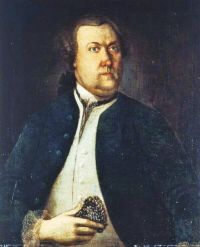
“ This autumn the ague was more violent here, than it commonly used to be. People who are afflicted with it, look as pale as death, and are greatly weakened, but in general are not prevented from doing their work in the intervals. It is remarkable, that every year there are great parts of the country where this fever rages, and others where scarce a single person has been taken ill. ”
Susanna Moodie,
Roughing it in the Bush — Chapter XX: Disappointed Hopes
“ The death of these animals deprived us of three barrels of pork, and half-starved us through the winter. That winter of '36, how heavily it wore away! The grown flour, frosted potatoes, and scant quantity of animal food rendered us all weak, and the children suffered much from the ague.One day, just before the snow fell, Moodie had gone to Peterborough for letters; our servant was sick in bed with the ague, and I was nursing my little boy, Dunbar, who was shaking with the cold fit of his miserable fever, when Jacob put his honest, round, rosy face in at the door. ”
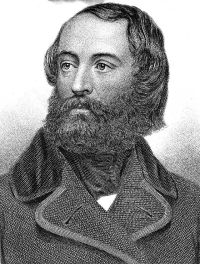 Elisha Kent Kane,
The Far North: Exploration in the Arctic Regions
Elisha Kent Kane,
The Far North: Exploration in the Arctic Regions
“ Each one has a knife, or a file, or a saw, or some such treasured keepsake; and the children have a lump of soap, the greatest of all great medicines. The merry little urchins break in upon me even now as I am writing—‘Kuyanake, kuyanake, Nalegak-soak!’ ‘Thank you, thank you, big chief!’ while Myouk is crowding fresh presents of raw birds on me as if I could eat for ever, and poor Aningnah is crying beside the tent-curtain, wiping her eyes on a bird skin! ”
George Frederick Laidlaw, The Treatment of Hay Fever by rosin-weed…
“ Uricacidæmia and Gout. Now, why do I speak with respect of de Mussy's theory of gout as a cause of hay fever and so disrespectfully of the uric acid doctrine? Are not gout and uric acid poisoning the same thing? No. They are not; though the two ideas are usually confused by medical men since Garrod's time and his demonstration of the increase and decrease of uric acid in the blood of gouty patients. Gout [Pg 73] is something more than a simple accumulation of uric acid in the blood because of its imperfect elimination by the kidneys. What that something is, we do not know ”
James Frazer, The Golden Bough — Chapter 55:… (1922)
“ A Northamptonshire, Devonshire, and Welsh cure for a cough is to put a hair of the patient's head between two slices of buttered bread and give the sandwich to a dog. The animal will thereupon catch the cough and the patient will lose it. Sometimes an ailment is transferred to an animal by sharing food with it. Thus in Oldenburg, if you are sick of a fever you set a bowl of sweet milk before a dog and say, "Good luck, you hound! ”
| editor, Southern Life in Southern Literature (1917)
“ October tinges the leaves of the forest; the morning dews are heavy, the days hot and the nights chill; and the unacclimatized family in a few days are attacked with ague. The lingering disease almost prostrates their whole faculties. ”
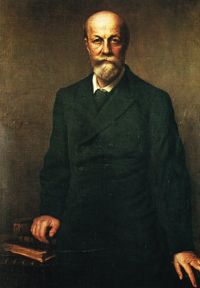 Mór Jókai,
The Slaves of the Padishah
Mór Jókai,
The Slaves of the Padishah
“ Towards evening every bird became silent, the flowers closed their calices, the leaves of the trees hung limply down. The people walking about outside began to complain of a stifling cough, and from that time forth the germs of every disease antagonistic to nature were seen in every herb, in every fruit ”
William Thomas Fernie, Herbal Simples Approved for Modern Uses of Cure
“ Provers who have pushed on themselves the administration of the Sundew in toxical quantities, developed hoarseness, with expectoration of yellow mucus from the throat and upper lungs, as well as a hacking cough, and loss of flesh, this combination of symptoms closely resembling the form of tubercular consumption which begins in the throat, and extends mischievously to the lungs. ”
James Greenwood, Stirring scenes in savage lands (1865)
“ They delight in war and bloodshed, and always come down to be present at the Dayak “head-feast.” They are described as of a fierce and wild appearance, and covered with hair like an ourang-outang. The Umot spirits are divided into classes. There is the “Umot Sisi,” a harmless [240] kind of spirit which follows the Dayak to look for the fragments of food which have fallen through the open flooring of their houses, and who is heard at night munching away below; “Umot Perubak,” who causes scarcity among the Dayaks by coming invisibly and eating the rice from the pot at meal time ”
Pehr Kalm,
Travels into North America, Volume 1…
(1770)
“ No disease is more common here, than that which the English call fever and ague, which is sometimes quotidian, tertian or quartan. But it often happens, that a person who has had a tertian ague, after losing it for a week or two, gets a quotidian ague in its stead, which after a while again changes into a tertian. The fever commonly attacks the people at the end of August, or beginning of September, and commonly continues during autumn and winter till towards spring, when it ceases entirely. ”
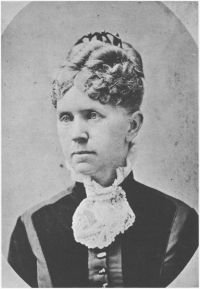 Frances Fuller Victor,
History of Oregon
(1886)
Frances Fuller Victor,
History of Oregon
(1886)
“ In the midst of the harvest the effect of noxious exhalations from the freshly ploughed earth, which had for a long time been poisoning their blood while unsubstantial diet thinned it, became distressingly manifest in fierce attacks of intermittent fever, each member of the Mission family being in turn prostrated. ”
 Howard Roger Garis,
Umboo, the Elephant
Howard Roger Garis,
Umboo, the Elephant
“ And we monkeys can't stand too much water. This felt fine!"The monkeys in the cage were quite damp, and some began combing out their long hair with their queer little fingers, that look almost like yours, except that their thumb isn't quite the same."If Umboo can't squirt any more water on us, maybe he can do something else to help us forget that it is so hot," said Gink, a funny little monkey, who had a very long tail."What can he do, except squirt water on us?" asked Chako. "And I wish he'd do that again. It's the only thing to make us cooler." ”
Howard Roger Garis,
Umboo, the Elephant
“ Can you do that? Smelling out earth-roots is nothing!""I think it is something," spoke Umboo. "And, when I get a little bigger my mother is going to show me how to pull over, or knock down, a whole tree. But now I am hungry for roots."So Umboo kept on sniffing at the ground with his trunk. He was feeling quite hungry. Suddenly Keedah cried:"Ha! I have found some sweet roots! I am going to dig them up!""And I have found some, too!" exclaimed Umboo, as through his long nose of a trunk he sniffed the good smell. ”
John G. Neihardt, The Lonesome Trail
“ It happened at the Omaha Agency, which is situated on the Missouri River some seventy miles above Omaha.The summer of 1900 debilitated all thermal adjectives. It was not hot; it was Saharical! It would hardly have been hyperbole to have said that the Old Century lay dying of a fever. The untilled hills of the reservation thrust themselves up in the August sunshine like the emaciated joints of one bedridden. The land lay as yellow as the skin of a fever patient, except in those rare spots where the melancholy corn struggled heartlessly up a hillside, making a blotch like a bedsore! ”
