Viviparity

Definition and stakes

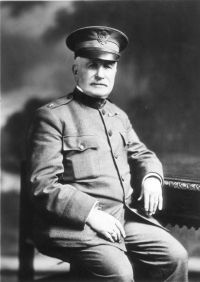
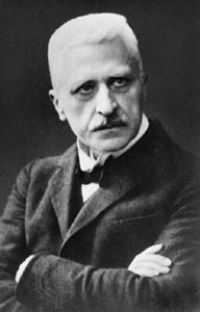
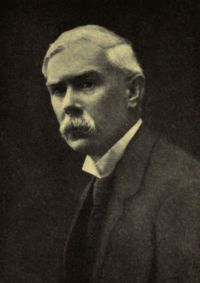
Portrait of John Arthur Thomson John Arthur Thomson,  The Outline of Science — Part II

“ There are only a few offspring at a time, and, although there are exceptional cases like the summer green-flies, which are very prolific though viviparous, the general rule is that viviparity is associated with a very small family. The case of flowering plants stands by itself, for although they illustrate a kind of viviparity, the seed being embryos, an individual plant may have a large number of flowers and therefore a huge family.
Viviparity naturally finds its best illustrations among terrestrial animals, where the risks to the young life are many, and it finds its climax among mammals.
”
Source: Wikisource

Various,  Popular Science Monthly (1907)

“ But the true relation of Aristotle's thought to that of Ray and Linnæus may be exhibited in the following well-known citations from "The Parts of Animals." [2]
Some animals are viviparous, some oviparous, some vermiparous. The viviparous are such as man, and the horse, and all those animals which have hair; and of the aquatic animals, the whale kind, as the dolphin and
cartilaginous fishes [in reference to the viviparity of certain sharks] . (Book I., chap. V.) Of quadrupeds which have blood and are viviparous, some are (as to their extremities) many-cloven, as the hands and feet of man.
”
Source: Wikisource

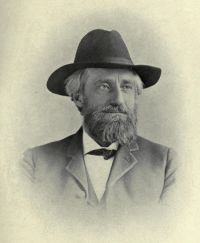
Portrait of Albert Leffingwell Albert Leffingwell,  Vivisection

“ Finally, one of the strongest advocates of vivisections, Dr. Anthony, pupil of Sir Charles Bell, would exclaim, if a mere [Pg 59] exposition of the lungs of the frog were referred to, "Fond as I am of physiology, I would not do that for the world!"
Now, what has our inquirer learned by his appeal to science? Has he gained any clear and absolute knowledge? Hardly two of the experimenters named agree upon one simple yet most important preliminary of research—the sensibility to pain of a single species of animals.
”
Source: Gutenberg

Get perspective with Kwize: daily news enlightened by great literature