Babylonian religion

Definition and stakes

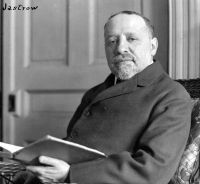
Portrait of Morris Jastrow Morris Jastrow,  The Religion of Babylonia and Assyria

“ The nature of the old Babylonian religion entails, as a necessary consequence, an array of gods that might be termed endless. Local cults would ever tend to increase with the rise of new towns, and while the deities thus worshipped would not rise to any or much importance, still their names would become known in larger circles, and a ruler might, for the sake of increasing his own lustre, make mention of one or more of them, honoring them at the same time by an epithet which might or might not accurately define their character. ”

Source: Gutenberg

Portrait of A. H. Sayce A. H. Sayce,  The Religions of Ancient Egypt and Babylonia

“ The Babylonian religion with which we are acquainted is that official theology in which the older Sumerian and Semitic elements were combined together and worked into an elaborate system. To distinguish the elements one from the other, and discover the beliefs and conceptions which underlie them, is a task of infinite labour and complexity. But it is a task which cannot be shirked if we would even begin to understand the nature of Babylonian religion, and the fundamental ideas upon which it rested. ”
Source: Gutenberg

Portrait of Morris Jastrow Morris Jastrow,  The Religion of Babylonia and Assyria

“ A god of the heavens is an abstract conception, and while it is possible that even in an early age, such a conception may have arisen in some minds, it is not of a character calculated to take a popular hold. As we proceed in our attempt to trace the development of the Babylonian religion, we will find the line of demarcation separating the theological system, as evolved by the schoolmen, from the popular phases of the religion, becoming more marked. In the inscriptions of the old Babylonian rulers, comparatively little of the influence of the Babylonian theologians is to be detected. ”
Source: Gutenberg

Get perspective with Kwize: daily news enlightened by great literature