Basque language

Definition and stakes

Katharine Lee Bates,  Spanish Highways and Byways

“ What little literature there is in the Basque language is naturally of the popular cast—hero songs, dancing songs, dirges, hymns, and folk-lore.
The Basques are noted for their passionate love of liberty. The sturdy peasant is lord of his own rugged farm, and insists on tilling it in his own primitive way, breaking the soil with 366 rude mattock more often than with plough. An English engineer, laying a railroad through Alava, tried his best to make his men abandon their slow, laborious method of carrying the earth in baskets on their heads.
”
Source: Gutenberg

Mary Platt Parmele,  A Short History of Spain

“ The language of the Basques bears no resemblance to any of the Indo-European, nor indeed to any known tongue. It is so difficult, so intricate in construction, that only those who learn it in infancy can ever master it. It is said that, in Basque, "you spell Solomon, and pronounce it Nebuchadnezzar." Its antiquity is so great that one legend calls it the "language of the angels," and another says that Tubal brought it to Spain before the lingual disaster at Babel! ”
Source: Gutenberg

Portrait of H. J. Fleure H. J. Fleure,  The peoples of Europe (1922)

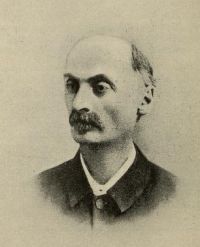
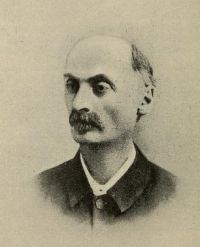
“ Educated people in Basque country speak either French or Spanish in addition to the mother tongue, and the Basque language has thus taken up many words from its neighbours; it has very little literature and has contributed extremely little, so far as is known, to French and Spanish. Its affinities are quite unknown, though a kinship with the Bronze Age languages of the Mediterranean is suspected, and suggestions of relations to languages of North Africa have been made. ”
Source: Gutenberg

Get perspective with Kwize: daily news enlightened by great literature