Binet-Simon scale

Definition and stakes

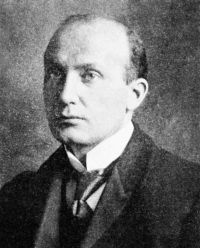
Portrait of Lewis M. Terman Lewis M. Terman,  The measurement of intelligence

“ For this purpose there is nothing else as significant as the I Q. All who test below 70 I Q by the Stanford revision of the Binet-Simon scale should be considered feeble-minded, and it is an open question whether it would not be justifiable to consider 75 I Q as the lower limit of “normal” intelligence. Certainly a large proportion falling between 70 and 75 can hardly be classed as other than feeble-minded, even according to the social criterion. ”
Source: Gutenberg

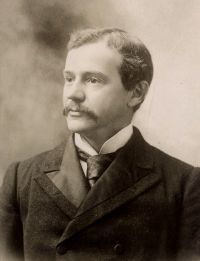
Portrait of Harry L. Hollingworth Harry L. Hollingworth,  Vocational Psychology: Its Problems and Methods

“ Efficiency in the test may be measured by the point one can reach in the text in a given time. This test has been standardized, not on the basis of physical age, as in the case of the Binet-Simon scale, but on the basis of school grade, from the second grade through the high school, some four or six years beyond the point where the Binet-Simon scale ceases to be useful. A copy of this test is also given in the Appendix. Those who wish to use it should consult the original description of it, for technique, precautions, norms, and interpretation. ”
Source: Gutenberg

James Burt Miner,  Deficiency and Delinquency: An Interpretation of Mental Testing

“ If, however, the form of distribution remains uniform, it would first be necessary for those advocating the use of any of the other quantitative definitions to show that the units of their scales are equal under some reasonable hypothesis. A ratio or a deviation statable only in scale units which are not demonstrably equal is a hazard, with the chances badly weighted against its reliability. So far as both the Binet and the Point scales are concerned we have found that the units are not equal. ”
Source: Gutenberg

Get perspective with Kwize: daily news enlightened by great literature