“ Though the Indian uses musical instruments for his social ceremonies, such as the turtle-shell harp, wooden flute and whistles, he never applies their tunes to the dances that have a more serious or religious meaning. The Snake Dance, like the Dream Dance, is based on a legend, but the story of it is more involved, tragic and mystic, therefore its ghastly nature and weird symbolic gestures appear42 more vivid and direct than the themes of any other of the Indian folk-dances. But the steps and poses of every Indian dance are similar to each other, slow, compact, impassive and dignified. ”
Indian dance
Definition and stakes
Quotes about “Indian dance”
Otto Rothfield, Women of India
“ Throughout the Indian dance the feet, like the tuned drums, are means to mark the beats. The time is divided into syllables or bars and the dancer’s beating feet, circled with a belt of jingling bells, must move and pause in the strictest accordance. The right foot performs the major part, the left completes the rhythmic syllable. But further by her dance the singer’s art is to make more clear and more magnetic the meaning of her song. With her attitudes and gestures she accords her person to her melody and sense, till her whole being, voice and movement, is but one living emotion. ”
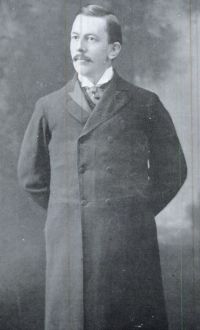
Warren King Moorehead,
The American Indian in the United States…
“ If the reverend gentleman, to whom I have referred, was scandalized in observing a squaw-dance, what must be his feelings when he observes educated young men and women lapsing into the paganism of Paris and New York!The Government’s taboo of the begging dance, and the curtailment of the ordinary Indian dances, leave no amusements in which the older Indians may participate. Consequently, they are quite likely to gamble and engage in far more harmful pastimes. Ordinary dances should be permitted, and the gift dance regulated. ”
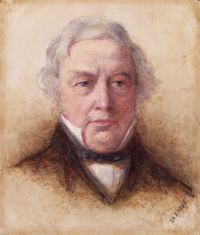
Thomas Whiffen, The North-West Amazons: Notes of some months spent among cannibal tribes
“ Whatever of art there may be in the soul of the tribesman finds expression in the dance. It is the concert and the play, the opera, the ball, the carnival, and the feast of the Amazons, in that it gives opportunity for the æsthetic, artistic, dramatic, musical, and spectacular aspirations of the Indian’s nature. It is his one social entertainment, and he invites to it every one living in amity with him. Any excuse is enough for a dance, but nevertheless the affair is a serious business. The dance, like the tobacco palaver, is a dominant factor in tribal life. ”
“ Since the whole Indian civilization is the same to-day that it was thousands of years ago, we are pretty safe in our assumption that the dances of the Bayaderes exhibited at Calcutta or Benares now were pretty nearly the same during the life of Buddha. The modern dances, like the old ones, show similarity in the fact that the Indian dancers stand nearly at one spot and hardly move their feet, while mimicking, and moving their body, arms, hands and fingers. The individual peculiarity of all Indian dances lies in the impressionistic poses of their hands and the body. ”
“ There is no doubt that the peculiarities of Indian music have been obstacles to the development of the national dance. Although it is full of color and feeling, yet the division of their scale into so many more tone units than ours makes it extremely difficult for a dancer to catch the delicate nuances and lines and reproduce them in movement. A few dancing designs here and there give the impression that this art has not changed during the four thousand years of the nation’s existence. ”
“ Those of our Western students of art who make us believe that they can perform genuine Indian dances are grossly mistaken, simply because the real Indian dance is not an art and amusement, but the preaching of a certain philosophy. ”
James Mooney,
The Ghost-dance religion and the Sioux outbreak of 1890
“ As springtime came and passed, and summer grew and waned, and autumn faded again into winter without the realization of their hopes and longings, the doctrine gradually assumed its present form—that some time in the unknown future the Indian will be united with his friends who have gone before, to be forever supremely happy, and that this happiness may be anticipated in dreams, if not actually hastened in reality, by earnest and frequent attendance on the sacred dance. ”
William F. Drannan, Capt. W. F. Drannan, Chief of Scouts…
“ I never knew how many took a part in the dance that night, which is always danced in a circle, and every Indian has his or her own way of dancing, and all, old and young, male and female, that take a part are singing. ”
Thomas Love Peacock,
Headlong Hall
“ Mr Jenkison. On the same iron plea, the modern system of dancing is more justifiable. The Indian dances to prepare himself for killing his enemy: but while the beaux and belles of our assemblies dance, they are in the very act of killing theirs—TIME!—a more inveterate and formidable foe than any the Indian has to contend with ”
Otto Rothfield, Women of India
“ All the more tragic is it, a very tragedy of irony, that the dance—the one really Indian art that remains—has been, by some curious perversion of reasoning, made the special object of attack by an advanced and reforming section of Indian publicists. They have chosen to do so on the score of morality—not that they allege the songs and dances to be immoral, if such these could be, but that they say the dancers are. ”
Henry Rowe Schoolcraft,
The American Indians
“ There is no feast, and no religious ceremony, among them, which is not attended with dancing and songs. Thanks are thus expressed for success in hunting, for triumphs in war, and for ordinary providential cares. Public opinion is called to pressing objects by a dance, at which addresses are made, and in fact, moral instructions and advice are given to the young, in the course of their being assembled at social feasts and dances. Dancing is indeed the common resource, whenever the mass of Indian mind is to be acted on. ”
Henry Rowe Schoolcraft,
The American Indians
“ They are generally the composers of the songs, and the leaders in the dance and ceremonies, and it is found, that their memories are the best stored, not only with the sacred songs and chants, but also with the traditions, and general lore of the tribes.Dancing is thus interwoven throughout the whole texture of Indian society, so that there is scarcely an event important or trivial, private or public, which is not connected, more or less intimately, with this rite. The instances where singing is adopted, without dancing, are nearly confined to occurrences of a domestic character. ”
“ While the European tourist calls all Indian dancers Bayaderes, regardless whether they give their performances on the streets or in the temples, an Indian calls the temple dancers Devadazis, or the ‘slaves of God.’ The common street or social dancer is called Nautch Girl. The Indian Devadazis are raised and educated much as are the Christian nuns. After being graduated from a dancing school, the girls are taken by the priests to the temples in which they give daily performances to the pilgrims and live as sacred courtesans with the clergy. ”
Leo Crane, Indians of the Enchanted Desert (1925)
“ Until we furnish something as good in place of the Indian social dance, why rave about it? We might easily have a large number of low-spirited, sullen, and even dangerous Indians on our hands if it were not for these joyous occasions. So long as the dances are clean, can any one quarrel with a Ya-be-chai of the Navajo, a Corn Dance of the Hopi, or one of the Pueblo spectacles, half pagan, half Catholic? ”
Samuel Hearne,
A Journey from Prince of Wales's Fort in Hudson's Bay to the Northern Ocean in the Years 1769…
“ They also amuse themselves at times with dancing, which is always performed in the night. It is remarkable that those people, though a distinct nation, have never adopted any mode of dancing of their own, or any songs to which {334} they can dance; so that when anything of this kind is attempted, which is but seldom, they always endeavour to imitate either the Dog-ribbed or Southern Indians, but more commonly the former, as few of them are sufficiently acquainted either with the Southern Indian language, or their manner of dancing. ”
Otto Rothfield, Women of India
“ In order to attain this complete accord of movement and melody, this union of grace and emotional expression, it is necessary to conventionalize the means by strict attention to the material presented to the creative artist—in the case of the dance, the youthful female figure. As in a painting, to the trained eye, a line presents the transition between two differently lit surfaces, so in the dance, by an habitual agreement between the spectator and the performer, certain simple movements are made to evoke wider imaginations. Indian dancing, like every art, must have its own conventions. ”
Joseph K. Dixon,
The Vanishing Race: The Last Great Indian Council
“ The sun dance is a custom among the Indians which seeks to elevate a spirit of honour among men as well as women. No young woman dare take part in the sun dance unless she is virtuous, for [pg 101] she is sure to be pointed out and put to shame, and if she does not take part, then suspicion falls upon her and she is likewise put to shame. The men emulate the deeds of their fathers in order that they may take part in the sun dance. And thus this wonderful dance becomes a school for patriotism among the tribes and a stimulus to deeds of valour as well as an incentive to virtue. ”
“ The lack of humor and joy mirrors itself best in the art of the Bayaderes, the celebrated dancers of India. Their gestures and movements are void of that exultant gaiety and optimism that predominates in dances of other nations. An air of gloom and pessimism emanates from all the Indian art. ”
“ All the Indian social ceremonies, such as marriage, birth and burial, are celebrated with dancing and music. This is particularly true of the social ceremonies of the rich. The standing of the dancers is high in India, so that even in the palace of the Rajah dancers are treated like the guests. ”
Henry Rowe Schoolcraft,
The Indian in his Wigwam; Or, Characteristics of the Red Race of America
“ Whoever has heard an Indian war song, and witnessed an Indian war dance, must be satisfied that the occasion wakes up all the fire and energy of the Indian's soul. His flashing eye—his muscular energy, as he begins the dance—his violent gesticulation as he raises his war-cry—the whole frame and expression of the man, demonstrate this. ”
Various, Indian Stories Retold From St. Nicholas
“ This was their dance-hall. The squaws were again shut out, as, according to [37] Santee Sioux custom, they are not allowed to join in the dances with the men. The Indians, as they came in, sat quietly down around the sides of the inclosure. The musicians were gathered around a big drum, on which they pounded with short sticks, while they sang a sort of wild, weird chant. The effect, to an uneducated white man's ear, was rather depressing, but it seemed very pleasing to the Indians.The ball was opened by an old chief, who, rising slowly, beckoned the others to follow him. ”
Elias Johnson, Legends, Traditions, and Laws of the Iroquois…
“ The men, or a number of them, usually begin the dance alone, and the women, or each of them, selecting the one with whom she would like to dance, presents herself at his side as he approaches and is immediately received into the circle. Consequently, the young Indian beau knows nothing of the tact required to handsomely invite and gallantly lead a lady to the dance; and the young Indian maiden, unannoyed by obnoxious offers, at her own convenience, gracefully presents her personage to the one she designs to favor, and thus quietly engages herself in the dance. ”
Mary Hazelton Blanchard Wade, Yellow Thunder, Our Little Indian Cousin
“ It seems as though there were always something happening among the Indians to give them a good reason to dance.The War-dance is only performed in the evening and always on some important occasion.Fifteen or twenty men are usually chosen, one of whom must be the leader. All appear in costume and wear knee rattles of deer's hoofs. When the time draws near, the people gather in the council-house and wait quietly for the dancers to arrive. A keeper-of-the-faith rises and makes a short speech on the meaning of the dance. ”
George Wharton James,
The Grand Canyon of Arizona: How to See It
“ Almost all Indian peoples have the firmly fixed notion that the gods can be propitiated only by these exhausting dances. Consequently they are not performed by a few professional dancers, or even by certain families; all the people must dance. The smallest child, as soon as he is able to understand, must take his place with the elders, and the women and girls enter into the dances with the same religious fervor and zeal that is displayed by the men. And there is none of that sex enjoyment injected into their sacred dances, as there is in the white man's pleasure dances. ”
Thomas Whiffen, The North-West Amazons: Notes of some months spent among cannibal tribes
“ In considering the native dances it must be remembered that the accompanying songs are essential elements of the entertainment: they mark the character of the dance; and equally, in considering the songs, it must be remembered that the imagination of the native never goes beyond the relation of the sexes. The Indian’s poetry is an inverted form of romanticism. Instead of seeking to give rhythmical expression to an idealisation, to find in the beauties of Nature an analogy to the realities of Life, he reverses the process. ”
George Wharton James,
The Indians of the Painted Desert Region…
“ Then, with a side shuffling motion, moving one foot to the left and following it rapidly but rhythmically with the other, the while lustily and seriously singing the song they had just learned, the dance continued,—a dull, monotonous, sleep-producing ceremony, until the onlooker was awakened by manifestations he little expected to see at an Indian thanksgiving dance. Very often it occurs that women of the tribe are affected with a somewhat similar excitement to that which seizes the negro when he has "the power." ”
George Catlin, Illustrations of the manners, customs… (1876)
“ Dancing is done here too, as it is oftentimes done in the enlightened world, to get favours—to buy the world’s goods; and in both countries danced with about equal merit, except that the Indian has surpassed us in honesty by christening it in his own country, the “beggar’s dance.” ”
Lucy Thompson,
To the American Indian
(1916)
“ THE LODGE DANCE. THE white man calls this dance the jump dance and this has caused the Indians to call it thus when they speak of it in the white mans tongue, but we call in our language Wah-neck-wel-la-gaw, and which has no meaning as to a dance. This dance is held at the Pec-wan village, and it is about one mile up the river from where the “White Deer-Skin Dance” is held. This festival is held one year after the White Deer Skin Dance, or is held alternately. ”
George Catlin, Illustrations of the manners, customs… (1876)
“ Instead of the “giddy maze” of the quadrille or the country dance, enlivened by the cheering smiles and graces of silkened beauty, the Indian performs his rounds with jumps, and starts, and yells, much to the satisfaction of his own exclusive self, and infinite amusement of the gentler sex, who are always lookers on, but seldom allowed so great a pleasure, or so signal an honour, as that of joining with their lords in this or any other entertainment. ”
Thomas Crosby, Among the An-ko-me-nums, or Flathead Tribes of Indians of the Pacific Coast
“ With much of their music is associated their pagan dancing. There are professional dancers among the tribes, who as a rule are identified with the clans of the medicine men. The heathen dances are very fascinating to the heathen mind, and in nothing is the “backsliding” of the Indian more noticeable than in his return to the dance. [104] At the dancing season certain persons become possessed, or as the An-ko-me-nums say, “the you-an, or dance-spirit, is on them.” ”
“ The Indian conception of beauty lies in the spiritual and intellectual and but little in the physical and æsthetic forms. The main purpose of the great Indian ballerinas is to inspire their audiences to thought and meditation upon the great powers of nature and the mystic purposes of human life. Their art is exotic and introspective and lacks absolutely the element of purely beautiful inspiration, produced by the great Western dancers. ”