Kulturkampf

Definition and stakes

Æneas MacDonell Dawson,  Pius IX. And His Time

“ They are both alike characterized by hatred of the Christian faith and all religious institutions. This feeling impels them to war against everything connected with Christianity, and to substitute what the Germans of the same school call Kulturkampf, or, a struggle for culture, on principles the very opposite of those on which is founded the high civilization of the nineteenth century. No doubt these apostles of Kulturkampf have a much higher civilization [pg 390] in store for mankind. But it must be admitted that they follow a strange way of bringing about the much-desired consummation. ”
Source: Gutenberg

Francis A. Cunningham,  The War Upon Religion

“ CHAPTER V. The Kulturkampf—The Causes—The Men—and the Events.
THE CAUSES.
Looking into the history of the times just preceding the Kulturkampf, and the nature of the events transpiring during its progress, among the causes may be enumerated the following: 1, the liberalism of the rationalists; 2, the liberalism of certain pseudo-Catholics; 3, the desire for Protestant ascendancy; 4, the hatred of ultramontainism as incarnated in the "Old Catholic" sect; and 5, the determination of Caesarism to reduce all religion in Germany to the domination of the State.
”
Source: Gutenberg

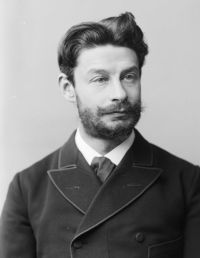
Portrait of Georg Brandes Georg Brandes,  Friedrich Nietzsche

“ When does a state of culture prevail? When the men of a community are steadily working for the production of single great men. From this highest aim all the others follow. And what state is farthest removed from a state of culture? That in which men energetically and with united forces resist the appearance of great men, partly by preventing the cultivation of the soil required for the growth of genius, partly by obstinately opposing everything in the shape of genius that appears amongst them. Such a state is more remote from culture than that of sheer barbarism. ”
Source: Gutenberg

Get perspective with Kwize: daily news enlightened by great literature