Adductor muscle

Definition and stakes

Kenneth W. Goadby Lead poisoning and lead absorption (1912)

The chief adductor muscle of the thumb (extensor metacarpi pollicis) is particularly powerful; the other extensors of the thumb are very weak, and work under unfavourable physical conditions, but are supported in their action by the strong abductor muscle. The muscles of the abductor, opponens and flexor brevis, in the complicated work thrown on the thumb in manipulation, are much exerted, so that the effects of overexertion show themselves first in this region.
Source: Gutenberg

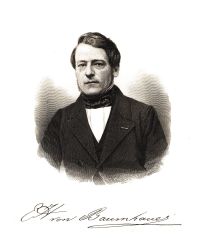
Portrait of Eduard Hendrik von Baumhauer Eduard Hendrik von Baumhauer Popular Science Monthly (1878)

The effect produced by these muscles in contracting is very evident. The large adductor muscle, situated on a plane a little above the general centre of rotation of the valves, serves to draw together the rounded sides of the valves as well as all the other parts of the valves situated posteriorly on the same side of the centre of rotation. The small adductor muscle, placed in front of the centre of rotation, exercises a more limited action. When it contracts, the anterior extremities of the spiral part of the valves approach each other
Source: Wikisource

Portrait of Charles Darwin Charles Darwin A Monograph on the Sub-class Cirripedia…

Internally, there is no conspicuous pit for the adductor muscle; under the umbones, there is generally either on both valves, or only on the right-hand side (Pl. I, fig. 1 c) , a small calcareous projection or tooth, of variable size and shape, even in the same species; it is generally largest on the right-hand valve; these teeth at first sight appear to form a hinge, uniting the opposite scuta at their umbones, but this is not really the case, and their use appears to be only to give attachment to the membrane uniting the valves together, and to the peduncle.
Source: Gutenberg

Get perspective with Kwize: daily news enlightened by great literature