Assumption of risk

Definition and stakes

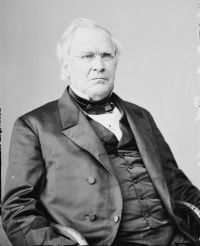
Mahlon Pitney Seaboard Air Line Railway v. Horton…

On the other hand, the assumption of risk, even though the risk be obvious, may be free from any suggestion of fault or negligence on the part of the employee. The risks may be present, notwithstanding the exercise of all reasonable care on his part. Some employments are necessarily fraught with danger to the workman,-danger that must be and is confronted in the line of his duty.
Source: Wikisource

Portrait of William R. Day William R. Day Chicago Railway Company v. Ward…

He does not, however, assume such risks as are created by the master's negligence nor such as are latent or are only discoverable at the time of the injury. The doctrine of an assumption of risk is wholly dependent upon the servant's knowledge, actual or constructive, of the dangers incident to his employment. Where he knew, or in the exercise of reasonable and ordinary care, should know the risk to which he is exposed, he will, as a rule, be held to have assumed them
Source: Wikisource

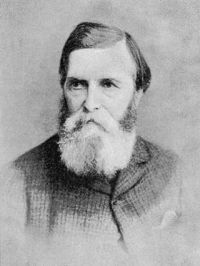
Sir John W. Salmond Jurisprudence (1913)

The risk depends, in its turn, on two things: first, the magnitude of the threatened evil, and second, the probability of it. The greater the evil is, and the nearer it is, the greater is the indifference or carelessness of him who creates the danger.
Source: Gutenberg

Get perspective with Kwize: daily news enlightened by great literature