
“ I was not ill-pleased. And then suddenly it occurred to me that I had never actually looked up the word in a dictionary. Carminative had grown up with me from the days of the cinnamon bottle. It had always been taken for granted. Carminative: for me the word was as rich in content as some tremendous, elaborate work of art; it was a complete landscape with figures. ‘And passion carminative as wine...’ It was the first time I had ever committed the word to writing, and all at once I felt I would like lexicographical authority for it. ”
Quotes about “carminative”
A. Cooper, The Complete Distiller
“ This Water is much Superior to the preceding, as all the Ingredients will give their Virtues to the Tincture, tho’ they will not rise in Distillation. It is a noble Alexi 175pharmic, it strengthens the Stomach, and greatly assists Digestion; it is also an excellent Carminative and good against the Cholic and Gripes: Its Cordial Virtues renders it serviceable in all Tremblings of the Nerves, and Depressions of the Spirits. ”
M. M. Pattison Muir, The Story of Alchemy and the Beginnings of Chemistry
“ Plants are preserved by the preservation of their seed. "In like manner," the alchemist's argument proceeded, "there must be a seed in metals which is their essence; if I can separate the seed and bring it under the proper conditions, I can cause it to grow into the perfect metal." "Animal life, and human life also," we may suppose the alchemist saying, "are continued by the same method as that whereby the life of plants is continued; all life springs from seed; the seed is fructified by the union of the male and the female; in metals also there must be the two characters ”
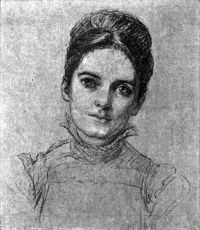 A. Mary F. Robinson,
The fields of France
(1905)
A. Mary F. Robinson,
The fields of France
(1905)
“ Eight days later their martyrdom begins; they are shaken till the seed falls from the pod; they are stretched in a water-meadow to rot; they are dried in the oven; they are rubbed, beaten, crushed, pounded, combed with iron combs, till nothing is left of their sturdy green grace and rustic beauty, no likeness of the poor handsome female plant, only a mass of loose tow and formless fibre. ”
 William Gilbert,
On the Magnet
(1900)
William Gilbert,
On the Magnet
(1900)
“ For the hidden primordial elements of metals and stones lie concealed in the earth, as those of herbs and plants do in its outer crust. For the soil dug out of a deep well, where would seem to be no suspicion of a conception of seed, when placed on a very high tower, produces, by the incubation of sun and sky, green herbage and unbidden weeds; and those of the kind which grow spontaneously in that region, for each region produces its own herbs and plants, also its own metals. ”
Robert Cromie, The Crack of Doom
“ I say life, for I take it that this company admits that a slab of granite is as much alive as any man or woman I see before me. But I have manufactured gold, and I could have manufactured protoplasm if I had devoted my life to that object. My studies have been almost wholly on the inorganic plane. Hence the 'philosopher's stone' came in my way, but not the 'elixir of life.' The molecules of protoplasm are only a little more complex than the molecules of hydrogen or nitrogen or iron or coal. ”
 Samuel Taylor Coleridge,
Specimens of the Table Talk of Samuel Taylor Coleridge
Samuel Taylor Coleridge,
Specimens of the Table Talk of Samuel Taylor Coleridge
“ Every rank of creatures, as it ascends in the scale of creation, leaves death behind it or under it. The metal at its height of being seems a mute prophecy of the coming vegetation, into a mimic semblance of which it crystallizes. The blossom and flower, the acme of vegetable life, divides into correspondent organs with reciprocal functions, and by instinctive motions and approximations seems impatient of that fixture, by which it is differenced in kind from the flower-shaped Psyche that flutters with free wing above it. ”
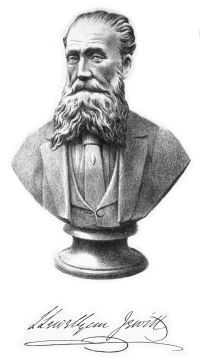 Llewellynn Frederick William Jewitt,
The ceramic art of Great Britain from pre-historic times down to the present day…
(1878)
Llewellynn Frederick William Jewitt,
The ceramic art of Great Britain from pre-historic times down to the present day…
(1878)
“ As there is nothing in nature but by calcination, grinding, and washing will produce a fixed indissoluble matter, distinguished by the name of virgin earth, the properties of which is strictly the same whether produced from animals, vegetables, or fossills, no other difference arising from the process but that some bodys produce it in greater quantities than others, as all animal substances, all fossils of the calcarious kind, such as chalk, limestone, &c. ”
 Francis Bacon,
Novum Organum — Book II
(1620)
Francis Bacon,
Novum Organum — Book II
(1620)
“ For instance, suppose the inquiry to be, from what beginnings, in what manner, and by what process gold or any metal or stone is generated from the original menstruum, or its elements, up to the perfect mineral: or, in like manner, by what process plants are generated, from the first concretion of juices in the earth, or from seeds, up to the perfect plant, with the whole successive motion, and varied and uninterrupted efforts of nature; and the same inquiry be made as to a regularly deduced system of the generation of animals from coition to birth, and so on of other bodies. ”
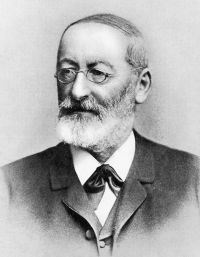 Ferdinand Julius Cohn,
Popular Science Monthly
(1883)
Ferdinand Julius Cohn,
Popular Science Monthly
(1883)
“ Having extracted the carbon, they combine it with water and with the mineral substances that have been drawn from the soil, and prepare from them the living matters out of which the plant itself builds up its cells, and which, taken up into the body of an animal, is transformed by it into flesh and blood. ”
Thomas H. Huxley, Evolution and Ethics and Other Essays (November, 2001 [Etext #2940])
“ In the theory of evolution, the tendency of a germ to develop according to a certain specific type, e.g. of the kidney bean seed to grow into a plant having all the characters of Phaseolus vulgaris, is its "Karma." ”
 Paracelsus,
A New Light of Alchymie
Paracelsus,
A New Light of Alchymie
“ If therefore thou wilt produce a Metall, thou shalt ferment with a Metall; and if thou wilt produce a Tree, let the seed of the Tree be thy ferment. There is as we said, but one operation, and beside it there is none other that is true. All they therefore are mistaken that say, that any particular thing, besides this one way, and naturall matter is true ”
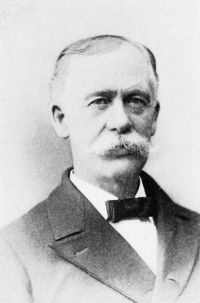 Charles Henry Hitchcock,
Popular Science Monthly
(1877)
Charles Henry Hitchcock,
Popular Science Monthly
(1877)
“ Organisms are preserved because of the more or less complete substitution of mineral for animal matter. Pieces of coal or wood that have been deposited in clay may be washed out, but the small pores and interstices will be seen to be filled with the matrix. When the burial has been in a solution capable of precipitating solid matter, the wood will be found more or less changed according to the nature of the solution and its capacity for alteration. ”
Robert Hunt, The Poetry of Science; or, Studies of the Physical Phenomena of Nature
“ A system of revival, or decomposition, is carried on at one pole, and one of abrasion, or more correctly speaking, of composition and solution, at the other. By taking advantage of this very extraordinary power of electricity, we now form vessels for ornament or use, we gild or silver all kinds of utensils, and give the imperishability of metal to the most delicate productions of nature—her fruits, her flowers, and her insects;—and over the finest labours of the loom we may throw coatings of gold or silver to add to their elegance and durability. ”
 Lorenz Oken,
Elements of Physiophilosophy
Lorenz Oken,
Elements of Physiophilosophy
“ As the fundamental earths lose themselves in pure carbon, in resin, and so in the vegetable world, so the series of corrosive earths resolves itself likewise in remnants of an organic, and that indeed the animal, kingdom. As the pit-coals and resins are associated with the metals and Inflammables, so are the fossil animal remains with the calcareous earth; and thus the voice of the organic world speaks already with force and clearness to those that hearken, from out the stones. ”
Popular Science Monthly (1877)
“ Granting it is, then shall we say that all vegetable products, although long since uprooted but undecomposed, are possessed of life? Are the cells which compose the well-worn oak-beams of the few remaining wooden walls of Old England still endowed with vitality, and constantly engaged in a struggle for life with the low forms of animated Nature? Then, if this be conceded, might we not assume that fructification of germs is likewise essential to the decomposition of minerals? ”
T. Lucretius Carus, Of The Nature of Things — Book I (1916)
“ The earthy clods, there herbs, and grains, and leaves, All sorts dispersed minutely in the soil; Lastly we ought to find in cloven wood Ashes and smoke and bits of fire there hid. But since fact teaches this is not the case, 'Tis thine to know things are not mixed with things Thuswise; but seeds, common to many things, Commixed in many ways, must lurk in things. "But often it happens on skiey hills" thou sayest, "That neighbouring tops of lofty trees are rubbed One against other, smote by the blustering south, Till all ablaze with bursting flower of flame." ”
Agnes Robertson Arber, Herbals, Their Origin and Evolution…
“ I considered further how that in everything which arises, grows, lives or soars in the four elements named, be it metal, stone, herb or animal, the four natures of the elements, heat, cold, moistness and dryness are mingled. It is also to be noted that the four natures in question are also mixed and blended in the human body in a measure and temperament suitable to the life and nature of man. ”
Various, The Atlantic Monthly (1858)
“ The plant absorbs the crystal, and it becomes a part of a higher organization, which could no more exist without its soul; and if the plant is cut down and cast into the oven, is the organic impulse food for the flames? ”
Gideon Algernon Mantell, The Medals of Creation, Volumes 1 and 2
“ The reader will observe that the fossil vegetables hitherto described belong, with but few exceptions, to the Carboniferous flora; and that the remains of Ferns, Calamites, Sigillariæ, and Lepidodendra, compose in a great measure those prodigious accumulations of mineral fuel, or coal, which supply the luxuries and necessities created by civilization. ”
Elihu Palmer, Principles of nature; or, a development of the morals causes of happiness and misery among the… (1819)
“ For the truth of this, an appeal is made to the power, pressure, and dissolving operation of the most inert and stupid portions of material substance. An appeal is made also to the activity of the most stupid parts of matter, in the composition of vegetable productions. What regular industry do the solids and fluids exhibit in the formation of a common vegetable? The march of each particle to its destined post is with firm and philosophic step; with constancy and physical zeal. There is no such thing as dead matter; all is alive, all is active and energetic. ”
Sir Charles Alexander Cameron, The Stock-Feeder's Manual
“ Co-incidentally with the conversion of the mineral constituents of the food of plants into organised structures—albumen, fibre, and such like substances—the light, and the heat, and the various other forces likewise suffer a change. Although the precise nature of the new force into which they are converted is still a mystery—one, too, which may never be revealed to us—still we know sufficient of it to satisfy us that it can only exist in connection with organic or organised structures. ”
Caroline Pridham, Twilight and Dawn; Or, Simple Talks on the Six Days of Creation
“ They tell us that these "infant" plants were followed by those of larger growth, specimens of which are found in layers of rock and clay nearer the surface, and are followed by remains of the "herb yielding seed, and the fruit tree yielding fruit after its kind"—for mummies of seed vessels and fruits have been found in coal-fields in many parts of the world. ”
John Rudolph Glauber, The works of the highly experienced and famous chymist… (1689)
“ And if by the regiment of art there be left any Caput Mortuum in the distillation, it hath, being dissolved in the air, a power to putrify metals being prepared, and mixed with it, in the space of few hours, so as to make them become black, and to grow up like trees with their roots, trunks, and boughs, which by how much the longer they are so left, become the better. ”
 Algernon Blackwood,
The Garden of Survival — Chapter X
(1918)
Algernon Blackwood,
The Garden of Survival — Chapter X
(1918)
“ For the vegetable kingdom alone possesses the power of converting the mineral or the chemical into the living organism by absorption; and here, among the leaves and roots and flowers, that power was sweetly, irresistibly, at work. ”
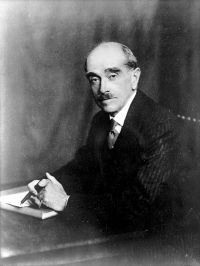 C. J. S. Thompson,
The Mystery and Romance of Alchemy and Pharmacy
C. J. S. Thompson,
The Mystery and Romance of Alchemy and Pharmacy
“ Cataplasms and salves were frequently made of green herbs sodden, pounded, and applied externally.Gradually, as the years have rolled on, and as the science of chemistry has unlocked the marvellous resources and products of nature, most of these old relics of the days of superstition and witchcraft have been left behind and forgotten, and it remains only for some old black-lettered tome to tell the story and for us to fill in the background to the picture. ”
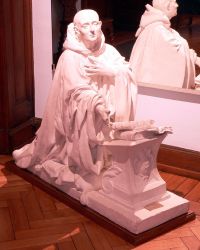 Augustin Calmet,
The Phantom World; or, The philosophy of spirits…
Augustin Calmet,
The Phantom World; or, The philosophy of spirits…
“ The chemists demonstrate that the or a sort of restoration or resurrection of animals, insects, and plants, is possible and natural. When the ashes of a plant are placed in a phial, these ashes rise, and arrange themselves as much as they can in the form which was first impressed on them by the Author of Nature. ”
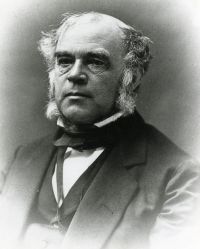 John William Draper,
History of the Intellectual Development of Europe…
John William Draper,
History of the Intellectual Development of Europe…
“ At one moment they exist as inorganic combinations in the air or the soil, [342] then as portions of plants, then as portions of animals, then they return to the air or soil again to renew their cycle of movement. The metamorphoses feigned by the poets of antiquity have hence a foundation in fact, and the vegetable and animal, the organic and inorganic worlds are indissolubly bound together. Plants are reducing, animals oxydizing, machines. Plants form, animals destroy. ”
Various, Once a Week (1861)
“ Thus we are brought to the close of the era denominated carboniferous—a period of gigantic vegetable growth, a period of ferns and conifers, a period of reptiles and fishes, a period having, like that of all organic existences, recorded and unrecorded, a beginning and an end ”
Clinton G. Gilroy, The History of Silk, Cotton, Linen…
“ Let us fancy that some thousand years ago, a mortal, wandering through an oriental wood, saw a worm falling from a fruit-bearing tree—that he found this little creature had reached the end of one of its stages of existence, and was laboriously engaged in shrouding itself in an unknown substance, like a fine thread of gold, out of which it constructed its tomb ”
Anonymous, The Ladies Book of Useful Information
“ Bloom Rose.—This is a preparation of carmine for the face and lips. Take a quarter of a dram of carmine and place it in a phial with half a dram of liquid ammonia; keep for a few days, occasionally shaking the mixture; then dilute with two ounces of rose-water, to which half a dram of essence of roses has been added. Draw off and keep a week or ten days, then apply with the corner of a soft handkerchief, taking care that if the color is too bright it is reduced by means of pure water. ”
“ By this means the plant is brought into direct connexion with the relevant spiritual energy, and then left to carry out for itself the necessary process of materialization, instead of being forced by mere chemical additions to the soil first to potentize the substance itself.8The same principle holds good for man and beast. They also need 'young material' for their nourishment, so that the type active in them - which in animals is the group-soul of the species and in man is the single individual - can express its true form and character. ”
Augustin Calmet,
The Phantom World; or, The philosophy of spirits…
“ They take a flower, burn it, and collect all the ashes of it, from which they extract the salts by calcination. They put these salts into a glass phial, wherein having mixed certain compositions capable of setting them in motion when heated, all this matter forms a dust of a bluish hue; of this dust, excited by a gentle warmth, arises a stem, leaves, and a flower; in a word, they perceive the apparition of a plant springing from its ashes. ”
Benjamin F. Taylor, The World on Wheels, and Other Sketches
“ When the necromancer turns farmer, sows a few kernels of wheat in a little tin-box of earth, claps on the cover, sends a few sparks of electricity through it, whips off the lid and shows you the green blades an inch and a half long, in a minute and a half, it is a phenomenon, but not a miracle. ”
The Vedanta-Sutras with the Commentary by Ramanuja
“ For ordinary experience shows us on all sides that the operative cause and the material cause are quite distinct: we invariably have on the one side clay, gold, and other material substances which form the material causes of pots, ornaments, and so on, and on the other hand, distinct from them, potters, goldsmiths, and so on, who act as operative causes. ”
Henry James Slack, Marvels of Pond-life
“ Microscopic animal life helps the regenerative process, and, together with the minute vegetable life, [146] restores to the organic system myriads of tons of matter, which death and decay would have handed over to the inorganic world. ”
