“ As the cell house is the core of Sing Sing, so the cell structure is its core. In the exact centre of the building, steel within stone, six levels of cells rise, one level on another, climbing up almost to the roof, from which many hooded, round ventilators stare down like watchful eyes that never sleep. In each tier are two hundred cells, built back to back, each row of cells being faced by narrow iron balconies and reached by narrow wooden stairways. ”
Cell (building)
Definition and stakes
The theme of “cell (building)” has been addressed by authors such as Douglas Houghton Campbell, Ferdinand Julius Cohn, D'Arcy Wentworth Thompson, Gilbert Charles Chubb and William James Mansfield. It is often associated with terms like wall, biology, protoplasm, nucleus and plant.
Quotes about “cell (building)”
William James Mansfield, Histology of medicinal plants
“ A modification of this manner of growth is that in which the layers are built up one over the other, but the building is gradually done by the deposit of minute particles of cell-wall substance over the older deposits. Such walls are never striated, as is likely to be the case in cell walls formed by the first method. In other cells the walls are increased in thickness by the deposition of new wall material in the older membrane. The cell walls will be discussed more fully when the different tissues are studied in detail. ”
Marcus Hartog, The Cambridge natural history, Vol… (1906)
“ Such a cell can and does grow when encysted: it grows even more readily in this state, since none of its energies are absorbed by the necessities of locomotion, etc. Growth leads, of course, to division: there is often an economy of wall-material by the formation of a mere party-wall dividing the cavity of the old cell-wall at its limit of growth into two new cavities of equal size. ”
Émile-Honoré Cazelles, Popular Science Monthly (1875)
“ Some authors have explained the production of cells on the hypothesis of a true spontaneous generation. According to them, cells are organized in a saline solution, the first step being the deposit of a nucleolus, around which there forms an envelope called the nucleus, and finally, at a greater distance, a second envelope, or cell-wall. ”
D. Kerfoot Shute, A first book in organic evolution (1899)
“ In many cells the protoplasm has formed on its periphery a layer of metaplasm which is frequently called a cell-wall. This cell-wall prevents amœboid movements of the protoplasm, and a cell possessing it is said to be encysted. ”
Eliza Burt Gamble, The Sexes in Science and History
“ Later, however, when a parent cell bursts, the newly developed cells no longer separate from it, but, by cohering to it and to each other, form a cluster of nucleated cells, while around this aggregation of units is formed a wall. ”
F. St. Mars, The Way of the Wild
“ Moreover, more cells were built, always taking the cross as the center of all things—six-sided cells, with a low, incomplete wall, or, rather, parapet, partitioning each off, to the number of about twenty-four cells in all. Each cell was closed, of course, at the top, the top being its floor, and open at the bottom, the bottom being, if I may so put it, the top; for, as has already been said, wasp cities are built upside-down, and everybody walks and hangs on his head, being so fitted for the purpose. ”
 Ferdinand Julius Cohn,
Popular Science Monthly
(1883)
“ The cell utilizes a part of its food for its own growth; but, sooner or later, the growth ceases, and the cell, keeping the form and size it has acquired, becomes a permanent cell. It is round or oval, or resembles a many-sided crystal. Some cells become flat and square, like a tile; some put out rays, like a star, or form a zigzag, like the wall of a fortress; many lengthen themselves out. The inner structure, also, of the cell changes with age; the envelope, delicate and thin in youth, afterward receives accretions and ornaments. ”
 George James Allman,
Popular Science Monthly
(1879)
“ The cells of which they are built up are comparatively large, and, like almost all vegetable cells, are each inclosed in a wall of cellulose. The cellulose is perfectly transparent, and if the microscope, even with a low power, be brought to bear on one of these cells, a portion of its protoplasm may be seen in active rotation, flowing up one side of the long, tubular cell and down the other, and sweeping on with it such more solid particles as may become enveloped in its current. ”
 Julius von Sachs,
History of botany
(1890)
“ The systematic elaboration of the theory of cells, founded on careful observation and mature reflection, began with the year 1844. Almost at the same time in this year appeared Nägeli's detailed enquiries into the occurrence of the cell-nucleus and into cell-division, von Mohl's observations on the primordial utricle and its behaviour in the process of cell-division in young tissue, and lastly those of Unger on merismatic cell-formation (cell-division) as a general mode of proceeding in the growth of organs. ”
H. W. Conn, The Story of the Living Machine
“ The marvellous activities of the nucleus, and above all, the fact that the nucleus alone is handed down from one generation to the next in reproduction, all attested to its great importance and to the secondary importance of the rest of the cell.This was the most extreme position of the cell doctrine. The cell was the unit of living action, and the higher animal or plant simply a colony of such units. An animal was simply an association together for mutual advantage of independent units, just as a city is an association of independent individuals. ”
J. W. Griffith, An Elementary Text-book of the Microscope
“ Cells.—The elements of which all plants consist are cells. Cells, in their simplest condition, are microscopic, rounded, colourless, closed sacs or vesicles, resembling small bladders (Plate I. fig. 2) , and consist of a thin, transparent, colourless, vegetable skin or membrane (a) called the cell-wall. The cells are well seen in a little of the pulp of an apple (fig. 2) , or in a section of almost any soft part of a plant. A high power is usually required to show them distinctly, on account of their minute size. ”
William Noyes, Wood and Forest
“ The cells of the pith rays, as we have seen in Chapter I, run at right angles to the direction of the mass of wood fibers, and since they shrink according to the same laws that other cells do, viz., by the cell wall becoming thinner but not shorter, the strain of their shrinkage is contrary to that of the main cells. ”
 C. Lloyd Morgan,
Animal Life and Intelligence
“ This growth is effected by the multiplication of the constituent cells. The cells themselves have a very limited power of growth. But, especially in the early stages of [28] the life of the organism, when well supplied with nutriment, the cells multiply rapidly, by a process of fission, or the division of each cell into two daughter cells. The first part of the cell to divide is the nucleus, the protoplasmic network of which shows, during the process, curious and interesting arrangements and groupings of the fibres. ”
 T. W. Rolleston,
Parallel Paths: A Study in Biology…
“ Cellular structure begins, as has long been known, by the division of a cell into two, each of the parts then proceeding to grow by the assimilative power of protoplasm and in due time to divide in its turn. A mass of these cells is called ‘cellular tissue.’ The so-called ‘budding’ of a small cell from the side of the parent is, of course, simply a form of division. ”
 Douglas Houghton Campbell,
Elements of Structural and Systematic Botany
“ Fig. 3.—Hairs from the leaf stalk of a wild geranium. A, single-celled hair. B and C, hairs consisting of a row of cells. The terminal rounded cell secretes a peculiar scented oil that gives the plant its characteristic odor. B, × 50; C, × 150.Very many of the lower forms of life consist of but a single cell which may occasionally be destitute of a cell wall. Such a form is shown in Figure 2. Here we have a mass of protoplasm with a nucleus (n) and cavities (vacuoles, v) filled with cell sap, but no cell wall. ”
 Charles Darwin,
The Variation of Animals and Plants Under Domestication…
“ But besides this means of increase I assume that cells, before their conversion into completely passive or "formed material," throw off minute granules or atoms, which circulate freely throughout the system, and when supplied with proper nutriment multiply by self-division, subsequently becoming developed into cells like those from which they were derived. These granules for the sake of distinctness may be called cell-gemmules, or, as the cellular theory is not fully established, simply gemmules. ”
Margaret Warner Morley, Flowers and their friends (1897)
“ That is the way the plant has decided. So pipes there are, plenty of them,—pipes or tubes of many sizes and shapes.You know how cells grow, lying next each other. Well, tube cells are long and contain protoplasm in the beginning. They lie end to end. But, you see, it would not be very easy for the sap to pass through millions of cell walls on its way up. ”
Ferdinand Julius Cohn,
Popular Science Monthly
(1883)
“ Thus the different functions are so divided among the different cells that one makes this, another that, occupation its own special business. The cells of the cell-state so arrange themselves in their different offices that they work mutually into each other's hands: one lives for all, all for one. The more perfectly the division is carried out, the more completely can each cell fulfill the duty for which it is designed; the more highly organized is the cell-state, and the higher position does the whole plant take in the order of growths. ”
Gilbert Charles Chubb, 1911 Encyclopædia Britannica (1911)
“ It is possible to suggest a mechanico-physical explanation of multicellular structure which will deprive the cell of much of its assumed significance as a unit of organization. The fact that surface area becomes relatively less extensive as bulk increases would alone set a limit to the size of “unicellular” organisms; for not only is there a constant reaction between nucleus and cytoplasm through the nuclear membrane, but the surface of the cell serves both for the intake of food and the elimination of waste material. ”
Albert F. Blaisdell, A Practical Physiology: A Text-Book for Higher Schools
“ In some cases the protoplasm at the circumference is so modified as to give the appearance of a limiting membrane called the cell wall. In brief, then, a cell is a mass of nucleated protoplasm; the nucleus may have a nucleolus, and the cell may be limited by a cell wall. Every tissue of the human body is formed through the agency of protoplasmic cells, although in most cases the changes they undergo are so great that little evidence remains of their existence. ”
The New Student's Reference Work (1914)
“ Bounding the ordinary plant-cell, there is a thin elastic wall composed of a substance called cellulose. This cell-wall forms a delicate sac within which there exists the living substance called protoplasm. It is this substance which is alive and works, and has really formed the cell-wall about itself. ”
T. W. Rolleston,
Parallel Paths: A Study in Biology…
“ Between the units thus formed and their combination into the elaborate structure which we now know a cell to be—packed as full of varied energies, it has been said, as an ironclad is of machinery—there is evidently a very wide gap. All we know is that when we have got the cell, we find it in possession of a complex apparatus for subdivision, which, taken together with the faculties of nutrition and growth, enable any one cell to multiply indefinitely by producing replicas of itself. To life and growth, then, has been added the faculty for multiplication. ”
 Catharine Esther Beecher,
American Woman's Home: Or, Principles of Domestic Science…
“ New cells are gradually formed from the nourishing yelk around the germ, each being at first roundish in shape, and having a spot near the centre, called the nucleus. The reason why cells increase must remain a mystery, until we can penetrate the secrets of vital force—probably forever. But the mode in which they multiply is as follows: The first change noticed in a cell, when warmed into vital activity, is the appearance of a second nucleus within it, while the cell gradually becomes oval in form, and then is drawn inward at the middle, like an hour-glass, till the two sides meet. ”
George John Romanes, An Examination of Weismannism
“ Each fresh cell-division sorts out tendencies which were mixed in the nucleus of the mother-cell, until the complete mass of embryonic cells is formed, each with a nuclear idio-plasm which stamps its specific histological character on the cell. ”
E. S. Russell, Form and Function: A Contribution to the History of Animal Morphology
“ In anucleate cells there is probably only a single process of layer formation round an infinitely small nucleolus. In almost all nucleate cells the nucleus is resorbed when the cell reaches its full development, and it is larger and more important the younger the cell is. ”
Various, Popular Science Monthly (1893)
“ Cells were then recognized as the ultimate units of organic structure, which were variously modified to adapt them to diverse special purposes. This cell theory of organized structure was generally adopted, and cells were defined as closed membranes or sacs, containing a more or less fluid substance which served to nourish them. The cells were looked upon as independent units, which multiplied by a process of budding or by self-division, and a new factor was introduced in the discussion of the mooted question as to what constitutes the individual in plants. ”
 Emil Abderhalden,
Defensive Ferments of the Animal Organism
(1914)
“ In this way a cell dies, though it be plentifully surrounded by a material rich in energy, which, however, cannot be used because it lacks the proper form—both structural and configurative. It does not suit the organization of the cell. ”
 Henri Bergson,
Creative Evolution
“ Imitation of the living by the unorganized may, however, go a good way. Not only does chemistry make organic syntheses, but we have succeeded in reproducing artificially the external appearance of certain facts of organization, such as indirect cell-division and protoplasmic circulation. It is well known that the protoplasm of the cell effects various movements within its envelope; on the other hand, indirect cell-division is the outcome of very complex operations, some involving the nucleus and others the cytoplasm. ”
Various, Popular Science Monthly (1908)
“ The partial explanation came in 1838 with Schleiden and the following year with Schwann, who stated that animals and plants are built up of definite living units, the cells; that such units compose the tissues that had been determined by the physiologist Bichat, and that the organs are composed of definite layers of cells. The simplest animals, what we now call the Protozoa, were shown by Dujardin to be each composed of only a single cell. We define a cell as a particular mass of living substance regulated by a particular center, the nucleus. ”
Herbert George Flaxman Spurrell, The commonwealth of cells
“ And, lastly, we have seen that just as several specialized forms of plasm together make up a cell, so several kinds of cells, each with some peculiarity exaggerated, aggregate, and, supplying one another’s needs, compose a body. ”
Edward Huntington Williams, A History of Science — Volume 4
“ All manner of schemes of cell-formation were put forward during the ensuing years by a multitude of observers, and gained currency notwithstanding Von Mohl's reiterated contention that there are really but two ways in which the formation of new cells takes place—namely, "first, through division of older cells; secondly, through the formation of secondary cells lying free in the cavity of a cell." ”
Edward Huntington Williams, A History of Science — Volume 4
“ The word cell received a final definition as "a small mass of protoplasm supplied with a nucleus." In this widened and culminating general view of the cell theory it became clear that every animate organism, animal or vegetable, is but a cluster of nucleated cells, all of which, in each individual case, are the direct descendants of a single primordial cell of the ovum. In the developed individuals of higher organisms the successive generations of cells become marvellously diversified in form and in specific functions ”
Thomas R. Henry, The Strangest Things in the World… (1958)
“ These free-moving living particles are known as “swarm cells”. Each is an individual with a film-like skin separating it from all other individuals. That is, the protoplasm of each cell is enclosed within a boundary and in the center of each is a nucleus. These one-celled “animals” wander about freely for a few days. During this time they may mate, as individuals. More commonly each loses its flagellae and splits into several fragments. ”
 George Henry Lewes,
The Physical Basis of Mind
“ The cell is a composite organite, the primary element being a microscopic mass of protoplasm, or what may more conveniently be termed neuroplasm. It appears as finely granulated and striated or fibrillated substance on a hyaline ground, with water, fat, and diffused pigment in varying quantities. The cell contains a nucleus, and nucleolus—sometimes two. Like other animal cells, it sometimes has a distinct cell-wall, sometimes not. ”
Related terms
Authors who wrote about “cell (building)”
Douglas Houghton CampbellFerdinand Julius Cohn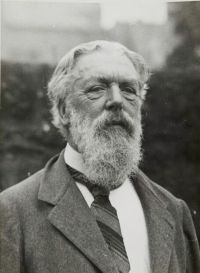 D'Arcy Wentworth ThompsonGilbert Charles ChubbWilliam James MansfieldH. W. ConnGeorge James AllmanHerbert George Flaxman SpurrellJ. W. GriffithD. Kerfoot ShuteJulius von SachsMarcus Hartog
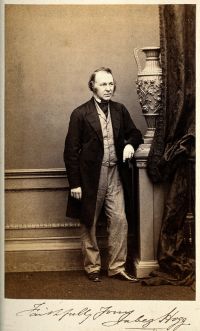 Jabez HoggAlfred B. Rendle, Arthur G. Tansley…Emil AbderhaldenNoble Smithson
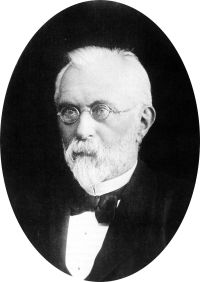 Eugenius WarmingWilliam A. LocySarah Ann Hackett StevensonFrancis M. Balfour
