Chemical combination

Definition and stakes

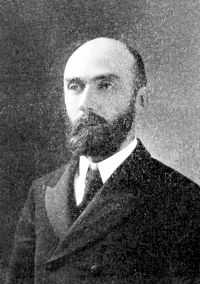
Portrait of John Henry Pepper John Henry Pepper,  The Boy's Playbook of Science

“ Thus we have traced out the distinction between mechanical aggregation and chemical affinity, taking for an example the difference between gunpowder as a whole (in which the ingredients are so nicely balanced that it is almost a chemical combination) , and its constituents, sulphur, charcoal, and nitre, when they are chemically combined; or, in briefer language, we have noticed the difference between the mechanical mixture, and some of the chemical combinations, of three important elements. ”

Source: Gutenberg

Mrs. Marcet,  Conversations on Chemistry, V. 1-2

“ Every chemical combination is an illustration of this rule. But let us proceed—
The 6th law is, that the force of chemical affinity between the constituents of a body is estimated by that which is required for their separation. This force is not always proportional to the facility with which bodies unite; for manganese, for instance, which, you know, is so much disposed to unite with oxygen that it is never found in a metallic state, yields it more easily than any other metal.
”
Source: Gutenberg

Robert Hunt,  The Poetry of Science; or, Studies of the Physical Phenomena of Nature

“ Although it may appear that some cases of chemical combination are due to these powers,—as, for instance, when the union of oxalic acid or sulphuric acid with lime produces an insoluble salt,—we cannot thus explain the constant proportions in which the metals, sulphur, oxygen, and similar bodies, unite. It is quite certain there is a power or principle, which we [Pg 286] have not yet reached, upon which are dependent all the phenomena which we now embrace under the term chemical affinity. ”
Source: Gutenberg

Get perspective with Kwize: daily news enlightened by great literature