Common knowledge
Definition and stakes
Quotes about “common knowledge”
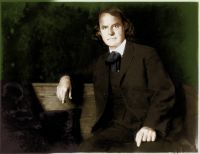
 Thomas Henry Huxley,
Lectures and Essays
“ And you know that what we call scientific knowledge is not any kind of conjuration, as people sometimes suppose, but it is simply the application of the same principles of common sense that we apply to common knowledge, carried out, if I may so speak, to knowledge which is uncommon. ”
 Annie Payson Call,
Nerves and Common Sense
“ To see the common sense of a process and, when we have not the opportunity to use the laws ourselves, to help others by means of our knowledge, impresses our own brains more thoroughly with the truth, especially if our advice is taken and acted upon and thus proved to be true. ”
 John Stuart Mill,
A System of Logic, Ratiocinative and Inductive
“ Such are: the degree of knowledge, and of intellectual and moral culture, existing in the community, and in every class of it; the state of industry, of wealth and its distribution; the habitual occupations of the community; their division into classes, and the relations of those classes to one another; the common beliefs which they entertain on all the subjects most important to mankind, and the degree of assurance with which those beliefs are held ”
 Josiah Royce,
The World and the Individual, First Series
(1899)
“ But we also find it socially convenient to view the common objects of our human and social knowledge as independent both of my fellow and myself, even while we still view these objects as the same for both of us, and for all other actual and possible human observers. ”
The Pacific Monthly (1898)
“ And we all praise famous men — Ancients of the College; For they taught us common sense — Tried to teach us common sense — Truth and God*s Own Common Sense. Which is more than knowledge. This we learned from famous men. Knowing not its uses When they showed in daily work Man must finish off his work — Right or wrong, his daily work — And without excuses. ”
 Bertrand Russell,
Our Knowledge of the External World as a Field for Scientific Method in Philosophy
“ If our logic is to find the common world intelligible, it must not be hostile, but must be inspired by a genuine acceptance such as is not usually to be found among metaphysicians. ”
William Hazlitt, Table Talk: Essays on Men and Manners
“ Learning is, in too many cases, but a foil to common sense; a substitute for true knowledge. ”
G. W. Foote, Comic Bible Sketches, Reprinted from "The Freethinker"
“ But they are conversant with one or two cardinal ideas of science, and they know the principles which underlie our daily life. What is called common sense (the logic of common experience) is their philosophy, and whoever seeks to move them must appeal to them through that. ”
 William Isaac Thomas,
The Unadjusted Girl, With Cases and Standpoint for Behavior Analysis
“ Science accumulates facts and principles which could never be determined by the common sense of the individual or community, and of so great a variety and generality that some of them are constantly passing over into practical life. ”
 James Frederick Ferrier,
Blackwood's Magazine
(1838)
“ How is the conversion of common sense into philosophy to be brought about? We answer, by accepting completely and faithfully the facts and expressions of common sense as given in their primitive obscurity, and then by construing them without violence, without addition, and without diminution into clearer and more intelligible forms. ”
 William Kingdon Clifford,
The Scientific Basis of Morals…
“ One is a statement about phenomena, about the objects which are actually in my possession; the other is a statement about my feelings, about my wants and desires. There are facts, to be got at by common sense, about the kind of thing that a man of a certain character and occupation will like to have in his house, and these facts may be organized into general statements on the assumption of uniformity in nature. Now the organized results of common sense dealing with facts are just science and nothing else. ”
 Samuel Taylor Coleridge,
The Literary Remains of Samuel Taylor Coleridge…
“ But in the popular acceptation, common sense in an uncommon degree is what the world calls wisdom. ”
Francis Adams, Australian Essays
“ Culture, we are told, is reading, but reading with a purpose to guide it and with system. The purpose, it is presumed, is attainment, but what is the system? We are to have knowledge, and not only knowledge but right tact and justness of judgment, forming themselves by and with judgment. ”
 Samuel Johnson,
A Journey to the Western Islands of Scotland
“ To the confidence of these objections it may be replied, that by presuming to determine what is fit, and what is beneficial, they presuppose more knowledge of the universal system than man has attained ”
Thomas Henry Huxley,
Lectures and Essays
“ They have accumulated a vast body of universally accepted knowledge; and the conceptions of man and of society, of morals and of law, based upon that knowledge, are every day more and more, either openly or tacitly, acknowledged to be the foundations of right action. ”
 Catharine Esther Beecher,
Common Sense Applied to Religion…
“ To this, add the fact that men in other professions are far more habituated to look at all questions in a practical relation, and to use the principles of common sense more than the principles of a system. ”
Robert Mudie, The Modern Athens
“ To examine society with a view to determine the [160] general spirit and character of those who compose it, is like examining an animal with a view to a knowledge of the nature and operation of the living principle. If we examine it while alive and in the performance of its functions, we see the results without being able to understand the machinery ”
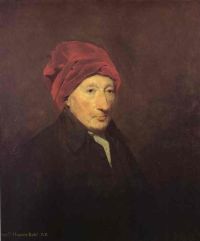 Thomas Reid,
An Inquiry into the Human Mind…
“ I find something within me that recoils against it, and inspires more reverent sentiments of the human kind, and of the universal administration. Common sense and reason have both one author; that almighty Author, in all whose other works we observe a consistency, uniformity, and beauty, which charm and delight the understanding: there must therefore be some order and consistency in the human faculties, as well as in other parts of his workmanship. ”
 Albert J. Beveridge,
The Young Man and the World
“ How much sense there is in these common maxims of the common people, proverbs not written by any one man, but axioms that spring out of the combined intelligence of the millions, meditating through the centuries. The sayings of the people are always simple and wise. ”
Alexander Campbell Fraser, Thomas Reid
“ I hope you will not think the worse of this Society when I tell you, that to it the world is indebted for a Comparative View of the Faculties of Man, and an Inquiry into Human Nature on the Principles of Common Sense. I have shown that all genuine reasoning does ultimately terminate in principles which it is impossible to disbelieve, and as impossible to prove; that, [55] therefore, the ultimate standard of truth to us is Common Sense, or that instinctive conviction into which all true reasoning does resolve itself ”
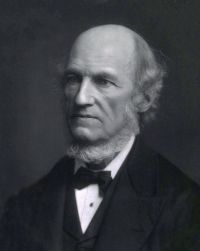 William Benjamin Carpenter,
Popular Science Monthly
(1873)
“ But, on the other hand, there are certain things we feel to be too strange and absurd to be believed; and that feeling we come to especially, when we have endeavored to cultivate our Common-Sense in the manner which I described to you in my last lecture. The higher our common-sense—that is, the general resultant of the whole character and discipline of our minds—the more valuable is the direct judgment that we form by the use of it. ”
 Herbert Spencer,
Essays: Scientific, Political, & Speculative…
“ To elucidate the matter, let us take the most familiar case in which the indirect judgments of Reason correct the direct judgments of Common Sense. The direct judgment of Common Sense is that the Sun moves round the Earth. ”
Peter Annet, The Miraculous Conception
“ What follows is a short examination of the two stories on the principles of what is usually called common sense, in the way in which an ordinary man would investigate a tale in which he was interested in knowing the truth. ”
Various, Blackwood's Edinburgh Magazine…
“ We propose making one or two very commonplace observations, professing to take no other guide than a small modicum of common sense, and to have no other object than our readers' delectation and the good of our country. ”
Alexander Campbell Fraser, Thomas Reid (1898)
“ On the other hand there are common prejudices which, while they last, are popularly dignified as 'common sense.' Some now universally admitted truths of science at first shocked men, although afterwards found to be in harmony with the general common sense to which philosophy appeals. ”
Alexander Campbell Fraser, Thomas Reid
“ They serve to direct us in the common affairs of life, when our reasoning faculty would leave us in the dark; they are part of our constitution; all the discoveries of our reason are grounded upon them; they make up what is called the common sense of mankind. ”
 Wesley Mills,
Voice production in singing and speaking…
“ As few can hope to unite all these qualities in themselves in even a moderate degree, openness of mind, temperance in the expression of opinion, and common sense with experience, must be largely relied on to furnish working conclusions. ”
James Frederick Ferrier,
Philosophical Works of the Late James Frederick Ferrier
(1888)
“ Reason and experience, that is, either personal observation or knowledge gathered from the history of mankind in the different eras of civilisation, these are the guides which will point out to us what the means are by which the good of society may be promoted, and its interests advanced. ”
Josiah Royce,
The World and the Individual, First Series
(1899)
“ And now, finally, after surveying all these so various types of beings, we have to recall the comment often already made in these lectures, and to assert that not only these different kinds of realities, but also the concrete experiences whereby we come to observe, and the ideas whereby we ourselves define, describe, and in general undertake to know these very objects, are themselves also in their own measure real, and are as truly real as are the various finite objects of common sense that we know. ”
 Anatole France,
Monsieur Bergeret in Paris
“ So that we see that the light first dawned upon those who, by the quality of their minds and the nature of their occupation, were better adapted than others to the solution of difficult problems. After this, all that was needed was common sense and close attention. Common sense is enough to-day. ”
John Doughty, The Parable of Creation (1892)
“ As I have elsewhere remarked, knowledge is one thing, understanding what we know another, and a loving life of what we understand another still. We may have a knowledge of the customs of polite society. ”
 George E. Ellis,
The Red Man and the White Man in North America
(1882)
“ Of course common-sense, after all, must be trusted on such themes to draw the line not only between opinions and theories, but even in the statement and interpretation of facts, as they come from romancers, sentimentalists, idealists, and philanthropists, or from literal, practical, matter-of-fact persons, speaking from experience. ”
 Johann Gottlieb Fichte,
The Vocation of the Scholar — Lecture IV. The Vocation of the Scholar
(1794)
“ The knowledge which he has acquired for society he must now actually apply to the uses of society; he must rouse men to the feeling of their true wants, and make them acquainted with the means of satisfying these. ”
David Masson, The Life of John Milton Volume 3 1643-1649
“ Whether we provide for action or conversation, whether we wish to be useful or pleasing, the first object is the religious and moral knowledge of right and wrong; the next is an acquaintance with the history of mankind, and with those examples which may be said to embody truth, and prove by events the reasonableness of opinions. ”
 Albion Woodbury Small,
The American Journal of Sociology
(1896)
“ And if this has been true in the past of those sciences upon which philosophy rests, how much more so in our own day, when these sciences have become the sources of knowledge that has transformed and reconstructed the very foundations of human thought! [2] VII. If we are not self-deceived, no scholars in the world are more sagacious than those in the United States about the subordination of all special knowledge to larger relations. ”
 Auguste Comte,
A General View of Positivism
“ Special studies carried on without regard for the encyclopædic principles which determine the relative value of knowledge, and its bearing on human life, will be condemned by all men of right feeling and good sense. ”
 Ellen H. Richards,
The Cost of Shelter
“ What is the value, of present-day knowledge if not to stimulate the conscious group, through the individual perhaps, but the group finally, to better use of its powers and opportunities toward a higher form of social life? ”
G. A. Johnston, An Introduction to Ethics, for Training Colleges… (1915)
“ The more complex civilisation grows, the more difficult it becomes to explain or to understand the good or value of the actions that men perform, the aims they set before themselves, and the knowledge that they acquire. In a simple and primitive community the good of every action can readily be explained. ”
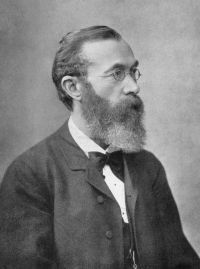 Wilhelm Max Wundt,
Elements of Folk Psychology
“ But, whatever our opinion concerning the possible success of such striving and concerning the relation of its two phases, there can be no doubt that the concept 'humanity,' which has become common property among civilized peoples, combines an objective with a subjective aspect. ”
John Moore, A View of Society and Manners in Italy…
“ He will be enabled to correct the theoretical notions he may have formed of human nature, by the practical knowledge of men. By contemplating their various religions, laws, and government, in action, as it were, and observing the effects they produce on the minds and characters of the people, he will be able to form a juster estimate of their value than otherwise he could have done. ”
 Robert Dale Owen,
Owen's Moral Physiology; or, A Brief and Plain Treatise on the Population Question
“ As each revolving year passes over, and as truth overcomes error, and as the diffusion of knowledge dispels ignorance, so will the subject elicit additional inquiry, and the merits of the work be more justly appreciated by the enlightened portion of the community. A further discussion and investigation of the subject will cause it to be better understood, and a public opinion favourable to the subject will be formed, of immense moral utility. ”
Charlotte M. Mason, An Essay Towards a Philosophy of Education…
“ Now, forceful personalities, persons of weight and integrity, of decision and sound judgment, are what the country is most in need of; and, if we propose to bring such persons up for the public service, the gradual inception of knowledge is one condition amongst others. ”
Thomas Henry Huxley,
American Addresses, with a Lecture on the Study of Biology
“ It is plain common sense, as all truth, in the long run, is only common sense clarified. ”
 Janet Erskine Stuart,
The Education of Catholic Girls
“ Minds endowed with common sense are an aristocracy among the "average," and if this quality of theirs is lifted above the ordinary round of business and trained in the domain of thought it becomes a sound and wide practical judgment. ”
George Iles, Popular Science Monthly (1885)
“ The idea of knowledge which I have sought to express makes clear the grounds whereon thought and discussion ask for full liberty. As men differing in natural ability, temperament, education, and stand-point, strive to attain views of truth, their results must inevitably vary. ”
Various, The Little Review, February 1915…
“ Thus has come to be the matter-of-fact multitude, the simple, the all-knowing, those who act and think and feel “as everybody else does,” as they are taught and trained by the ingenious apparatus of scientific, moral, and social classifications, definitions, simplifications, in a word—the civilized man. ”
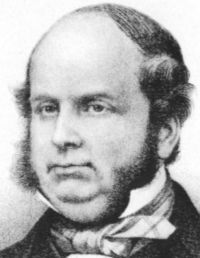 Henry Thomas Buckle,
History of Civilization in England…
“ And as the different tendencies observable in successive generations depend on the difference in their knowledge, it is evident, that we can only understand the working of the tendencies, by taking a wide view of the amount and character of the knowledge. ”
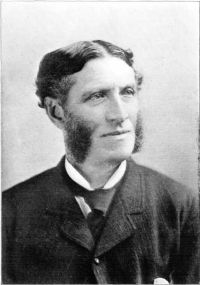 Matthew Arnold,
Discourses in America
“ But every one knows how we seek naturally to combine the pieces of our knowledge together, to bring them under general rules, to relate them to principles; and how unsatisfactory and tiresome it 105 would be to go on for ever learning lists of exceptions, or accumulating items of fact which must stand isolated. ”
Giuseppe Fiamingo, The American Journal of Sociology (1896)
“ In this work so much light is shed upon the organism of society, and human nature, and it is so full of civic wisdom, and the whole is expressed in language so brilliant, and at the same time so scientific, that one does not know whether to admire more the philosopher or the jurist, the biologist or the sociologist, the moralist or the litterateur. ”
Related terms
Authors who wrote about “common knowledge”
 John LockeBertrand RussellAlexander Campbell Fraser
 John DeweyJames Frederick FerrierCharlotte M. Mason
 Zhuangzi
 Frances WrightRobert Dale OwenJohn DoughtyThomas Henry HuxleyWilliam Kingdon CliffordJosiah RoyceSamuel Taylor ColeridgeWilliam JamesHerbert SpencerJohann Gottlieb FichteJohn Stuart MillThomas Reid
 Ralph Waldo Emerson
