Dominant chord

Definition and stakes

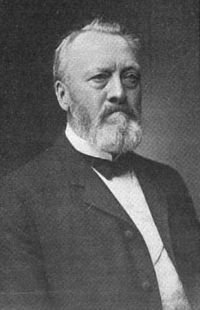
Portrait of Edward Berdoe Edward Berdoe,  The Browning Cyclopædia: A Guide to the Study of the Works of Robert Browning

“ The ‘commiserating sevenths’ are closely connected with the ‘dominant’s persistence’ in the next verse:—
‘Hark! the dominant’s persistence till it must be answered to:
So an octave struck the answer.’
The dominant chord in music is the chord written on the fifth degree of the scale, and it almost always has a seventh added to it, and in a large percentage of cases is followed by the tonic, the chord on the first degree of the scale. Now, in fugue form a theme is repeated in the dominant key, the latter being called the answer.
”
Source: Gutenberg

Portrait of Aubertine Woodward Moore Aubertine Woodward Moore,  For Every Music Lover

“ Every masterpiece of music clothes in tonal form some idea which originated in the composer's mind. To the interpreter it is given to invest it with living sound.
Chords and chord combinations all have their individual characteristics. Some cause satisfaction, for instance, others unrest. When a chord of the dominant seventh is heard, the educated musician knows that a solution is demanded. The unspoiled ear and taste instinctively feel something unfinished, and are disturbed if it be not followed by a return to the key chord.
”
Source: Gutenberg

Portrait of Ebenezer Prout Ebenezer Prout,  Fugue (1891)

“ The mental effect of the music is distinctly that of the key of C, till we come to (a) where the double significance of the third of the scale is very clearly shown. The first E, being followed by C, is the third of the tonic, and is answered by the third of the dominant; the second E is not followed by a note of the tonic chord, and is therefore regarded as sixth of the dominant. ”
Source: Wikisource

Get perspective with Kwize: daily news enlightened by great literature