Equation of motion

Definition and stakes

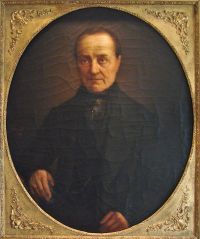
Portrait of Auguste Comte Auguste Comte,  The philosophy of mathematics

“ In like manner, in Dynamics, when we desire to know the expression for the velocity acquired at each instant by a body impressed with a motion varying according to any law, we will consider the motion as being uniform during an infinitely small element of the time t, and we will thus immediately form the differential equation de = vdt, in which v designates the velocity acquired when the body has passed over the space e ”
Source: Gutenberg

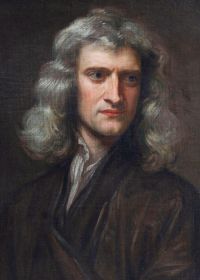
Portrait of Isaac Newton Isaac Newton,  The Mathematical Principles of Natural Philosophy (1846)

“ Regarding lines as generated by the motion of points, surfaces by the motion of lines, and solids by the motion of surfaces, and considering that the ordinates, abscissae, &c., of curves thus formed, vary according to a regular law depending on the equation of the curve, he deduced from this equation the velocities with which these quantities are generated, and obtained by the rules of infinite series, the ultimate value required. ”
Source: Wikisource

Portrait of Horace Lamb Horace Lamb,  1911 Encyclopædia Britannica, Volume 17… (1911)

“ Whenever, as in the preceding examples, a body or a system of bodies, is subject to constraints which leave it virtually only one degree of freedom, the equation of energy is sufficient for the complete determination of the motion. If q be any variable co-ordinate defining the position or (in the case of a system of bodies) the configuration, the velocity of each particle at any instant will be proportional to q̇, and the total kinetic energy may be expressed in the form 1/2Aq̇2, where A is in general a function of q [cf. equation (14) ] . ”
Source: Wikisource

Get perspective with Kwize: daily news enlightened by great literature