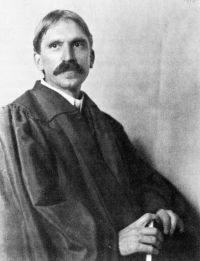
“ The idea, or ideal, becomes a fixed principle, and life, like any other force, is driven into mechanical repetition of given motions—millions of times over and over again—according to the fixed ideal. ”
Fixed idea
Definition and stakes
The theme of “fixed idea” has been addressed by authors such as Josiah Royce, Johann Gottlieb Fichte, D. H. Lawrence, Anton Chekhov and Alfred H. Lloyd. It is often associated with terms like philosophy, principle, world, social and sense.
Quotes about “fixed idea”
 Dinah Maria Mulock Craik,
A Life for a Life, Volume 1 (of 3…
“ My secret was simple enough; one which Nature herself often tries and rarely fails in—the law of substitution; the slow eradication of any fixed idea, by supplying others, under the influence of which the original idea is, at all events temporarily, laid to sleep. ”

 Johann Gottlieb Fichte,
On the Nature of the Scholar — Lecture VII.…
“ The Idea alone impels him; where it does not move him, he rests and remains inactive. He does nothing with precipitation, hurried forward by disquietude and restlessness; these may well be symptoms of unfolding power, but they are never to be found in conjunction with true, developed, mature and manly strength. Until the Idea stands before him clear and breathing, finished and perfect even to word or deed, nothing moves him to action; the Idea rules him entirely, governs all his powers, and employs all his life and effort. ”
Johann Gottlieb Fichte,
On the Nature of the Scholar — Lecture III.…
“ Whatever may now dwell within him,—or, more strictly speaking, whatever he might have acquired in the course of his progressive culture,—he is unable to explain clearly either to himself or others, or to make it the deliberate rule of his actions and thus realize it in the world. He wants the two necessary elements of the true life of the Idea,—clearness and freedom. ”
Johann Gottlieb Fichte,
Addresses to the German Nation…
(1922)
“ Nevertheless, between the idea and the act of introducing it into every separate form of life there lies a great gulf. To fill up this gulf is not only the work of the man of affairs, who indeed must previously have learnt enough to be able to understand you, but the work also of you, who in the world of thought must not forget life. ”
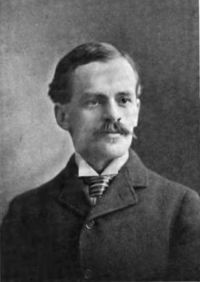 Alfred H. Lloyd,
The will to doubt
“ Once more the difficulty is in the assumption, so natural to an objective science, of fixed conceptions. Are purpose and social feeling so fixed in their nature, and above all so well understood, that their presence or absence can be established by an experiment or two or ten thousand conducted on strictly objective principles? No conceptions are fixed, and instead of questions of fact we should have, what a strictly objective science cannot have, questions of meaning. ”
Johann Gottlieb Fichte,
On the Nature of the Scholar — Lecture III.…
“ He, on the contrary, in whom the Idea perfectly reveals itself, looks out upon and thoroughly penetrates all reality by the light of the Idea. Through the Idea itself he understands all its related objects,—how they have become what they are, what in them is complete, what is still awanting, and how the want must be supplied ”
Johann Gottlieb Fichte,
Sun-Clear Statement — Introduction
(1868)
“ My reader, does a philosophical system, such as I have just now described, appear to you to be honorable to common sense and its interests—a system which insists of common sense that it should be cured of its inborn blindness in the school of the philosopher, and should there get an artificial light to replace its own natural light? ”
A World of Wonders, with Anecdotes and Opinions Concerning Popular Superstitions
“ Moreover, our features are constantly varying; and if our moral and intellectual faculties are to be inferred from these changes, how are we to establish or follow up any fixed principle, amid such a labyrinth of confusion? ”
 James Frederick Ferrier,
Reid and the Philosophy of Common Sense
(1883)
“ In our problem the desiderated solution is the means; the end is the development, or, we should rather say, the creation of speculative thought, a kind of thought different altogether from ordinary popular thinking. "Oh! then," some one will perhaps exclaim, "after all, the whole question about perception resolves it into a mere gymnastic of the mind." ”
 Thomas Hill Green,
Lectures on the Principles of Political Obligation
“ But unless a discipline and refinement of the natural impulses, through the operation of social institutions and arts, went on pari passu with the expression of the idea of perfection in such institutions and arts, the direction of the impulses of the individual by this idea, when in some form or other it has been consciously awakened in him, would be practically impossible. The moral progress of mankind has no reality except as resulting in the formation of more perfect individual characters ”
Johann Gottlieb Fichte,
Characteristics of the Present Age
(1806)
“ Hence our principle, as we ourselves have expressed it in all its rigour,—it and nothing else,—is our meaning, against which it is, and always will be, impossible to bring forward any essential objection. ”
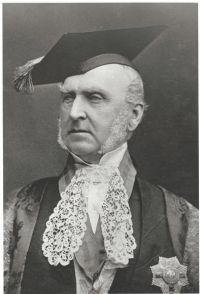 Redmond Barry,
Inaugural address, delivered before the members of the Victorian Institute…
(1854 | noyear)
“ In the elaboration of each separate idea, a compensating mutual relation with some other cognate idea is found, which brings a fresh agency to bear upon, assimilate or clash with it; such attrition, different from that which wastes and diminishes physical bodies, serving to sharpen and refine the mind, correct, enlarge or perfect the idea. ”
Boyd Henry Bode, Creative Intelligence: Essays in the Pragmatic Attitude
“ If "to substitute" means that philosophy is a complete exchange of the modes of feeling, perception, desire, and will for a world of categories or notions, then, saying nothing of the range of values in such a world, the problem of the meaning 94 of "adequate" is on our hands. What is the notion to be adequate to? But if "to substitute" means that the modes of feeling, perception, desire, and will, when in a specific situation of ambiguity and inhibition, go over into, take on, the modes of data and hypothesis in the effort to get rid of inhibiting conflict that is quite another matter. ”
G. W. Foote, Flowers of Freethought (First Series…
“ When once an idea enters the human mind it acts according to the necessary laws of thought. It changes to its own complexion all its mental surroundings, and through every mental and moral channel influences the world of practice outside. ”
 Josiah Royce,
The World and the Individual, First Series
(1899)
“ In other words, we shall find that while, for our purposes, we, the critics, must first sharply distinguish the apparently external purpose that, as it were, from without, we assign to the idea, from the internal meaning of the idea, as present to a passing conscious instant, still, this our assignment of the external purpose, this our assertion that the idea knows or resembles, or imitates, or corresponds to, fact wholly beyond itself, must in the end be justified, if at all, by appeal to the truth, i.e. ”
Johann Gottlieb Fichte,
A Criticism of Philosophical Systems
“ The realism which forces itself upon all, even the most decided idealist—namely, the assumption that things exist independently and outside of us—is involved in the idealistic system itself; and is, moreover, explained and deduced in that system. Indeed, the deduction of an objective truth, as well in the world of appearances as in the world of intellect, is the only purpose of all philosophy. ”
William Hazlitt, The Collected Works of William Hazlitt…
“ Meet some new matter to look up, and wonder.’ But reason, not employed to interpret nature, and to improve and perfect common sense and experience, is, for the most part, a building without a foundation.—The criticism exercised by reason then on common sense may be as severe as it pleases, but it must be as patient as it is severe. ”
Samuel Warren, Ten Thousand a-Year. Volume 3
“ We are permitted to obtain a few occasional glimpses of the one, as well as of the other—and they should satisfy us of the reality of the sublime and awful system which is in existence around us. What know we of the ultimate scope and end of His working? What seeming good shall we be sure will not produce evil? ”
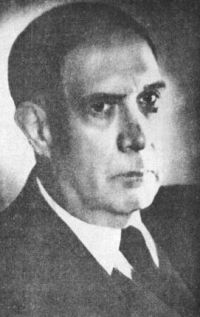
“ However, you see my point: before you can have action to accomplish a purpose, you must have a vision of what the purpose is. The ideal precedes and accompanies the accomplishment of reform—that you understand! The world must be reformed, must be built up again rather, from its foundations. ”
 J. B. Bury,
The Idea of Progress: An Inquiry into Its Origin and Growth
“ Therefore, if we take the methods and the result together, a more perfect world is impossible. The argument was ingenious, though full of assumptions, but it was one which could only satisfy a philosopher. ”
 John Stuart Mill,
Autobiography (Mill) — Chapter VII. 1840-1870
(1874)
“ Now, the difference between these two schools of philosophy, that of Intuition, and that of Experience and Association, is not a mere matter of abstract speculation; it is full of practical consequences, and lies at the foundation of all the greatest differences of practical opinion in an age of progress. The practical reformer has continually to demand that changes be made in things which are supported by powerful and widely-spread feelings, or to question the apparent necessity and indefeasibleness of established facts ”
Johann Gottlieb Fichte,
Sun-Clear Statement — Introduction
(1868)
“ Hence, it is the tendency of all newer philosophy which understands itself and knows what it wants. I have not to defend any of the others here; I speak only of my own, of the so-called newest. The standpoint, the method, the whole form of this philosophy, involves statements which may induce the belief that it does not tend towards the result just described, but towards its very opposite, namely: if its peculiar standpoint is lost sight of, and if that which is valid for it is held as valid for everyday life and common sense. ”
Johann Gottlieb Fichte,
Sun-Clear Statement — Third Conversation
(1868)
“ You are not satisfied to establish your product, as in itself existing and agreeing with itself; you go beyond it. You assert it to be, moreover, a picture of true actual consciousness, as it exists without the co-operation of philosophy, or of that consciousness which we all possess. ”
Robert E. Speer, The Stuff of Manhood: Some Needed Notes in American Character (1917)
“ Finally, in the formation of an opinion as to the abstract preferableness of one course of action over another, or as to the truth or falsehood or right significance of a proposition, the fact that the majority of one’s contemporaries lean in the other direction is naught, and no more than dust in the balance. ”
Johann Gottlieb Fichte,
Addresses to the German Nation…
(1922)
“ Created, indeed, in the proper sense of the word, it cannot be, for men cannot make something out of nothing. If our proposal is to be practicable at all, this pleasure must exist originally, and be simply present and innate in all men without exception. ”
Johann Gottlieb Fichte,
The Religious Significance of the Science of Knowledge
(1799)
“ Now, if I am but ripe for that abstraction, that is, if I take it from out myself, and do not accept it traditionally, then that one principle can only be thought as a for itself existing and working principle, but not as a mere quality or predicate, inherent to some substance or another. ”
William James, Pragmatism: A New Name for Some Old Ways of Thinking
“ Between the coercions of the sensible order and those of the ideal order, our mind is thus wedged tightly. Our ideas must agree with realities, be such realities concrete or abstract, be they facts or be they principles, under penalty of endless inconsistency and frustration. ”
 Anthony M. Ludovici,
Nietzsche and Art
“ It was their Will to Power that simplified, organized, ordered and schematized the world, and it was their will to prevail which made them proclaim their simplification, their organization, their order and scheme, as the norm, as the thing to be believed, as the world of values which must be regarded as creation itself. ”
Johann Gottlieb Fichte,
Sun-Clear Statement — Fifth Conversation
(1868)
“ Our philosophy is, therefore, most decidedly favorably disposed towards common sense, and secures its rights, as we asserted at the beginning; and all other philosophy which opposes it in this respect is in opposition to common sense. ”
 Jean Jaurès,
Socialist Unity
(1899)
“ It does not suffice to pronounce always the two or three essential formulas to resolve all problems. The adaptation of these formulas to the movement of life, the incessant confronting them with facts, infers a perpetual awakening of thought. ”
Cora May Williams, A Review of the Systems of Ethics Founded on the Theory of Evolution
“ A compromise between idealism and realism is everywhere necessary; and such a compromise is made, despite all fine words to the contrary, by every one,—by one only more openly or consciously than another. ”
John Theodore Merz and Henry Sturt, 1911 Encyclopædia Britannica, Volume 17… (1911)
“ What remains to be done is, not to explain how such a world manages to be what it is, nor how we came to form these notions, but merely this—to expel from the circle and totality of our conceptions those abstract notions which are inconsistent and jarring, or to remodel and define them so that they may constitute a consistent and harmonious view. ”
 Harry Emerson Fosdick,
Christianity and Progress
“ The practical applications of this ideal, as, for example, to the coloured problem in America, are so full of difficulty that no one need be ashamed to confess that he does not see in detail how the principle can be made to work. ”
Johann Gottlieb Fichte,
Characteristics of the Present Age
(1806)
“ Thus the formula which we laid down,—‘That the life of Man be dedicated to that of his Race,’—may also be expressed thus,—‘That the life of Man be dedicated to Ideas;’—for Ideas embrace the Race as such, and its Life; and thus the Life according to Reason, or the only good and true Life, consists in this,—that Man forget himself in Ideas, and neither seek nor know any enjoyment save in Ideas, and in sacrificing all other enjoyments for them.—Thus far for our explanation. ”
 Mikhail Bakunin,
God and the State — Chapter 2
“ The general idea is always an abstraction and, for that very reason, in some sort a negation of real life. ”
 Johann Wolfgang von Goethe,
Maxims and Reflections
“ Our plans and designs should be so perfect in truth and beauty, that in touching them the world could only mar. We should thus have the advantage of setting right what is wrong, and restoring what is destroyed. ”
 Victor Hugo,
Les Misérables — Volume 4, Book Third…
“ Elements and principles mingle, combine, wed, multiply with each other, to such a point that the material and the moral world are brought eventually to the same clearness. The phenomenon is perpetually returning upon itself. ”
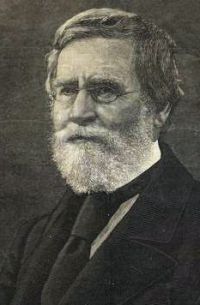
“ We then, abandoning these, seek for some higher and more universal principles—essential in the nature of things, and thus independent of the will and action of man—to see if they will throw any light on the subject. ”
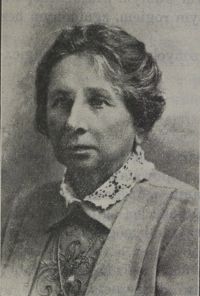 Josepha Kodis,
Richard Avenarius
(1896)
“ It is a rather popular exposition of the chief ideas of the Critique, namely, of the critical realism, which consists in the critical and conscious acceptation of the facts first given to a naïve mind, namely, that the world consists of ‘things’ and ‘ideas,’ in opposition to those idealistic theories, which consider the world as ‘representation’ or ‘will,’ or ‘will and representation,’ etc. ”
 Friedrich Schiller,
Aesthetical Essays of Friedrich Schiller
“ Direct the world on which you act towards that which is good, and the measured and peaceful course of time will bring about the results. You have given it this direction if by your teaching you raise its thoughts towards the necessary and the eternal; if, by your acts or your creations, you make the necessary and the eternal the object of your leanings. The structure of error and of all that is arbitrary must fall, and it has already fallen, as soon as you are sure that it is tottering. But it is important that it should not only totter in the external but also in the internal man. ”
James Frederick Ferrier,
An Introduction to the Philosophy of Consciousness
(1883)
“ How is the conversion of common sense into philosophy to be brought about? We answer, by accepting completely and faithfully the facts and expressions of common sense as given in their primitive obscurity, and then by construing them without violence, without addition, and without diminution into clearer and more intelligible forms. ”
Boyd Henry Bode, Creative Intelligence: Essays in the Pragmatic Attitude
“ If one moves a certain way along a certain line he can never return to the starting-point and set out unchanged along any other. If one does one thing one cannot do another. And when the sufficient reasons for this mutual exclusion lie in the structure and organization of the human mind and body our deliberation as between the two alternatives, our constructive comparison of them remains upon the ethical plane. ”
William James, The Philosophical Review (1892)
“ We need a fair and square and explicit abandonment of such questions as that of the soul, the transcendental ego, the fusion of ideas or particles of mind stuff, etc., by the practical man; and a fair and square determination on the part of the philosophers to keep such questions out of psychology and treat them only in their widest possible connections, amongst the objects of an ultimate critical review of all the elements of the world. ”
 Ameen Rihani,
Path of Vision; pocket essays of East and West
(1921)
“ It is among the poor and obscure, however, that the ideal often finds its sincerest expression; for those who make it their business often speculate in certain tangible concrete forms of it—reform formulas—that are neither useful in a general way nor attractive. ”