“ We would now direct your attention to habit—one of the most obvious and important elements in the formation of character. Its influence is felt in every sphere of your activity, its power extends to every faculty of your nature, and affects your personal, social, civil, and religious thought, feeling, and conduct. The nature of habit may be considered in two lights: first, an ease and excellence in doing a thing from having done it frequently ”
Habitue
Definition and stakes
The theme of “habitue” has been addressed by authors such as . It is often associated with terms like habit, mind, character, thought and consciousness.
Quotes about “habitue”
 William Walker Atkinson,
A Series of Lessons in Raja Yoga
William Walker Atkinson,
A Series of Lessons in Raja Yoga
“ Think over this a little and you will see the truth of it. You do certain things without a thought, because you have gotten into the habit of doing them. You act in certain ways because you have established the habit. You are in the habit of being truthful, honest, virtuous, because you have established the habit of being so. Do you doubt this? Then look around you—or look within your own heart, and you will see that you have lost some of your old habits of action, and have acquired new ones. The building up of Character is the building up of Habits. ”
William James, Talks To Teachers On Psychology…
“ They talk of the smoking-habit and the swearing-habit and the drinking-habit, but not of the abstention-habit or the moderation-habit or the courage-habit. But the fact is that our virtues are habits as much as our vices. All our life, so far as it has definite form, is but a mass of habits,—practical, emotional, and intellectual,—systematically organized for our weal or woe, and bearing us irresistibly toward our destiny, whatever the latter may be. ”
Robert Aitkin Bertram, The Preacher's Complete Homiletic Commentary on the Books of the Bible…
“ Habits are like paths beaten hard and clear by the multitude of light footsteps which go to and fro. The daily restraint or indulgence of the nature, in the business, in the hope, in the imagination, which is the inner laboratory of the life, creates the character which, whether it be here or there, settles the destiny.—J. Baldwin Brown. ”
Charlotte Marie Mason, Home Education (Mason) — Part III: 'Habit Is Ten Natures'
“ Parents and Teachers must lay down Lines of Habit.--All this is nothing new; we have always known that 'use is second nature,' and that 'man is a bundle of habits.' It was not the fact, but the application of the fact, and the physiology of habit, that were new and exceedingly valuable ideas to me, and I hope they may be of some use to the reader. ”
Charlotte M. Mason, Parents and children (1897)
“ It is not only the obscene speech, the unholy acts; that which signifies is the manner of thoughts we think; speech, act, are the mere outcome; it is the habitual thought of a man which shapes that which we call his character. And these, can we reasonably doubt that every imagination of their heart is only evil continually? We say, use is second nature, but let us consider what we mean by the phrase; what is the philosophy of habit so far as it has been discovered to us. The seat of habit is the brain; the actual grey nervous matter of the cerebrum. ”
 James Lane Allen,
Out from the heart
(1900)
James Lane Allen,
Out from the heart
(1900)
“ Every established mental condition is an acquired habit, and it has become such by continuous repetition of thought. Despondency and cheerfulness, anger and calmness, covetousness and generosity—indeed, all states of mind—are habits built up by choice, until they have become automatic. A thought constantly repeated at last becomes a fixed habit of the mind, and from such habits proceeds the life. ”
 Georg Wilhelm Friedrich Hegel,
Hegel's Philosophy of Mind
Georg Wilhelm Friedrich Hegel,
Hegel's Philosophy of Mind
“ In scientific studies of the soul and the mind, habit is usually passed over—either as something contemptible—or rather for the further reason that it is one of the most difficult questions of psychology. ”
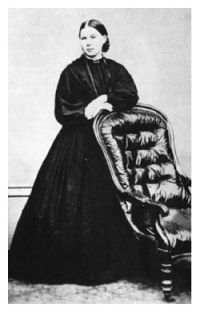 Charlotte Mason,
Parents and Children
Charlotte Mason,
Parents and Children
“ HABIT. The Vicious by Inveterate Habit––Use is second nature, we say. Habit is ten natures; habit begins as a cobweb, and ends as a cable. 'Oh, you'll get used to it,' whatever it is. Dare we face the habits in which these people have their being? ”
David Masson, The Three Devils: Luther's, Milton's…
“ Soul, mind, spirit, these old and simple words are the strongest, the profoundest, the surest; age cannot antiquate them, nor science undo them; they last with the rocks, and still go beyond. But, having in view rather the operation than the cause, we find a use also in such alternative phrases as “mode of thinking,” “mode of feeling and thinking,” “habit of thought,” “moral and intellectual character or constitution,” and the like. ”
 F. H. Bradley,
Ethical Studies — Essay VI.
(1876)
F. H. Bradley,
Ethical Studies — Essay VI.
(1876)
“ The habits we encourage or suffer, we are aware of or might be aware of; we know their moral quality, and hence are responsible for them. Our character formed by habit is the present state of our will, and, though we may not be fully aware of its nature, yet morally it makes us what we are. [16] Our will is not this, that, or the other conscious volition, nor does it exist just so far as we reflect upon it. ”
William James, Talks To Teachers On Psychology…
“ In my last talk, in treating of Habit, I chiefly had in mind our motor habits,—habits of external conduct. But our thinking and feeling processes are also largely subject to the law of habit, and one result of this is a phenomenon which you all know under the name of 'the association of ideas.' To that phenomenon I ask you now to turn.You remember that consciousness is an ever-flowing stream of objects, feelings, and impulsive tendencies. ”
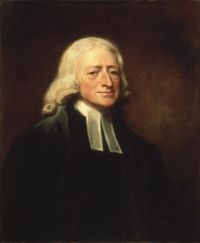 John Wesley,
The works of the Rev. John Wesley…
John Wesley,
The works of the Rev. John Wesley…
“ And in that day shall be discovered every inward working of every human soul: every appetite, passion, inclination, affection, with the various combinations of them, with every temper and disposition that constitute the whole complex character of each individual. ”
Nicolas August Ludwig Jacob Johannsen, Popular Science Monthly (1875)
“ Discipline, habit, and character, appear to be activity crystallized in seeking adaptation to our environments. What is the truth that stands out in relief? Clearly, that character, habit, and discipline, are the reflex upon ourselves of activity, moral, mental, or physical. Whence it seems to follow that useless or vicious activity will appear as useless or vicious character and discipline. ”
 Charles Horton Cooley,
Human nature and the social order
(1902)
Charles Horton Cooley,
Human nature and the social order
(1902)
“ When, on the other hand, we say that right is largely determined by habit, we only emphasize the other aspect of that progressive mingling of continuity with change, which we see in mental life in all its phases. Habit, we know, makes lines of less resistance in thought, feeling, and action ”
Charlotte Marie Mason, Home Education (Mason) — Part IV: Some Habits Of Mind - Some Moral Habits
“ A Mind at the Mercy of Associations.--We will consider, then, the nature and the functions of attention. The mind--with the possible exception of the state of coma--is never idle; ideas are for ever passing through the brain, by day and by night, sleeping or walking, mad or sane. We take a great deal too much upon ourselves when we suppose that we are the authors and intenders of the thoughts we think. ”
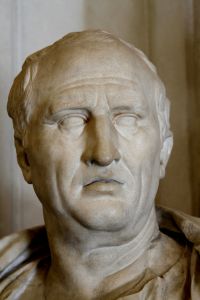 Marcus Tullius Cicero,
The Orations of Marcus Tullius Cicero…
Marcus Tullius Cicero,
The Orations of Marcus Tullius Cicero…
“ But when we speak of a man's habitual condition, we mean his constant and absolute completeness of mind or body, in some particular point—as for instance, his perception of virtue, or of some art, or else some science or other. ”
Marcus Tullius Cicero,
On Invention — Book 2
“ But as habit consists in some perfect and consistent formation of mind or body, of which kind are virtue, knowledge, and their contraries; the fact itself, when the whole circumstances are stated, will show whether this topic affords any ground for suspicion. For the consideration of the state of a man's mind is apt to give good grounds for conjecture, as of his affectionate or passionate disposition, or of any annoyance to which he has been exposed ”
William James, The Principles of Psychology, Volume 2…
“ We are once for all so made that when certain impressions come before our mind, one of them will seem to call for or repel the others as its companions. To a certain extent the principle of habit will explain these æsthetic connections. ”
Harry D. Kitson, How To Use Your Mind
“ They will develop whether you wish them or not. Already you are "a bundle of habits"; they manifest themselves in two ways—as habits of action and habits of thought. You illustrate the first every time you tie your shoes or sign your name. ”
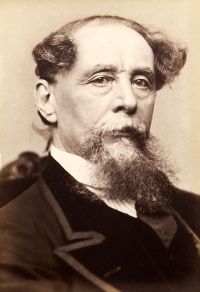 Charles Dickens,
Sketches by Boz, Illustrative of Every-Day Life and Every-Day People
Charles Dickens,
Sketches by Boz, Illustrative of Every-Day Life and Every-Day People
“ CHAPTER XXV—A VISIT TO NEWGATE ‘The force of habit’ is a trite phrase in everybody’s mouth; and it is not a little remarkable that those who use it most as applied to others, unconsciously afford in their own persons singular examples of the power which habit and custom exercise over the minds of men, and of the little reflection they are apt to bestow on subjects with which every day’s experience has rendered them familiar. ”
 Ralph Waldo Trine,
What All The World's A-Seeking
Ralph Waldo Trine,
What All The World's A-Seeking
“ Thought is the force underlying all. And what do we mean by this? Simply this: Your every act—every conscious act—is preceded by a thought. Your dominating thoughts determine your dominating actions. The acts repeated crystallize themselves into the habit. The aggregate of your habits is your character. Whatever, then, you would have your acts, you must look well to the character of the thought you entertain. Whatever act you would not do,—habit you would not acquire,—you must look well to it that you do not entertain the type of thought that will give birth to this act, this habit. ”
William James, Talks To Teachers On Psychology…
“ If, namely, we wish our trains of ideation and volition to be copious and varied and effective, we must form the habit of freeing them from the inhibitive influence of reflection upon them, of egoistic preoccupation about their results. Such a habit, like other habits, can be formed. Prudence and duty and self-regard, emotions of ambition and emotions of anxiety, have, of course, a needful part to play in our lives. ”
William James, Talks To Teachers On Psychology…
“ Our volitional habits depend, then, first, on what the stock of ideas is which we have; and, second, on the habitual coupling of the several ideas with action or inaction respectively. How is it when an alternative is presented to you for choice, and you are uncertain what you ought to do? ”
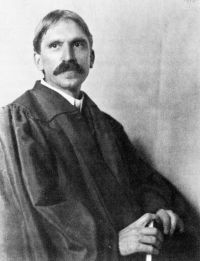 John Dewey,
Human Nature and Conduct: An introduction to social psychology
John Dewey,
Human Nature and Conduct: An introduction to social psychology
“ Concrete habits do all the perceiving, recognizing, imagining, recalling, judging, conceiving and reasoning that is done. "Consciousness," whether as a stream or as special sensations and images, expresses functions of habits, phenomena of their formation, operation, their interruption and reorganization.Yet habit does not, of itself, know, for it does not of itself stop to think, observe or remember. Neither does impulse of itself engage in reflection or contemplation. ”
Charlotte Marie Mason, Home Education (Mason) — Part III: 'Habit Is Ten Natures'
“ Habit runs on the Lines of Nature.--But habit runs on the lines of nature: the cowardly child habitually lies that he may escape blame; the loving child has a hundred endearing habits; the good-natured child has a habit of giving; the selfish child, a habit of keeping. Habit, working thus according to nature, is simply nature in action, growing strong by exercise. ”
Georg Wilhelm Friedrich Hegel,
The Philosophy of Fine Art, volume 1…
“ Glancing now at the main position we have arrived at, and from which our inquiry will proceed, we have found that circumstances, conditions, and relations, whether determined with a reference to the external world or the subjective consciousness, only create the situation by virtue of the temperament or passion which experiences them and derives its nutriment through them. ”
James Ward, 1911 Encyclopædia Britannica (1911)
“ The growth of intellection and self-consciousness reacts powerfully upon the emotional and active side of mind. To Conduct. describe the various sources of feeling and of desire that thus arise—aesthetic, social and religious sentiments, pride, ambition, selfishness, sympathy, &c.—is beyond the scope of systematic psychology, and certainly quite beyond the limits of an article like the present. But at least a general résumé of the characteristics of activity on this highest or rational level is indispensable. ”
John Dewey,
Human Nature and Conduct: An introduction to social psychology
“ It overrides our formal resolutions, our conscious decisions. When we are honest with ourselves we acknowledge that a habit has this power because it is so intimately a part of ourselves. It has a hold upon us because we are the habit. ”
John Dewey,
Human Nature and Conduct: An introduction to social psychology
“ These traits of a bad habit are precisely the things which are most instructive about all habits and about ourselves. They teach us that all habits are affections, that all have projectile power, and that a predisposition formed by a number of specific acts is an immensely more intimate and fundamental part of ourselves than are vague, general, conscious choices. All habits are demands for certain kinds of activity; and they constitute the self. ”
Joseph Butler, The Analogy of Religion to the Constitution and Course of Nature
“ We can form habits—both bodily and mental. As these operate in producing radical changes in human character, we will look for a moment at the process. —Neither perceptions, nor knowledge, are habits; though necessary to forming them. —There are habits of perception, however, and habits of action: the former are passive, the latter active. —Habits of body are produced by external acts, and habits of mind by the exertion of principles ”
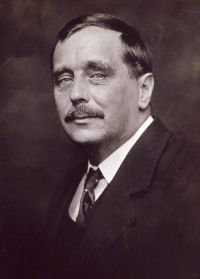 H. G. Wells,
Mankind in the Making
H. G. Wells,
Mankind in the Making
“ Their memories set, their opinions set, their methods of expression set, their delights recur and recur, they convert initiative into mechanical habit day by day. Let them taste any pleasure and each time they taste it they deepen a need. At last their habits become imperative needs. With such a disposition, external circumstances and suggestions, I venture to believe, may make a man either into an habitual church-goer or an habitual drunkard, an habitual toiler or an habitual rake. ”
 David Hume,
A Treatise of Human Nature
David Hume,
A Treatise of Human Nature
“ As is the ‘habit’ which determines the expectation, such must be the expectation itself; and as have been the sequences of feeling in each man’s past, such must be the habit which results from them. Now no one’s feelings have always occurred to him in the same relative order. ”
 Josiah Royce,
The Conception of God
(1897)
Josiah Royce,
The Conception of God
(1897)
“ What from a psychological point of view appeared to us as the evanescence, the infinite delicacy, the natural instability, of your selfhood, is now to be viewed, in the light of your ideal, as the essential uniqueness of just your significant experience of selfhood. For just what as mere content is so fleeting, is in the light of the one and unique goal a process tending and striving thither. ”
William Henry Pyle, The Science of Human Nature: A Psychology for Beginners
“ He has writing habits, spelling habits, reading habits, arithmetic habits. He has political habits, religious habits. He has various social habits, habitual attitudes which he takes toward his fellows. He has moral habits—he is honest and truthful, or he is dishonest and untruthful. He always looks on the bright side, or else on the dark side of events. All these habits and many more, he has. They are structures which he has built. One’s life, then, is the sum of his tendencies, and these tendencies one establishes in early life. ”
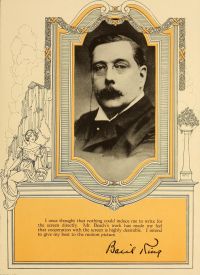 Basil King,
The City of Comrades
Basil King,
The City of Comrades
“ She weighed this, a forefinger against a cheek.“The big ways are those which indicate character, aren’t they? While the little ones only make for habits. Men differ as to their habits, but in character they’re all cut on the same pattern—two or three patterns at most.” ”
George Henry Lane Fox Pitt-Rivers, Conscience & Fanaticism: An Essay on Moral Values
“ This law of habit we may reasonably regard as exemplified in the life of every individual [Pg 75] in the long line of genealogical ascent that connects us with our humblest ancestors, in so far as every permanent advance in the scale of life implies a basis of habit embodied in a structure which has been perfected by practice. ”
 John of the Cross,
The Spiritual Canticle
John of the Cross,
The Spiritual Canticle
“ To these habits belong that of speaking, thinking, and the doing of things that are useless; and likewise, the not making use of these things according to the requirements of the soul's perfection; other desires also the soul may have, with which it ministers to the desires of others, to which may be referred display, compliments, flattery, human respect, aiming at being well thought of, and the giving pleasure to people, and other useless actions, by which it labored to content them, wasting its efforts herein, and finally all its strength. ”
 Fanny Kemble,
Records of Later Life
Fanny Kemble,
Records of Later Life
“ Of the discomfort and disorder of our mode of life I cannot easily give you a notion, for you know nothing of the sort, and, until now, neither did I. The absence of decent regularity in our habits, and the slovenliness of our whole existence, is peculiarly trying to me, who have a morbid love of order, system, and regularity, and a positive delight in the decencies and elegancies of civilized life. ”
