Bertrand Russell,
Philosophy
(1927)
“ The tendency of our perceptions is to emphasise increasingly the objective elements in an impression, unless we have some special reason, as artists have, for doing the opposite. ”
Bertrand Russell,
Philosophy
(1927)
“ The tendency of our perceptions is to emphasise increasingly the objective elements in an impression, unless we have some special reason, as artists have, for doing the opposite. ”
Edmond Holmes, What Is and What Might Be
“ The more faithfully he tries to render his impression of the object, the more does that impression gain in truth and strength; and in proportion as the impression becomes truer and stronger, so does the rendering of it become more masterly and more correct. ”
Lord Henry Home Kames, Elements of Criticism, Volume III
“ Yet a singular opinion that impressions are the only objects of perception, has been espoused by some philosophers of no mean rank; not attending to the foregoing peculiarity in the senses of seeing and hearing, that we perceive objects without being conscious of an organic impression or of any impression. ”
Mary Wollstonecraft Shelley, Tales and Stories
“ No person and no incident, perhaps, takes a very strong hold upon the imagination; but the general impression is one of a sphere of exalted feeling into which it is good to enter, and which ennobles as much as the photography of ugliness degrades. ”
 David Hume,
A Treatise of Human Nature
“ But the impressions of reflection resolve themselves into our passions and emotions’. [2] From the polemic against abstract ideas we learn further that ‘the appearance of an object to the senses’ is the same thing as an ‘impression becoming present to the mind’. ”
Lord Henry Home Kames, Elements of Criticism, Volume I
“ Now, in order to a deep impression, it is wisely contrived, that things should be introduced to our acquaintance, with a certain pomp and solemnity productive of a vivid emotion. When the impression is once fairly made, the emotion of novelty, being no longer necessary, vanisheth almost instantaneously ”
James Hosmer Penniman, Children and Their Books
“ For all true feeling is unconscious in proportion to its perfection." Building up knowledge without cultivating the power to use it is of small value. Impression should go hand in hand with expression. ”
William Hazlitt, Table Talk: Essays on Men and Manners
“ In art, in taste, in life, in speech, you decide from feeling, and not from reason; that is, from the impression of a number of things on the mind, from which impression is true and well founded, though you may not be able to analyse or account for it in the several particulars. In a gesture you use, in a look you see, in a tone you hear, you judge of the expression, propriety, and meaning from habit, not from reason or rules ”
 Aristotle,
On the Vital Principle
(1855)
“ Now, all things which are impressed and set in motion are so affected by something capable of making impression and existing in activity; so that impression is in one sense by like, and in another sense by unlike, as we have said—for the unlike is subject to impression, but, having been impressed, it is converted into like. ”
T. W. Allies, The Formation of Christendom, Volume II
“ Without this a writing by itself was like a figure in a picture, which makes an impression on the beholder, but when asked if it is the true impression keeps, as he says, a solemn face, and makes no reply; which is the same to all, the earnest and the indifferent, and cannot treat them according to their merits. ”
 Herbert Spencer,
First Principles
“ For how can consciousness be wholly resolved into impressions and ideas, when an impression of necessity implies something impressed? Or again, how can the sceptic who has decomposed his consciousness into impressions and ideas, explain the fact that he considers them as his impressions and ideas? Or once more, if, as he must, he admits that he has an impression of his personal existence, what warrant can he show for rejecting this impression as unreal while he accepts all his other impressions as real? ”
 John Ruskin,
Modern Painters, Volume 2 (of 5…
“ To the first of these questions, I answer that we cannot speak of the immediate impression of sense as false, nor of its preference to others as mistaken, for no one can be deceived respecting the actual sensation he perceives or prefers. ”
 Joseph Conrad,
Notes on My Books — Preface
“ Such an appeal to be effective must be an impression conveyed through the senses; and, in fact, it cannot be made in any other way, because temperament, whether individual or collective, is not amenable to persuasion. All art, therefore, appeals primarily to the senses, and the artistic aim when expressing itself in written words must also make its appeal through the senses, if its high desire is to reach the secret spring of responsive emotions. ”
Charles Edwyn Vaughan, English literary criticism
“ No creative work, no critical judgment, either is or can be put forward as a mere impression; it is the impression of a trained mind—that is, of a mind which, instinctively or as a conscious process, is guided by principles or ideas. ”
The World's Great Sermons, Volume 04…
“ Then if we go to others, that is, to the subjects of influence, we find every man endowed with two inlets of impression; the ear and the understanding for the reception of speech, and the sympathetic powers, the sensibilities or affections, for tinder to those sparks of emotion revealed by looks, tones, manners and general conduct. And these sympathetic powers, tho not immediately rational, are yet inlets, open on all sides, to the understanding and character. ”
 Charles Horton Cooley,
Human nature and the social order
(1902)
“ We also get from every art a personal impression that does not come from the imitation of features and tones, nor from a description of these in words, but is the personality of the author himself, subtly communicated by something that we interpret as signs of his state of mind. ”
David Nichol Smith, Eighteenth Century Essays on Shakespeare
“ But what have we to do, may my readers exclaim, with principles so latent, so obscured? In Dramatic composition the Impression is the Fact; and the Writer, who, meaning to impress one thing, has impressed another, is unworthy of observation. ”
 Leo Tolstoy,
The Complete Works of Lyof N. Tolstoï
(1899)
“ You insist on his explaining himself, but since he must use words to explain the impression which words produce on him, he is either silent, or else he begins to talk nonsense, or lies, or deceives himself, trying to find something to satisfy you, or he invents some non-existent difficulty and struggles under it; the general impression produced by a book, the poetic sense which helps him to obtain a notion of it, is driven in and hidden. ”
Dan McKenzie, Aromatics and the Soul: A Study of Smells
“ Here we have apparently a complex of sense-impressions, for the most part vague, which we are seldom able to analyse, even to ourselves. Still less can we put it into words capable of conveying our impression to other people. ”
William Hazlitt, The Collected Works of William Hazlitt…
“ But it is little less than sheer nonsense to maintain, while outward impressions 178are said to be every thing, and the mind alike indifferent to all, that one single unconscious impression shall decide upon a man’s whole character, genius, and pursuits in life,—and all the rest thenceforward go for nothing. ”
Lord Henry Home Kames, Elements of Criticism, Volume I
“ On the one hand, the agitation of the mind and its keen attention, prepare it in the most effectual manner for receiving a deep impression. On the other hand, the object by its sudden and unforeseen appearance, makes an impression, not gradually as expected objects do, but as at one stroke with its whole force. The circumstances are precisely similar, where the object is in itself disagreeable. ”
 Friedrich Schiller,
Aesthetical Essays of Friedrich Schiller
“ Whether the form be lyric or epic, dramatic or descriptive, we can receive an impression either stronger or weaker, but if we remove what is connected with the nature of the subject, we shall always be affected in the same way. The feeling we experience is absolutely identical ”
 Walter Pater,
Appreciations, with an Essay on Style
“ What are the qualities in things and persons which he values, the impression and sense of which he can convey to others, in an extraordinary way? An intimate consciousness of the expression of natural things, which weighs, listens, penetrates, where the earlier mind passed roughly by, is a large element in the complexion of modern poetry. It has been remarked as a fact in mental history again and again. It reveals itself in many forms; but is strongest and most attractive in what is strongest and most attractive in modern literature. ”
Lord Henry Home Kames, Elements of Criticism, Volume II
“ We perceive display’d externally, hope, fear, joy, grief: we can read the character of a man in his face; and{117} beauty, which makes so strong an impression, is known to result, not so much from regular features and a fine complexion, as from good nature, good sense, sprightliness, sweetness, or other mental quality, expressed some way upon the countenance. ”
 Walter Alexander Raleigh,
Six Essays on Johnson
(1910)
“ When it becomes necessary, as a guarantee of sincerity and knowledge, to exhibit in full all that is implied in a general statement, he reverses his favourite method, and permits his imagination to expatiate on his material with all the visionary activity of poetry. ”
Giovanni Duprè, Thoughts on Art and Autobiographical Memoirs of Giovanni Duprè
“ The impression each receives depends upon his character, intelligence, temperament, and education. This being admitted, it is in the highest degree difficult to assert with assurance, "I understand and can express the fact better than you." ”
Hans Gross, Criminal Psychology: A Manual for Judges…
“ The simplest thing is to say that a sense-impression is correct and implies reality when it remains identical under various circumstances, in various conditions, when connected with other senses, and observed{425} by different men, with different instruments. ”
Various, Harper's New Monthly Magazine, Volume 2…
“ Avoiding all considerations of a purely speculative character, he presents the practical aspects of his theme, with discrimination, earnestness, and force. His style, which is always animated and effective, betrays the influence of profound and accurate thought, and is equally adapted to make a favorable impression on the understanding and on the heart of the attentive reader. ”
William Hazlitt, Lectures on the English Poets; Delivered at the Surrey Institution
“ The poetical impression of any object is that uneasy, exquisite sense of beauty or power that cannot be contained within itself; that is impatient of all limit; that (as flame bends to flame) strives to link itself to some other image of kindred beauty or grandeur; to enshrine itself, as it were, in the highest forms of fancy, and to relieve the aching sense of pleasure by expressing it in the boldest manner, and by the most striking examples of the same quality in other instances. ”
Aristotle,
On the Vital Principle
(1855)
“ But the term impression is not absolute in signification, as sometimes it implies a kind of destruction by a contrary, and sometimes it signifies rather preservation of something being in potentiality by something which is in reality and like, in the relation that potentiality bears to reality. ”
 Thomas Henry Huxley,
Man's Place in Nature, and Other Essays
“ We should leave a very wrong impression on the reader’s mind if we permitted him to suppose that the value of that work depends wholly on the ultimate justification of the theoretical views which it contains. ”
 Ralph Barton Perry,
The Harvard Classics Vol. 51
(1914)
“ It may even be that they should not affect our purely aesthetic judgments at all. But it is clear that they signify an important fact about the mind of the artist, and also about the mind of the observer. ”
“ Therefore, it is above all things necessary that the impression you are to make should be essentially different from all those hitherto received, though at some later day, by your devotion and love, you may have to obliterate any bad impression you have made in the beginning. ”
William Winter, Shadows of the Stage
“ For expression is the predominant necessity of human nature. Out of this proceed forms and influences of beauty. These [Pg 96] react upon mankind, pleasing an instinct for the beautiful, and developing the faculty of taste. ”
De Witt H. Parker, The Principles of Aesthetics
“ If I ask a man the way and he tells me, the quality of his voice, the interest which he takes in telling me, and the images which float across his mind are of no importance to me, so long as I can follow his directions. But in poetry the situation alters once more. For there, since expression itself has become the end, and all action upon it is inhibited, the feeling which prompts it becomes a significant part of what I appreciate. ”
S. G. W. Benjamin, Art in America: A Critical and Historial Sketch
“ Inness has shown a disposition to yield more and more to a style at present called impressionist. Impressionism pure and simple, as represented by its most extravagant supporters, is like trying to represent the soul without the body. ”
Walter Pater,
Marius the Epicurean — Volume 1
“ But our own impressions!—The light and heat of that blue veil over our heads, the heavens spread out, perhaps not like a curtain over anything!—How reassuring, after so long a debate about the rival criteria of truth, to fall back upon direct sensation, to limit one’s aspirations after knowledge to that! ”
 Laurence Sterne,
The Life and Opinions of Tristram Shandy…
(1759)
“ You see as plain as can be, that I write as a man of erudition;—that even my similies, my allusions, my illustrations, my metaphors, are erudite,—and that I must sustain my character properly, and contrast it properly too,—else what would become of me? ”
Friedrich Schiller,
Aesthetical Essays of Friedrich Schiller
“ In a word, we have no longer to ask how he passes from virtue to truth which is already included in the former, but how he opens a way for himself from vulgar reality to aesthetic reality, and from the ordinary feelings of life to the perception of the beautiful. ”
Lewis E. Gates, Three studies in literature (1899)
“ Every one knows what charm there is in the talk of a man of the world who puts before his listeners, in picturesque phrases, the variable incidents of actual life as he himself has encountered them. The whim, the personal idiom, the glancing humour, the concrete image, the vivacious disorderliness, the skilful dealing at first hand with glowing human experience, give to talk of this sort a peculiarly winning quality. And the style that in literature mimics afar the colloquial rhythms and the idiom of such familiar talk has also, its peculiar charm. ”
E. Walter Walters, Confessions of a book-lover (1913)
“ There is an idea in some quarters that unless a person enjoys peculiar gifts of expression, or has achieved distinction in some walk of life, his thoughts and experiences are of no public interest. But there are, I am certain, many who would rather have the unadorned expression of a man’s innermost feelings than the thoughts that flit so lightly from the mind of the accomplished litterateur. ”
 Edward Payson Roe,
An Original Belle
“ Art is gabbled about a good deal in society, you know, and we have to keep a set of phrases on hand, whether we understand them or not. But since you believe in impressions, and will have mine, it is this as nearly as I can express it. ”
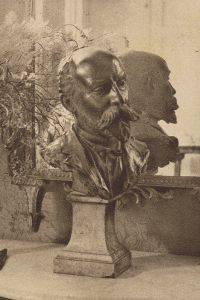 John McLure Hamilton,
Men I Have Painted
(1921)
“ His artistic temperament found expression in poetic and prose writings, whose interest and merit may in time surpass, in men's memories, his achievements in science. Sentiment often lives longer than empiricism. ”
Henry James, The Ambassadors (1903)
“ Since, however, all art is expression, and is thereby vividness, one was to find the door open here to any amount of delightful dissimulation. These verily are the refinements and ecstasies of method—amid which, or certainly under the influence of any exhilarated demonstration of which, one must keep one’s head and not lose one’s way. To cultivate an adequate intelligence for them and to make that sense operative is positively to find a charm in any produced ambiguity of appearance that is not by the same stroke, and all helplessly, an ambiguity of sense. ”
“ If they are not curious about the nature of their emotion, nor about the quality common to all objects that provoke it, they have my sympathy, and, as what they say is often charming and suggestive, my admiration too. Only let no one suppose that what they write and talk is aesthetics ”
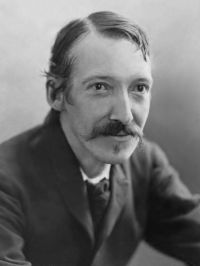 Robert Louis Stevenson,
Memories and Portraits
“ For the welter of impressions, all forcible but all discreet, which life presents, it substitutes a certain artificial series of impressions, all indeed most feebly represented, but all aiming at the same effect, all eloquent of the same idea, all chiming together like consonant notes in music or like the graduated tints in a good picture. ”
 Thomas Hardy,
Tess of the d'Urbervilles
(1891)
“ Let me repeat that a novel is an impression, not an argument; ”
“ But I magnified, as usual, the impression any word or deed of mine could produce on others; ”
 Hannah More,
Coelebs In Search of a Wife
“ Le vrai est le seul beau. Is it a fair and direct opposition between mind and matter? The poet could not have expressed the image more nobly, but might he not, out of the abundant treasures of his opulent mind have chosen it with more felicity? Is an act of murder, even of an usurper, as happily contrasted with the organization of matter, as the other beautiful instances I named, and which he goes on to select? The superiority of mental beauty is the point he is establishing, and his elaborate preparation leads you to expect all his other instances to be drawn from pure mental excellence. ”
David HumeLord Henry Home KamesBertrand RussellWalter Pater Arthur Schopenhauer
 G. K. Chesterton
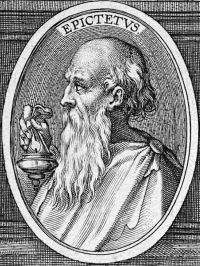 EpictetusVariousWilliam HazlittAristotleJohn RuskinHerbert SpencerT. W. AlliesEdmond HolmesMary Wollstonecraft ShelleyJames Hosmer PennimanLeo TolstoyDavid Nichol SmithCharles Horton CooleyCharles Edwyn Vaughan