Knot (unit)

Definition and stakes

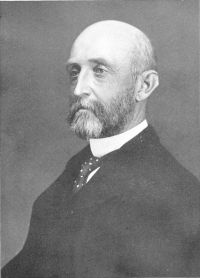
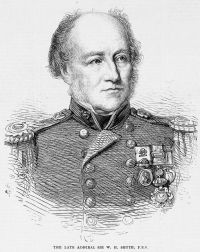
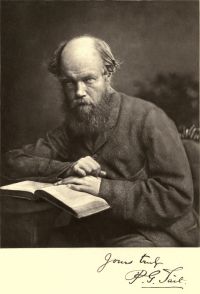
Portrait of W. H. Smyth W. H. Smyth,  The Sailor's Word-Book

“ The wall-knot is so made with the lays of a rope that it cannot slip, and serves for sheets, tacks, and stoppers. Knots are generally used to act as a button, in preventing the end of a rope from slipping through the hole of a dead-eye, or through the turns of a laniard, by which they are sometimes made fast to other ropes.—Knot also implies a division on the log line, bearing a similar proportion to a mile, which half a minute does to an hour ”
Source: Gutenberg

Various,  Encyclopaedia Britannica, 11th Edition…

“ The “knot” is formed to make a knob on a rope, generally at the extremity, and by untwisting the strands at the end and weaving them together. But it may be made by turning the rope on itself through a loop, as for instance, the “overhand knot” (fig. 1) . A “bend” (from the same root as “bind”) , and a “hitch” (an O.E. word) , are ways of fastening or tying ropes together, as in the “Carrick bend” (fig. 21) , or round spars as the Studding Sail Halyard Bend (fig. 19) , and the Timber Hitch (fig. 20) . ”
Source: Gutenberg

Various,  Harper's Young People, August 23…

“ A square or reef knot.—First make a plain overhand knot as in Fig. 1. Take the uppermost end b, place it over and under the part a, and draw the ends tightly. Then it will appear as in Fig. 2. If you pass the ends in a contrary direction, you will make what sailors call a granny knot, which is a term of ridicule to the green hands, who often tie them through mistake. A story is told that a sea-captain, who had on board of his packet a number of passengers, and was continually missing from his well-stocked larder some of his choicest bits, concluded to set a trap, and catch the thief. ”
Source: Gutenberg

Get perspective with Kwize: daily news enlightened by great literature