Lateral line system

Definition and stakes

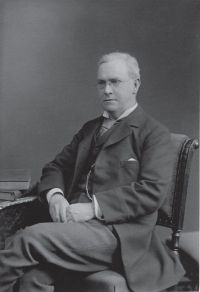
Frank Lewis Dyer,  Edison: His Life and Inventions

“ The immense difficulties of reducing such a system to practice may be readily conceived, especially when it is remembered that the "line" itself, running across hundreds of miles of country, is subject to all manner of atmospheric conditions, and varies from moment to moment in its ability to carry current, and also when it is borne in mind that the quadruplex requires at each end of the line a so-called "artificial line," which must have the exact resistance of the working line and must be varied with the variations in resistance of the working line. ”
Source: Gutenberg

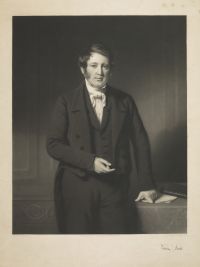
Portrait of George Findlay George Findlay,  The Working and Management of an English Railway (1889)

“ Railway curves are invariably arcs of circles of greater or less radius, except for a short length, where they join or leave the straight line. Where the radius of the curve is uniform, a uniform super-elevation is given to the outer rail, but this elevation dies away gradually to the straight line, where the rails become level. As the super-elevation decreases the radius of the curve increases until it becomes infinite, or, in other words, until the straight line is reached. ”
Source: Wikisource

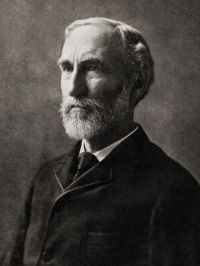
Portrait of Horace Lamb Horace Lamb,  1911 Encyclopædia Britannica, Volume 17… (1911)

“ Hence a couple of moment G, whose axis has the direction (l, m, n) relative to a right-handed system of rectangular axes, is equivalent to three couples lG, mG, nG in the co-ordinate planes. The analytical reduction of a three-dimensional system can now be conducted as follows. Let (x1, y1, z1) be the co-ordinates of a point P1 on the line of action of one of the forces, whose components are (say) X1, Y1, Z1. Draw P1H normal to the plane zOx, and HK perpendicular to Oz. In KH introduce two equal and opposite forces ±X1. ”
Source: Wikisource

Get perspective with Kwize: daily news enlightened by great literature