Limit (mathematics)

Definition and stakes

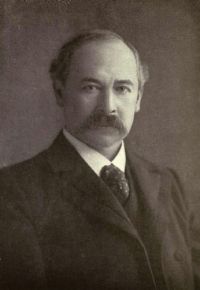
Portrait of Bertrand Russell Bertrand Russell,  Introduction to Mathematical Philosophy

“ LIMITS AND CONTINUITY THE conception of a "limit" is one of which the importance in mathematics has been found continually greater than had been thought. The whole of the differential and integral calculus, indeed practically everything in higher mathematics, depends upon limits. Formerly, it was supposed that infinitesimals were involved in the foundations of these subjects, but Weierstrass showed that this is an error: wherever infinitesimals were thought to occur, what really occurs is a set of finite quantities having zero for their lower limit. ”
Source: Gutenberg

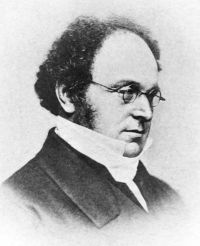
Portrait of William Whewell William Whewell,  Novum organon renovatum (1858)

“ Among the foundations of the Higher Mathematics is also the Idea of a Limit. The Idea of a Limit cannot be superseded by any other definitions or Hypotheses, The Axiom which we employ in introducing this Idea into our reasoning is this:—What is true up to the Limit is true at the Limit. This Idea and Axiom are the bases of all Methods of Limits, Fluxions, Differentials, Variations, and the like. ”
Source: Gutenberg

Portrait of Florian Cajori Florian Cajori,  A History of Mathematics (1893)

“ The first lemma of the first book has been made the foundation of the method of limits:—
"Quantities and the ratios of quantities, which in any finite time converge continually to equality, and before the end of that time approach nearer the one to the other than by any given difference, become ultimately equal."
In this, as well as in the lemmas following this, there are obscurities and difficulties. Newton appears to teach that a variable quantity and its limit will ultimately coincide and be equal.
”
Source: Wikisource

Get perspective with Kwize: daily news enlightened by great literature