Mechanical equilibrium

Definition and stakes

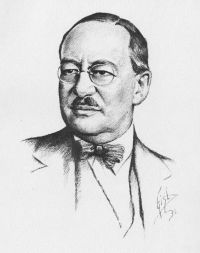
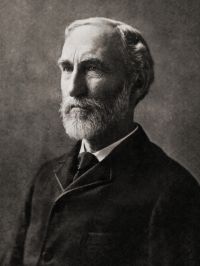
Portrait of Josiah Willard Gibbs Josiah Willard Gibbs,  Scientific Papers of Josiah Willard Gibbs (1906)

“ The mechanical conditions of equilibrium, however, have an especial importance, since we may always regard them as satisfied in any liquid (and not decidedly viscous) mass in which no sensible motions are observable. In such a mass, when isolated, the attainment of mechanical equilibrium will take place very soon; thermal and chemical equilibrium will follow more slowly. ”
Source: Wikisource

Various,  Popular Science Monthly (1909)

“ Criteria of Equilibrium and Stability.—Gibbs's conditions for the complete equilibrium of an isolated homogeneous chemical substance are that its pressure, temperature and the chemical potentials of its components should be constant throughout the mass, since changes of pressure and temperature disturb mechanical and thermal equilibrium, while difference of potentials destroys stability and precipitates chemical change. ”
Source: Wikisource

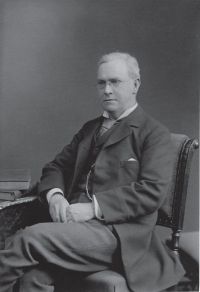
Portrait of Joseph Larmor Joseph Larmor,  1911 Encyclopædia Britannica (1911)

“ For we can by mere geometrical displacement change the order of the bodies so as to bring different ones into direct contact. If this disturbed the thermal equilibrium, we could construct cyclic processes to take advantage of the resulting flow of heat to do mechanical work, and such processes might be carried on without limit. Thus it is proved that if a body A is in temperature-equilibrium with B, and B with C, then A must be in equilibrium with C directly. ”
Source: Wikisource

Get perspective with Kwize: daily news enlightened by great literature