Motion (law)

Definition and stakes

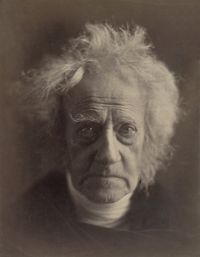
Portrait of William Whewell William Whewell,  History of scientific ideas (1858)

“ Thus, in order to determine the case of the direct action of bodies upon one another, we require no new law of motion. The equality of action and reaction, which enters necessarily into every conception of mechanical operation, combined with the measure of action as given by the third law of motion, enables us to trace the consequences of every case, whether of pressure or of impact. ”
Source: Gutenberg

Robert Routledge,  Discoveries and Inventions of the Nineteenth Century

“ The law itself admits of being stated in various ways, as thus:—“Whenever a force acts on a body, it produces upon it exactly the same change of motion in its own direction, whether the body be originally at rest or in motion in any direction with any velocity whatever—whether it be at the same time acted on by other forces or not.” Or again: “When two forces act in any direction whatever on a body free to move, they impress upon it a motion which is the superposition (or compounding) of those that it would receive if each force acted separately.” ”
Source: Gutenberg

Portrait of Paramahansa Yogananda Paramahansa Yogananda,  Autobiography of a Yogi

“ Newton’s Law of Motion is a law of maya: “To every action there is always an equal and contrary reaction; the mutual actions of any two bodies are always equal and oppositely directed.” Action and reaction are thus exactly equal. “To have a single force is impossible. There must be, and always is, a pair of forces equal and opposite.” ”
Source: Gutenberg

Get perspective with Kwize: daily news enlightened by great literature