“ Moment of Force.—In the study of motion we found that the quantity of motion is called momentum and is measured by the product of the mass times the velocity. In the study of parallel forces, especially such as tend to produce rotation, we consider a similar quantity. It is called a moment of force, which is the term applied to the effectiveness of a force in producing change of rotation. ”
Motion (physics)
Definition and stakes
The theme of “motion (physics)” has been addressed by authors such as Isaac Newton, William Whewell, Arthur Eddington, John Wesley Powell and Arthur Berry. It is often associated with terms like velocity, force, time, Earth and gravity.
Quotes about “motion (physics)”
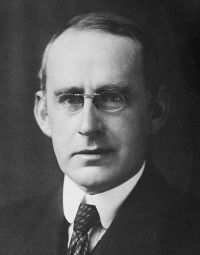 Sir Arthur Stanley Eddington,
The nature of the physical world
(1928)
“ Many of the important applications of the new conceptions to the practical problems of physics are too technical to be considered in this book; one of the simpler applications is to determine the changes of the physical properties of objects due to rapid motion. Since the motion can equally well be described as a motion of ourselves relative to the object or of the object relative to ourselves, it cannot influence the absolute behaviour of the object. ”
Walter Kaufmann, Translation:On the Constitution of the Electron (1905)
“ If is the velocity of the moving system, the speed of light, and if , then all dimensions parallel to the direction of motion shall be contracted in the ratio , the dimensions normal to the direction of motion shall remain unchanged. ”
 Arthur Eddington,
Space Time and Gravitation: An outline of the general relativity theory…
(1920)
“ We might restate the first law of motion in the form "Every body tends to move in the track in which it actually does move, except in so far as it is compelled by material impacts to follow some other track than that in which it would otherwise move." ”
 George Biddell Airy,
Popular Astronomy: A Series of Lectures Delivered at Ipswich
(1881)
“ When I take the theory of gravitation, I must begin by taking the evidence relating to the laws of motion, for these were described and defined long before the theory of gravitation was expounded. Now the laws of motion, in the shape in which they have been commonly expressed, are these: in the first place, if a body be started in motion, and if no force act upon it, that body will continue in motion in the same direction and with the same velocity. Of all things in the world, this is the most difficult to prove immediately. ”
 John Stuart Mill,
A System of Logic, Ratiocinative and Inductive
(1881)
“ It would have been scarcely possible to discover the law that every body in motion tends to continue moving in a straight line, by an induction from instances in which the motion is deflected into a curve, by being compounded with the effect of an accelerating force. ”
George F. Barker, Half Hours With Modern Scientists…
“ What can produce 45motion but motion itself? Into what can motion be converted, but motion? May not these forces, thus mutually convertible, be simply different modes of motion of the molecules of matter, precisely as mechanical motion is a motion of its mass? Thus was born the dynamic theory of force, first brought out in any completeness by Mr. Grove, in 1842, in a lecture on the “Progress of Physical Science,” delivered at the London Institution. In that lecture he said: “Light, heat, electricity, magnetism, motion, are all convertible material affections. ”
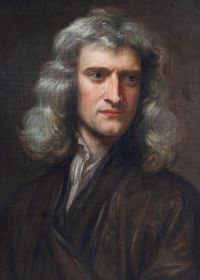 Isaac Newton,
The Mathematical Principles of Natural Philosophy
(1729)
“ And when a body is thrown upwards, its uniform gravity impresses forces and takes off velocities proportional to the times; and the times of ascending to the greatest heights are as the velocities to be taken off, and those heights are as the velocities and the times conjunctly, or in the duplicate ratio of the velocities. And if a body be projected in any direction, the motion arising from its projection as compounded with the motion arising from its gravity. ”
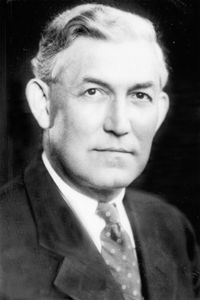 Robert Daniel Carmichael,
On the Theory of Relativity: Mass…
(1913)
“ When it is in motion with a velocity v let and be the apparent charge when measured by means of tests whose lines of action are perpendicular and parallel, respectively, to the line of motion of the electron. ”
 William Whewell,
History of scientific ideas
(1858)
“ Although the doctrine of motion in connexion with force, which is the subject of mechanics, is by far the most important form in which the consideration of motion enters into the formation of our sciences, the Pure Doctrine of Motion, which treats of space, time, and velocity, might be followed out so as to give rise to a very considerable and curious body of science. ”
Gilbert Newton Lewis, The Principle of Relativity, and Non-Newtonian Mechanics (1909)
“ Whether our conclusions can be retained when we consider processes in which the relative motion is being established, in other words, processes in which acceleration takes place, it is not our present purpose to determine. ”
John Stuart Mill,
A System of Logic, Ratiocinative and Inductive
(1881)
“ The law of the complex effect is explained, by being resolved into the separate laws of the causes which contribute to it. Thus, the law of the motion of a planet is resolved into the law of the acquired force, which tends to produce a uniform motion in the tangent, and the law of the centripetal force, which tends to produce an accelerating motion toward the sun; the real motion being a compound of the two. ”
Arthur Berry, A Short History of Astronomy
“ More important astronomically—and probably intrinsically also—is what he calls the science of local motion,80 which deals with the motion of bodies. He builds up on the basis of his early experiments (§ 116) a theory of falling bodies, in which occurs for the first time the important idea of uniformly accelerated motion, or uniform acceleration, i.e. motion in which the moving body receives in every equal interval of time an equal increase of velocity. ”
Popular Science Monthly (1874)
“ But whether or not momentum necessarily accompanies motion, it was shown above that the same reason for conceiving color to be solely a mode of motion equally obtains in our conception of matter, mass, or inertia, as a mode of motion; and that "all the reality we know" exists, primarily, in changing, but ever-existing, relations and contrasts of modes of motion. ”
Isaac Newton,
The Mathematical Principles of Natural Philosophy
(1846)
“ If a body is resisted in the ratio of its velocity, the motion lost by resistance is as the space gone over in its motion. For since the motion lost in each equal particle of time is as the velocity, that is, as the particle of space gone over, then, by composition, the motion lost in the whole time will be as the whole space gone over. ”
 Mary Somerville,
Personal Recollections, from Early Life to Old Age…
“ The general law that the change of motion is proportional to the moving force and takes place in its direction, provided we take care always to regard the reaction of curves, surfaces, obstacles, &c., as so many real moving forces of (for a time) unknown magnitude, will always help us out of any dynamical scrape we may get into. ”
Max Abraham, Translation:Principles of the Dynamics of the Electron (1902)
“ Now we imagine the motion as altered by an external force , for instance by a homogeneous electric or magnetic field. Angular forces and rotation are excluded by us; we satisfy the equations of motion, when we accordingly alter the momentum vector of force , and let the motion be parallel to the respective direction of the momentum vector. ”
Gilbert Newton Lewis, A revision of the Fundamental Laws of Matter and Energy (1908)
“ The question whether a method is conceivable by which absolute motion in space may be distinguished from relative motion must be answered definitely in the affirmative by one who accepts the above equations of non-Newtonian mechanics. A body is absolutely at rest when any motion imparted to it increases its mass, or when a certain force will give it the same acceleration in any direction. ”
William George Hooper, Aether and Gravitation
“ So long as that which we term Matter is able to accept motion in any manner from any body that is either moving, or in a state of vibration, and not only accepts, but also transmits the vibratory, or the kinetic motion so called of the moving body, then that which accepts the motion is legitimately termed Matter. ”
William Bower Taylor, Kinetic Theories of Gravitation… (1876)
“ In the physical world we are congnizant of but four elementary or primordial ideas, beside the inevitable Time and Space. They are Matter, Force, Position, and Motion. Of these, motion is simply change of position; and force is recognized as the agent in every change of motion. ”
 James Clerk Maxwell,
A Treatise on Electricity and Magnetism
(1873)
“ In the case of a connected system in motion, the configuration is continually changing at a rate depending on the velocities so that we can no longer assume that the momentum is the time-integral of the force which acts on it. ”
 Thomas Henry Huxley,
The Advance of Science in the Last Half-Century
(1887)
“ The laws of motion of visible and tangible, or molar, matter had been worked out to a great degree of refinement and embodied in the branches of science known as Mechanics, Hydrostatics, and Pneumatics. These laws had been shown to hold good, so far as they could be checked by observation and experiment, throughout the universe, on the assumption that all such masses of matter possessed inertia and were susceptible of acquiring motion, in two ways, firstly by impact, or impulse from without; ”
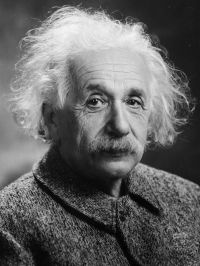 Albert Einstein,
The Principle of Relativity
“ The relative motion of the different parts of each body is not to occur. But each mass is seen to rotate by an observer at rest relative to the other mass round the connecting line of the masses with a constant angular velocity (definite relative motion for both the masses) . ”
Arthur Eddington,
Space Time and Gravitation: An outline of the general relativity theory…
(1920)
“ A simple instance may be given where the familiar kinematical conception of motion is insufficient. Suppose a perfectly homogeneous continuous ring is rotating like a wheel, what meaning can we attach to its motion? ”
 Edgar Allan Poe,
The Purloined Letter
(1844)
“ The principle of the vis inertiæ, for example, seems to be identical in physics and metaphysics. It is not more true in the former, that a large body is with more difficulty set in motion than a smaller one, and that its subsequent momentum is commensurate with this difficulty, than it is, in the latter, that intellects of the vaster capacity, while more forcible, more constant, and more eventful in their movements than those of inferior grade, are yet the less readily moved, and more embarrassed and full of hesitation in the first few steps of their progress. ”
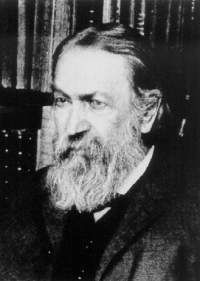 Ernst Mach,
Popular scientific lectures
“ Almost of necessity, therefore, motion appears to us as the most important physical factor. Moreover, mechanical properties may be discovered in all physical events. The sounding bell trembles, the heated body expands, the electrified body attracts other bodies. Why, therefore, should we not attempt to grasp all events under their mechanical aspect, since that is so easily apprehended and most accessible to observation and measurement? ”
 Thomas P. Jones,
Conversations on Natural Philosophy…
“ Motion. A continued and successive change of place, either of a whole body, or of the particles of [Pg 211] which a body is composed; the earth in revolving upon its axis only, would not change its place as a body, but all the particles of which it is composed, would revolve round a common axis of motion. In revolving in its orbit, its whole mass is constantly occupying a new portion of space. ”
John Bernhard Stallo, Popular Science Monthly (1874)
“ In revising our successive judgments concerning a body's course or velocity, we take for granted that there is an actual course or an actual velocity—we take for granted that there are fixed points in space with respect to which all motions are absolute; and we find it impossible to rid ourselves of this idea. Nevertheless, absolute motion cannot even be imagined, much less known. ”
Isaac Newton,
The Mathematical Principles of Natural Philosophy
(1729)
“ And therefore the same law takes place in a system consisting of many bodies as in one single body, with regard to their persevering in their state of motion or of rest. For the progressive motion, whether of one single body, or of a whole system of bodies, is always to be estimated from the motion of the centre of gravity. ”
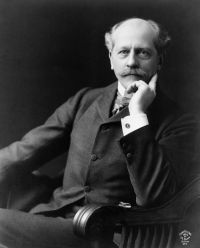 Percival Lowell,
The Evolution of Worlds
(1910)
“ This is evident at once because the components of motion at right angles to the principal plane add nothing to the moment of momentum of the system. It is also least when the bodies all revolve in circles about the centre of gravity. ”
 John Wesley Powell,
Truth and Error — Chapter XXIII.
(1898)
“ Many modern physicists mythologize in this manner about motion, being unable to distinguish motion as an abstract property, because motion is formulated in terms of space and force in terms of parallelograms. ”
Isaac Newton,
The Mathematical Principles of Natural Philosophy…
“ And therefore in clocks, if forces were impressed by some machine upon the pendulum which preserves the motion, and so compounded with the force of gravity, that the whole force tending downwards should be always as a line produced by applying the rectangle under the arc TR and the radius AR to the line TN, all the oscillations will become isochronous. ”
Isaac Newton,
The Mathematical Principles of Natural Philosophy
(1846)
“ The alteration of motion is ever proportional to the motive force impressed; and is made in the direction of the right line in which that force is impressed. If any force generates a motion, a double force will generate double the motion, a triple force triple the motion, whether that force be impressed altogether and at once, or gradually and successively. ”
Robert Hunt, The Poetry of Science; or, Studies of the Physical Phenomena of Nature
“ The rapidity of motion changes so constantly and quickly the position of the particles which have a tendency to fall, that we have motion balanced against the force of gravitation in a striking manner; and we learn, from this experiment, the explanation of the planetary and stellar masses revolving on their axis at a speed sufficient to maintain them without support in space. A mass of matter, a sphere or a disc, carefully balanced, is fixed in gymbals such as we employ for fixing our compass needles, and it is set by some mechanical contrivance in rapid rotation. ”
Related terms
Authors who wrote about “motion (physics)”
Isaac NewtonWilliam WhewellArthur EddingtonJohn Wesley PowellArthur BerryAlbert Einstein William Herrick MacaulayHenry KaterGilbert Newton LewisThomas P. JonesGeorge Biddell AiryWilliam Bower Taylor
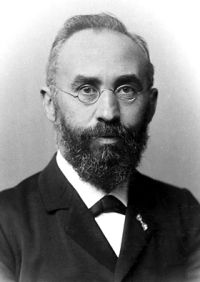 Hendrik LorentzJohn Bernhard Stallo
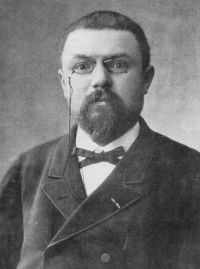 Henri Poincaré
 MaimonidesWilliam George HooperJohn Perry
 Francis Bacon
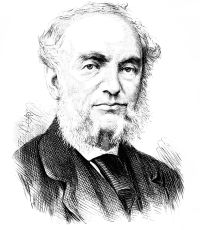 Balfour Stewart
