Organ (anatomy)

Definition and stakes

Portrait of Xavier Bichat Xavier Bichat,  General Anatomy, Applied to Physiology and Medicine…

“ Each organ has as yet only its nutritive parenchyma, the parenchyma upon which nature has imprinted the form of the organ, that is to be developed there. In proportion as this outline is increased, the nutritive substances penetrate it, and then each organ, which until that time had been like the rest in its nature, and forming with them a homogeneous mass, begins to be distinct, and have a separate existence; each one draws from the blood the substance that is proper for it. This addition gives the attributes of thickness, of density, and of nature ”
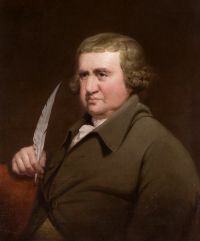
Source: Gutenberg

Portrait of Xavier Bichat Xavier Bichat,  General Anatomy, Applied to Physiology and Medicine…

“ From all that I have said, it is evident that in the organs whose capillary system contains in part blood, and in part different fluids, the proportion of the first to the others is infinitely variable; that a thousand causes in a state of health, as in that of disease, by bringing to the organ more or less blood, can fill more or less its capillary system. ”
Source: Gutenberg

Portrait of Xavier Bichat Xavier Bichat,  General Anatomy, Applied to Physiology and Medicine…

“ As every organ is nourished, and as the mechanism of nutrition is uniform, it follows that these two systems belong to all the organs. After them the cellular system is the most generally found. Where there are no blood vessels, it is sometimes met with, and it always exists where these vessels are. Next to this, the arteries and veins are spread to the greatest number of parts. Oftentimes no nerve is discoverable, where they penetrate, as in the aponeuroses, the fibrous membranes, &c. ”
Source: Gutenberg

Get perspective with Kwize: daily news enlightened by great literature