“ Law of Gravitation.—Every particle of matter in the universe attracts every other particle with a force that is directly proportional to the product of their masses and inversely proportional to the square of the distance between them. ”
Particle (physics)
Definition and stakes
The theme of “particle (physics)” has been addressed by authors such as Richard Feynman, Bertrand Russell, Sir Arthur Stanley Eddington, Henry Hobart Bates and J. W. Peck. It is often associated with terms like atom, mass, matter, force and molecule.
Quotes about “particle (physics)”
L. R. Curtiss, Popular Science Monthly (1877)
“ Hence, the main difficulty attending the possible amplification of objects less than about the 1100000 of an inch in diameter is a purely physical one, and depends upon the constitution of light itself. The various phenomena of chemical physics teach us that matter is not homogeneous, but is made up of infinitesimal particles or atoms, the term atom meaning indivisible particle; and that the term molecule—meaning literally a little mass—refers to an aggregation of two or more atoms. ”
 Paramahansa Yogananda,
Autobiography of a Yogi
“ Another example: the atom or final particle of matter is, like the earth itself, a magnet with positive and negative poles. The entire phenomenal world is under the inexorable sway of polarity; no law of physics, chemistry, or any other science is ever found free from inherent opposite or contrasted principles. ”
 Bertrand Russell,
The A B C of Relativity
(1925)
“ We have been seeking, in this chapter, to define matter so that there must be such a thing if the formulæ of physics are true. If we had made our definition such as to secure that a particle of matter should be what one thinks of as substantial, a hard, definite lump, we should not have been sure that any such thing exists. ”
“ For such hard Particles being heaped up together, can scarce [Pg 390] touch one another in more than a few Points, and therefore must be separable by much less Force than is requisite to break a solid Particle, whose Parts touch in all the Space between them, without any Pores or Interstices to weaken their Cohesion. And how such very hard Particles which are only laid together and touch only in a few Points, can stick together, and that so firmly as they do, without the assistance of something which causes them to be attracted or press'd towards one another, is very difficult to conceive. ”
N. S. Shaler, The Red Sunsets — The Atlantic Monthly
“ Now the smaller any bits of matter are, the larger in proportion is their surface to their weight. A certain descending force is required to push the resisting atoms of air apart, and so permit the descent of the gravitating particle. ”
 Emil du Bois-Reymond,
Popular Science Monthly
(1874)
“ A physical atom, i. e., a mass which, as compared with bodies with which we are acquainted, is held to be infinitesimal, but yet, regardless of its name, ideally divisible, and to which properties or a state of motion is attributed, whereby the behavior of a mass consisting of countless such atoms is explained—such a notion is a fiction quite congruous in itself, and under certain conditions a useful fiction in mathematical physics. But, latterly, atoms have been as far as possible discarded in favor of volume-elements of bodies regarded as continuous. ”
Henry Hobart Bates, Popular Science Monthly (1883)
“ The identity of the radiant particle with the component of the atom is inferable. It possesses the requisite properties of mass and resilience, and sufficient linear motion. Whether it should also have attraction imputed to it as inherent depends on whether that property in the molecule, where alone it is observed, is derived from the particle. If not, the latter needs only mass to conserve its deflections and its course under the first law of motion, and resilience to secure its compensatory readjustment in equilibrium. ”
14th earl of James Sinclair Caithness, Lectures on popular and scientific subjects
“ Summary.—Thus, then, on a review of the whole, we find all things are endowed with attractive power, and that there is no particle which is not directly or indirectly related, in manifold ways, to the other particles of the universe. There is, first, the universal attraction of gravitation, under which every particle is, by a fixed law, drawn to every other within the sphere of existence. There is, secondly, the attraction of cohesion or aggregation, which acts at short distances, and unites the otherwise loose atoms of bodies into coherent masses. ”
 Annie Besant,
London Lectures of 1907
“ And along other lines—chemical and electrical—surely there is something a little unsatisfactory, when a few years ago men told us that the atom was composed literally of myriads of particles, and during the last year it has been suggested that perhaps one particle is all of which an atom is composed. ”
 Samuel Johnson,
The Works of Samuel Johnson, LL.D. in Eleven Volumes…
“ For, if the very mathematical centre of the central particle be not accurately in the very mathematical centre of the attractive power of the whole mass, the particle will not be attracted equally on all sides. And much harder is it to suppose all the particles, in an infinite space, should be so accurately poised, one among another, as to stand still in a perfect equilibrium. ”
Bertrand Russell,
The A B C of atoms
(1923)
“ The charge on an electron, the equal and opposite charge on a hydrogen atom, the mass of an electron, the mass of a hydrogen nucleus, and Planck’s quantum, all appear in modern physics as absolute constants, which are just brute facts for which no reason can be imagined. ”
Jonathan Lawhead, Lightning in a Bottle — Chapter 1 (2014)
“ Research in quantum mechanics, to take one example on which my background allows me to speak at least semi-intelligently, might incorporate work from particle physicists doing empirical work with cloud chambers, high-energy particle physicists doing other empirical work with particle accelerators, and still other particle physicists investigating the mathematics behind spontaneous symmetry breaking. ”
Various, The Catholic World, Vol. 20, October 1874‐March 1875
“ The atomists measure the quantity of matter by its weight, because they know that every particle of matter is subject to gravitation, and therefore that the weights, all other things being equal, are proportionate to the number of primitive particles contained in the bodies. Thus, if a body contains a number, m, of primitive particles, and each of these particles is subject to the gravitation, g, while another body contains a number, m ́, of primitive particles subject to the same gravitation, the ratio of the weights of the two bodies will be the same as the ratio of the two masses ”
Various, The Catholic World, Vol. 19, April 1874‐September 1874
“ We term the most minute particle of matter, which we imagine to be no longer capable of division, an atom, and consider matter to be composed of such atoms, acquiring from them its qualities, and existing by their reciprocal attraction and repulsion. But the word atom is merely an expression for a necessary conception, required for certain purposes. ”
 John Tyndall,
Fragments of Science: A Series of Detached Essays…
“ As regards size, there is probably no sharp line of division between molecules and particles; the one gradually shades into the other. But the distinction that I would draw is this: the atom or the molecule, if free, is always part of a gas, the particle is never so. A particle is a bit of liquid or solid matter, formed by the Aggregation of atoms or molecules. ”
 Augustus Edward Hough Love,
1911 Encyclopædia Britannica
(1911)
“ These changes can be expressed most simply by the introduction of a vector quantity to represent the displacement of any particle. When the body is deformed by the action of any forces its particles pass from the positions which they occupied before the action of the forces into new positions. If are the co-ordinates of the position of a particle in the first state, its co-ordinates in the second state may be denoted by The quantities, are the “components of displacement.” When these quantities are small, the strain is connected with them by the equations 12. ”
Bertrand Russell,
The A B C of Relativity
(1925)
“ And so in the case with which this chapter is concerned: the question as to the nature of an electron or a proton is by no means answered when we know all that mathematical physics has to say as to the laws of its motion and the laws of its interaction with the environment. A definite and conclusive answer to our question is not possible just because a variety of answers are compatible with the truth of mathematical physics. Nevertheless some answers are preferable to others, because some have a greater probability in their favor. ”
Henry Hobart Bates, Popular Science Monthly (1883)
“ It is that the only obstructive portion of the so-called material atom (which I have named the elementary molecule) lies in the extreme boundary; and even of this it constitutes only such fraction as the ratio which the dimension of the component particle bears to the semi-circumference of the atom, which is an infinitesimal ratio. The component, having a dimension and velocity of an order comparable with that of the ethereal particles themselves, can protect itself from collisions by a readjustment, without rise of temperature, on the same terms as obtain with ethereal collisions. ”
Annie Besant,
Evolution of Life and Form
“ Instead of regarding an atom as a solid indivisible particle, the tendency is to regard it as a vortex of energy, a centre of force. One writer even goes so far as to suggest that an atom is a source "through which an invisible fluid is pouring into three-dimensional space." ”
Various, Popular Science Monthly (1905)
“ The particles thus consist of heavy bodies projected with great velocity, whose mass is of the same order of magnitude as the helium atom and at least 2,000 times as great as the apparent mass of the particle or electron. If the a particles carry a positive charge, it is to be expected that the particles, falling on a body of sufficient thickness to absorb them will, under suitable conditions, give it a positive charge, while the substance from which they are projected acquires a negative charge. The corresponding effect has been observed for the rays. ”
 William Whewell,
History of the inductive sciences…
(1875)
“ At present our business is, not so much with the sufficiency of the theory to explain phenomena, as with the mechanical problem of which this is an example, which is one of a very remarkable and important character; namely, to determine the effect of attractions which are exercised by all the particles of bodies, on the hypothesis that the 378 attraction of each particle, though sensible when it acts upon another particle at an extremely small distance from it, becomes insensible and vanishes the moment this distance assumes a perceptible magnitude. ”
William George Hooper, Aether and Gravitation
“ From the phenomenon of heat, which is simply matter in motion, we feel compelled to accept the fact that an atom is not a hard particle, but that it is something which is more closely allied to the Vortex Atom, or the Strain Atom of Dr. ”
 James Clerk Maxwell,
A Treatise on Electricity and Magnetism
(1873)
“ When a particle of a body possesses properties related to a certain line or direction in the body, and when the body, retaining these properties, is turned so that this direction is reversed, then if as regards other bodies these properties of the particle are reversed, the particle, in reference to these properties, is said to be polarized, and the properties are said to constitute a particular kind of polarization. ”
William Bower Taylor, Kinetic Theories of Gravitation… (1876)
“ And thus, whether we contemplate the infinitely small or the infinitely grand, in every case comes back upon us the wide induction, that the action of matter in atom, in molecule, or in mass, is ever at a distance! Of actual contact there is probably no instance afforded in nature, excepting in the intimate substance of the ultimate atom. ”
 Edgar Allan Poe,
Eureka: A Prose Poem
“ Here the Reason flies at once to Imparticularity—to a particle—to one particle—a particle of one kind—of one character—of one nature—of one size—of one form—a particle, therefore, “without form and void”—a particle positively a particle at all points—a particle absolutely unique, individual, undivided, and not indivisible only because He who created it, by dint of his Will, can by an infinitely less energetic exercise of the same Will, as a matter of course, divide it. ”
 Horace Lamb,
1911 Encyclopædia Britannica, Volume 17…
(1911)
“ We have now to consider the effect of the forces acting on the particles. These may be divided into two categories; we have first, the extraneous forces exerted on the various particles from without, and, secondly, the mutual or internal forces between the various pairs of particles. It is assumed that these latter are subject to the law of equality of action and reaction. If the equations of motion of each particle be formed separately, each such internal force will appear twice over, with opposite signs for its components, viz. ”
Helge Holst, The atom and the Bohr theory of its structure (1923)
“ There is much that might indicate that, on the whole, it is impossible to obtain a consistent picture of atomic processes in space and time with the help of the motions of the nuclei and the electrons and the variations in the state of the ether, and with the application of such fundamental conceptions of physics as mass, electric charge and energy. ”
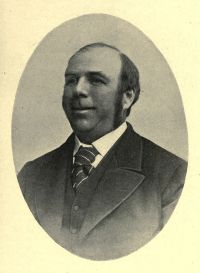 Robert S. Ball,
The Earth's Beginning
“ If a Particle of Mass m, is Moving in Space under the Action of any Force F, then the Projection of that Particle on any Fixed Plane will Move as if it were a Particle of Mass m Acted upon by that Component of F which is Parallel to the Plane. ”
Sydney T. Klein, Science and the Infinite; or, Through a Window in the Blank Wall
“ We are now considering relativity. If we cut off [Pg 14] the very end of the point of the finest needle, we get so minute a particle of steel that it is hardly visible to the naked eye, and yet we know that that small speck contains not only millions but millions of millions of what are called atoms, all in intense motion and never touching each other. ”
William Bower Taylor, Kinetic Theories of Gravitation… (1876)
“ Doubtless the centers of force vary in their distance one from another, but that which is truly the matter of one atom touches the matter of its neighbors. Hence matter will be continuous throughout, and in considering a mass of it, we have not to suppose a distinction between its atoms and any intervening space. ”
 John Wesley Powell,
Truth and Error — Chapter II.
(1898)
“ Bodies may be dissected, substances may be analyzed, essentials may be abstracted in consideration. The essentials are indissoluble in every particle. Where there is no unit there is no extension, no speed and no persistence. Where there is no speed there is no unit, no extension, no persistence. Where there is no persistence there is no unit, no extension and no speed. If any of the essentials of a particle of inanimate matter be taken away, the matter disappears. A particle is the essentials of which it is composed, and it has no other substrate. ”
Thomas Proctor Hall, Physical Theories of Gravitation (1895)
“ A force which belongs to individual atoms, is independent of chemical and physical conditions, and cannot be altered or destroyed by any known means, must be closely related to the fundamental nature of the atoms. One of the most essential parts in our concept of matter is mass, and the force of gravitation of an atom is proportional to its mass. Mass and gravitation stand, therefore, either as co-effects of the same cause or as cause and effect. ”
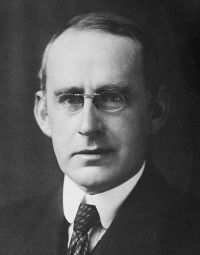 Sir Arthur Stanley Eddington,
The nature of the physical world
(1928)
“ You are not asked to imagine the state of a particle with several energies; what is meant is that our current picture of an electron as a particle with single energy has broken down, and we must dive below into the sub-aether if we wish to follow the course of events. The picture of a particle may, however, be retained when we are not seeking high accuracy; if we do not need to know the energy more closely than 1 per cent., a series of energies ranging over 1 per cent, can be treated as one definite energy. ”
Helge Holst, The atom and the Bohr theory of its structure (1923)
“ From a consideration of the chemical properties of the elements we shall now turn to an examination of the physical characteristics, although in a certain sense chemistry itself is but one special phase of physics.If matter is really constructed of independently existing particles—atoms and molecules—the interplay of the individual parts must determine not only the chemical activities, but also the other properties of matter. ”
William Bower Taylor, Kinetic Theories of Gravitation… (1876)
“ I designate as atoms the last stage of division of matter. I admit that two bodies separated by an absolute void cannot act on each other ; that action takes place only by contact, the play of forces following the laws of ordinary mechanics. If there existed but a single kind of atoms, the interchange of forces occurring between equal masses, two atoms could not unite. Force and matter would exist, but not attraction. There are then at least two kinds of primordial atoms of different masses. ”
Related terms
Authors who wrote about “particle (physics)”
 Richard FeynmanBertrand RussellSir Arthur Stanley EddingtonHenry Hobart BatesJ. W. PeckHorace LambJohn Wesley PowellHelge HolstWilliam George Hooper14th earl of James Sinclair CaithnessL. R. CurtissGeorges-Louis Le SageJohn TyndallN. S. Shaler
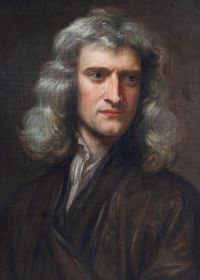 Isaac Newton
 Harvey Washington WileyWilliam Whewell
 John Henry Pepper
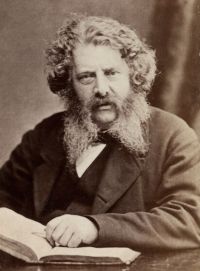 William John Macquorn RankineJonathan Lawhead
