A property qualification is a legal restriction that historically prevented individuals from voting or holding office based on land ownership, income, or wealth. In 18th- and 19th-century Britain and the U.S., such provisions excluded the poor and marginalized from political participation, reinforcing economic inequality.
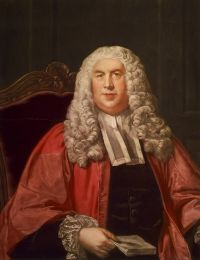
Authors like James Fenimore Cooper viewed property as an indicator of civic responsibility, while William Blackstone examined property rights within legal systems. Pierre-Joseph Proudhon criticized property as a mechanism of domination, arguing it undermined justice. These viewpoints highlight how property requirements linked economic power with political influence, shaping patterns of democratic exclusion and inclusion.
 James Fenimore Cooper,
The American Democrat
(1838)
James Fenimore Cooper,
The American Democrat
(1838)