“ The complete Satyr-play had a hero of this type and a Chorus of Satyrs. But the complete type was refined away during the fifth century; and one stage in the process produced a play with a normal chorus but with one figure of the Satyric or "revelling" type. ”
Satyr play
Definition and stakes
The theme of “satyr play” has been addressed by authors such as W. W. Greg, Roy C. Flickinger, E. K. Chambers, Colley Cibber and Gilbert Murray. It is often associated with terms like tragedy, chorus, knight, nymph and Dionysus.
Quotes about “satyr play”
“ It is rare in Greek tragedy for the Chorus to leave the stage altogether in the middle of a play. But they do so, for example, in the Ajax of Sophocles. Ajax is lost, and the Sailors who form the Chorus go out to look for him; when they are gone the scene is supposed to shift and Ajax enters alone, arranging his own death. This very effective scene of the revelling Heracles is to be explained, I think, by the Satyr-play tradition. ”
Roy C. Flickinger, The Greek theater and its drama (1918)
“ It is true, as Aristotle [233] warns us, that “even the known stories were known only to a few.” Nevertheless, the more intelligent in the audience would always be well informed, and of the oft-repeated tragic themes even the most stupid could hardly remain in ignorance.In the case of satyric drama the situation was naturally somewhat different. Whatever the relationship between the dithyramb, satyr-play, and tragedy, the fact remains that the satyr-play was placed in the program of the City Dionysia [126] largely as a concession to the Dionysiac element. ”
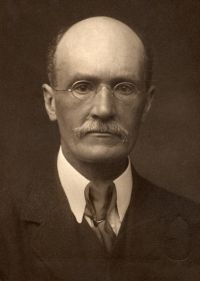 Gilbert Murray,
A History of Ancient Greek Literature
(1901)
“ One of the really elemental jokes of Æschylus is in the Prometheus Firekindler,* a satyr-play, where fire is first brought into the world, and the wild satyrs go mad with love for its beauty, and burn their beards in kissing it! The thing is made more commonplace, though of course more comic, in the Sophoclean satyr-play Helen's Marriage,* where they go similarly mad about Helen. A definite mark of the age is the large number of dramas that take their names from the chorus, which was still the chief part of the play—Bassaræ,* Edôni,* Danaides,* &c. ”
W. W. Greg, Pastoral Poetry & Pastoral Drama
“ But only the reader who cannot feel its beauty is safe from the enervating narcotic of Tasso's style.The first scene of the second act introduces a new character, the satyr, type of brute nature in the artificially polished Arcadia of courtly shepherds. He inherits no savoury character from his literary predecessors, and he is content to play to the rôle. His monologue may be passed over; it and still more the next scene serve to measure the cynical indelicacy of feeling which was tolerated in the Italian courts. ”
W. W. Greg, Pastoral Poetry & Pastoral Drama
“ It was here that the play appeared in 1607, though it is dedicated to Francesco Maria della Rovere, who had by that time succeeded his father in the duchy of Urbino. The plot of the play is highly intricate, and shows a tendency towards the introduction of an adventurous element; it turns upon the tribute of youths and maidens exacted from the island of Scyros by the king of Thrace. The figure of the satyr is replaced by a centaur who carries off one of the nymphs. Her cries attract two youths who succeed in driving off the monster, but are severely wounded in the encounter. ”
W. W. Greg, Pastoral Poetry & Pastoral Drama
“ Most of these, it may be remarked, as well as the character of Thenot and the unconventional rôle of the satyr, find parallels in the earlier stages of the Italian pastoral. The transformation-well recalls the enchanted lake of the Sacrifizio; the introduction of a supernatural agent in the plot reminds us of the same play, as well as of Epicuro's Mirzia; the friendly satyr, of this latter, which may be, in its turn, indebted to the revised version of the Orfeo; the character of Thenot is anticipated in the Sfortunato. I give the resemblances for what they are worth, which is perhaps not much ”
 Edmund Spenser,
The Faerie Queene — Volume 01
“ Satyrs are horned forest spirits, man-like above and goat- like below, usually portrayed as more or less lustful. In Roman mythology, Satyr, one of the satyrs, is a companion of Bacchus with long, pointed ears, behind which are the stumps of horns, with the tail of a goat, bristly hair, and a flat nose. ”
 Torquato Tasso,
Amyntas, A Tale of the Woods — Preface
(1820)
“ So does the pretty moral fiction of the viper's putting away her poison when she goes to her lover. The origin of the enamoured Satyr is Pan and his followers; but the rejected Polyphemic Satyr, unhappy in his love on account of the difference of his form, was first compounded by the inventor of the Sylvan Drama, Beccari ”
The Talking Beasts: A Book of Fable Wisdom (1922)
“ Arrived at the cave, the Satyr poured out a mess of smoking pottage and laid it before the Traveller, who at once commenced blowing at it with all his might."What, blowing again!" cried the Satyr. "Is it not hot enough?""Yes, faith," answered the Man, "it is hot enough in all conscience, and that is just the reason why I blow it.""Be off with you!" cried the Satyr, in alarm; "I will have no part with a man who can blow hot and cold from the same mouth." ”
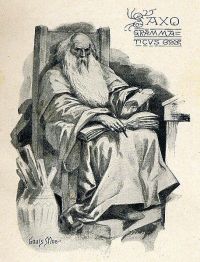 Saxo Grammaticus,
The Danish History — Book III
“ Then in the most dreadful words he threatened him with the worst, and demanded the sword and bracelets. The Satyr was not slow to tender him the ransom of his life for which he was asked. So surely do all prize life beyond wealth; for nothing is ever cherished more among mortals than the breath of their own life. Hother, exulting in the treasure he had gained, went home enriched with trophies which, though few, were noble. ”
 William Henry Giles Kingston,
The Seven Champions of Christendom
“ Soon recovering themselves, after a few of their number had bitten the dust, the hideous satyrs, uniting in one body, and seeing that their enemies consisted but of a single knight and his squire, flourished their huge clubs, and with loud shouts, louder than the roaring of ten thousand bulls, advanced towards them.Heroically fought Saint Patrick, and manfully combated his Squire. The blows from the monstrous clubs of the hideous satyrs fell like hail about their helmets; but their thirsty swords rapidly drank the life-blood of their foes, and now one satyr, now another, was overthrown. ”
 Mrs. Loudon,
Mrs. Loudon's Entertaining Naturalist
“ Probably they were partly personifications, intended to express the debasing influence of animal propensities and sensual indulgence: and as nothing tends more than intoxication to reduce man to a level with the brutes, since it deprives reason of all control over the passions, the form of the Satyr may have been ingeniously intended as a visible representation of the degraded state of those who surrender up the noblest prerogative of man. ”
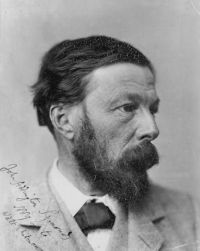 John Addington Symonds,
Renaissance in Italy, Volume 5…
“ Through the orange and laurel bowers, flooded with Tintoretto's golden sunlight, grins a bestial all-devouring satyr, a satyr far less innocent or gentle than Greek poets feigned, with a wolf's jaws as well as a goat's legs. ”
John Colin Dunlop, History of Roman Literature from its Earliest Period to the Augustan Age…
“ The Greek satires, which are improperly so termed, were divided into what were called tragic and comic. The former were dramatic compositions, which had their commencement, like the regular tragedy, in rustic festivals to the honour of [pg 234] Bacchus; and in which, characters representing Satyrs, the supposed companions of that god, were introduced, imitating the coarse songs and fantastic dances of rural deities. In their rude origin, it is probable that only one actor, equipped as a Satyr, danced or sung. ”
author:René le Bossu, Monsieur Bossu's Treatise of the Epick Poem (1695)
“ Seneca's Book on the Death of Claudius, Boetius his Consolation of Philosophy, and that of Petronius Arbiter, are Satyrs entirely like those of Varro. This is what I have in general to say on Satyr; nor is it necessary I insist any more on this Subject. This the Reader may observe, that the Name of Satyr in Latin, is not less proper for Discourses that recommend Virtue, than to those which are design'd against Vice. It had nothing so formidable in it as it has now, when a bare Mention of Satyr makes them tremble, who would fain seem what they are not ”
1911 Encyclopædia Britannica, Volume 8… (1911)
“ Thus independent of one another in their origin, Greek tragedy and comedy never actually coalesced. The “satyr-drama,” though in some sense it partook of the nature of both, was in its origin as in its history connected with tragedy alone, whose origin it directly recalled. The satyr-drama.Pratinas of Philus, a contemporary of Aeschylus in his earlier days, is said to have restored the tragic chorus to the satyrs; i.e. he first produced dramas in which, though they were the same in form and theme as the tragedies, the choric dances were different and entirely carried on by satyrs. ”
John Ashton, Curious Creatures in Zoology
“ No animal can withstand it, with the exception of man, to whom, when in its own regions, it is not inferior. It loves boys and women.Pliny speaks of the Satyr Ape thus: “Among the mountainous districts of the eastern parts of India, in what is called the country of the Catharcludi, we find the Satyr, an animal of extraordinary swiftness. They go sometimes on four feet, and sometimes walk erect; they have, also, the features of a human being. ”
 Friedrich Wilhelm Nietzsche,
The Birth of Tragedy; or, Hellenism and Pessimism
“ The satyr, like the idyllic shepherd of our more recent time, is the offspring of a longing after the Primitive and the Natural; but mark with what firmness and fearlessness the Greek embraced the man of the woods, and again, how coyly and mawkishly the modern man dallied with the flattering picture of a tender, flute-playing, soft-natured shepherd! Nature, on which as yet no knowledge has been at work, which maintains unbroken barriers to culture—this is what the Greek saw in his satyr, which still was not on this account supposed to coincide with the ape. ”
John Sheffield, An Essay on Poetry (1709)
“ Of all the Ways that wisest Men could findSatyr. To mend the Age, and mortifie Mankind, Satyr well writ has most successful prov'd, And cures, because the Remedy is lov'd. 'Tis hard to write on such a subject more, Without repeating Things said oft before. Some vulgar Errors only we remove, That stain this Beauty which so much we love. Of well chose Words some take not care enough, And think they should be as the Subject rough ”
 John Fletcher,
The Faithful Shepherdess
(1609)
“ Amo. So, this work hath end: Farewel and live, be constant to thy friend That loves thee next. Enter Satyr, Perigot runs off. Satyr. See the day begins to break, And the light shoots like a streak Of subtil fire, the wind blows cold, Whilst the morning doth unfold ”
E. M. Berens, Myths and Legends of Ancient Greece and Rome
“ They led a life of pleasure and self-indulgence, followed the chase, revelled in every description of wild music and dancing, were terrible wine-bibbers, and addicted to the deep slumbers which follow heavy potations. They were no less dreaded by mortals than by the gentle woodland nymphs, who always avoided their coarse rough sports.The Satyrs were conspicuous figures in the train of Dionysus, and, as we have seen, Silenus their chief was tutor to the wine god. The older Satyrs were called Silens, and are represented in antique sculpture, as more nearly approaching the human form. ”
A. H. Smith, A Catalogue of Sculpture in the Department of Greek and Roman Antiquities…
“ At the same time Attic schemes of composition present themselves, which had already come into use in the time of Pheidias.This frieze is a remarkable example of the Greek power of combining variety and symmetry. On the right and left of Dionysos the groups correspond with great accuracy, but the correspondent groups always differ one from another. On each side of the God we have an attendant Satyr; a Satyr with a crater; a Satyr watching the conflict; a Satyr hastening to join it; a Satyr kneeling on a pirate; a Satyr about to strike a pirate thrown to the ground ”
Jurgen and the law (1922)
“ The point here is that satyrs do not go indoors, for the reason that for a satyr to go indoors is unheard of. If it is indecent to mention a satyr, then not only should Keats and Swinburne be destroyed, but Elizabeth Barrett Browning should be reprimanded for writing that poem “A Musical Instrument”, which is all about “The Great God Pan”, chief of Satyrs. ”
 H. G. Wells,
The Island of Doctor Moreau
(1896)
“ The Satyr and the Ape-man stood watching us and making other remarks to each other. “He says nothing,” said the Satyr. “Men have voices.” “Yesterday he asked me of things to eat,” said the Ape-man. “He did not know.” Then they spoke inaudible things, and I heard the Satyr laughing. It was on our way back that we came upon the dead rabbit. The red body of the wretched little beast was rent to pieces, many of the ribs stripped white, and the backbone indisputably gnawed. At that Montgomery stopped. “Good God!” ”
 Franz von Reber,
History of Ancient Art
“ A mythological genre-group by Myron appears from existing copies to have been equally effective: it illustrated the legend of the flute, invented and cast away with a curse by Athene, and found by the unfortunate Marsyas. Statues in the Lateran and British Museum show the Satyr starting back in surprise, the momentary action of desire and fear being seized and expressed with as consummate mastery as were the athletic movements of the runner and the discos-thrower. ”
Richard Hurd, The works of Richard Hurd, volume 1…
“ Hence the propriety of the word nudavit, which Lambin rightly interprets, nudos introduxit Satyros, the poet hereby expressing the monstrous indecorum of this entertainment in its first unimproved state. Alluding also to this ancient character of the Satyr, he calls him asper, i. e. rude and petulant; and even adds, that his jests were intemperate, and without the least mixture of gravity. For thus, upon the authority of a very ingenious and learned critic, I explane incolumi gravitate, i. e. rejecting every thing serious, bidding farewell, as we say, to all gravity. ”
Indriði Einarsson, Sword and crozier, drama in five acts
“ The competitor was obliged to send in three tragedies called a trilogy, together with what was called a satyric play. This last might be related to the tragedies or be quite independent, as they usually were in Sophocles and Euripides. The satyric play was named from the satyrs or attendants upon Bacchus, and was a farce or burlesque intended to relieve the feelings of the spectators after the tragedies. The 'Alcestis' was entered by Euripides as a satyric play, but it only in parts approaches the characteristics of such a play. In other parts it has the dignity and beauty of a tragedy. ”
John Camden Hotten, The History of Signboards, from the Earliest times to the Present Day
“ It is curious to observe how the same simple thing has made mankind laugh for nearly thirty centuries, and that is a black face. In our age a large proportion of the public seem to find inexhaustible pleasure in pseudo-negroes, their songs and antics. The Greeks on their stage had a young satyr, dressed in goat or tiger-skin, with a short stick in his hand, a white hat on his head, his hair cut short, and a brown mask. This satyr performed some antics, and was the prototype of the harlequin. ”
 Jeremy Collier,
A Short View of the Immorality and Profaneness of the English Stage…
(1698)
“ As much as to say 'tis the Consequence of Sence, and right Thinking. Phædra when her Thoughts were embarrass'd with Hippolitus, endeavours to disentangle her self by ArgumentΜωρία τὸ Μῶρον Ed. Cant. 241. 250. 252. . She declaims with a great deal of Satyr against intemperate Women; she concluded rather to die then dishonour her Husband and Stain her Family. The Blemishes of Parents, as she goes on, often stuck upon their Children, and made them appear with Disadvantage. Upon this, the Chorus is transported with the Virtue of her Resolution and crys out ”
Torquato Tasso,
Amyntas, A Tale of the Woods — Preface
(1820)
“ It is from Theocritus that our poet took the Flight of Love and the rewards offered by Venus in the Prologue, the comparison of Love with a bee at the beginning of the Second Act, and the complaints of the Satyr in that soliloquy. Minor touches of imitation are also scattered about from Theocritus, Moschus, and Anacreon. The Satyr's curse upon mercenary love is from Tibullus. Thyrsis going to the capital, and describing his patron as a god, is Virgil's Tityrus going to Rome and deifying Augustus. ”
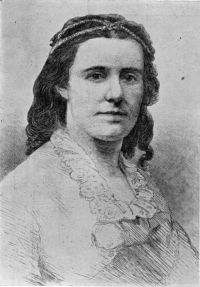 Abby Sage Richardson,
Stories from Old English Poetry…
(1899)
“ At one glance he saw the mangled steed of the maiden, and descried also her golden girdle lying coiled upon the sand. As quickly as the red lightning rushes from the clouds on some hoary monarch of the forest, and rives its ancient trunk with its forked darts, so quickly did Sir Satyrane ride upon the horrid monster and fell him to the trembling earth. But by the witch’s magic arts no sword had power to end his unclean life; and after many blows which would have put an end to him, if it had not been for the charms by which he was protected, the knight sent him howling back to his mistress. ”
Related terms
Authors who wrote about “satyr play”
W. W. GregRoy C. FlickingerE. K. ChambersColley CibberGilbert Murray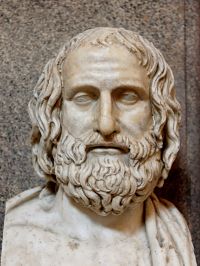 Euripidesauthor:René le Bossu
 Algernon Charles SwinburneJohn Colin Dunlop
 Edwin Carlile LitseyJohn AshtonH. G. Wells
 Joseph AddisonTorquato TassoSaxo GrammaticusJohn SheffieldJohn FletcherA. H. SmithFranz von ReberJohn Addington Symonds
Gilbert MurrayEuripidesauthor:René le BossuAlgernon Charles SwinburneJohn Colin DunlopEdwin Carlile LitseyJohn AshtonH. G. WellsJoseph AddisonTorquato TassoSaxo GrammaticusJohn SheffieldJohn FletcherA. H. SmithFranz von ReberJohn Addington Symonds