Sensory organ

Definition and stakes

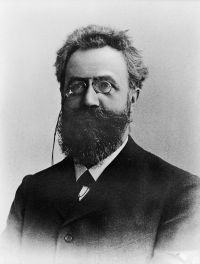
Portrait of Moses Allen Starr Moses Allen Starr,  Popular Science Monthly (1884)

“ It is no less true that an organ which is not used withers away. If one carries his arm in a sling for several weeks, it grows thin. Now, a sensory organ, like the eye, is simply a mechanism for the reception and transmission to its corresponding part of the brain of appropriate impulses. ”
Source: Wikisource

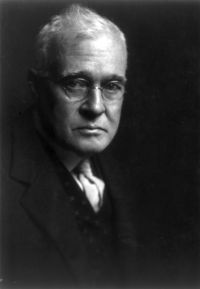
Portrait of Thomas Henry Huxley Thomas Henry Huxley,  Popular Science Monthly (1879)

“ In this case, the sense-organ is the epithelium which covers the tongue and the palate; and which sometimes, becoming modified, gives rise to peculiar organs termed "gustatory bulbs," in which the epithelial cells elongate and assume a somewhat rod-like form. Nerve-fibers connect the sensory organ with the sensorium, and tastes or flavors are states of consciousness caused by the change of molecular state of the latter. In the case of the sense of touch there is often no sense-organ distinct from the general epidermis. ”
Source: Wikisource

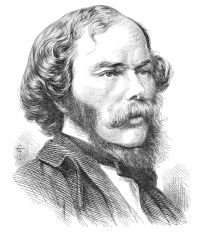
Portrait of George Henry Lewes George Henry Lewes,  The Physical Basis of Mind

“ By a similar procedure we separate the stimulation of a sensory nerve from the reaction of the sensory organ, and that from the reaction of the sensorium; and in this way we may come to regard Cerebration as Thought. But those who employ this artifice should remember that the organism is not an assemblage of organs, made up of parts put together like a machine. The organs are differentiations of the organism, each evolved from those which preceded it, all sharing in a common activity, all inter-dependent. ”
Source: Gutenberg

Get perspective with Kwize: daily news enlightened by great literature