Shell (biology)

Definition and stakes

A. H. Cooke,  The Cambridge natural history, Vol… (1895)

“ The popular names of ‘shells,’ ‘shell-fish,’ and the like, as commonly applied to the Mollusca, the intrinsic beauty and grace of the shells themselves, resulting in the passion for their collection, their durability and ease of preservation, as compared with the non-testaceous portion,—all these considerations tend to unduly exalt the value of the shell as part of the organism as a whole, and to obscure the truth that the shell is by no means the most important of the organs. ”
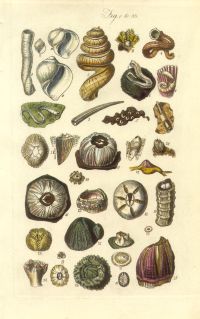
Source: Gutenberg

H. G. Adams,  Beautiful shells (1856)

“ Most usually he walks about at the bottom of the sea on his long arms, something like the Cuttle-fish, feeding on the marine vegetation; the shell is then uppermost; if we could look inside of it we should see numerous little chambers or cells, the larger and outermost of which only are inhabited by the mollusk, the others being filled with air render the whole light and buoyant. ”
Source: Gutenberg

A. H. Cooke,  The Cambridge natural history, Vol… (1895)

“ At the same time it must not be forgotten that the old systems of classification, which were based almost entirely on indications drawn from the shell alone, have been strangely little disturbed by the new principles of arrangement, which depend mainly on structural points in the animal. This fact only tends to emphasise the truth that the shell and animal are in the closest possible connexion, and that the shell is a living part of the organism, and is equally sensitive to external influences. ”
Source: Gutenberg

Get perspective with Kwize: daily news enlightened by great literature