Shoelace

Definition and stakes

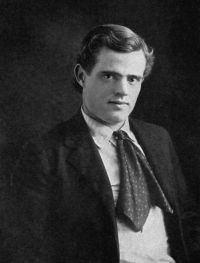
Portrait of Jack London Jack London,  The Star Rover (1915)

“ The man lies face-downward. The edges of the jacket are brought as nearly together as possible along the center of the man's back. Then a rope, on the principle of a shoelace, is run through the eyelets, and on the principle of a shoelacing the man is laced in the canvas. Only he is laced more severely than any person ever laces his shoe. They call it "cinching" in prison lingo. ”
Source: Wikisource

William Hunting,  The Art of Horse-Shoeing: A Manual for Farriers

“ When the horn on the lower surface of a foot is thin any uneven pressure—i.e., pressure applied directly to one spot—soon causes injury, pain, and lameness. When a good thick layer of horn exists, uneven pressures are less injurious, because the horn distributes them over a wide surface. Good workmanship is displayed by leaving no uneven pressure, and by so fitting a shoe that it shall do no harm. With a narrow shoe—one only the width of the wall—no uneven pressure can be applied to the sensitive foot, but such a shoe is seldom used as it is too light to afford sufficient wear. ”
Source: Gutenberg

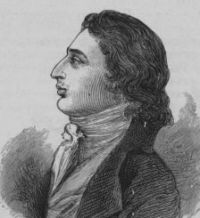
Portrait of Robert Southey Robert Southey,  A tale of Paraguay (1827)

“ Tremendous vanity, that one man should allow the mouth of another to be applied to his feet that he may have them trimly set out! The shoemaker unfolds the heel, turns round with the shoeing skin in his hand, and begins to fit the second part of the shoe upon the foot. He desires the gallant to put the end of the foot down, and the gallant does as he is desired. He draws the shoe towards him with such force that the person who is thus being shoed is compressed in an unseemly manner between the shoemaker's body and the back of the chair. ”
Source: Wikisource

Get perspective with Kwize: daily news enlightened by great literature